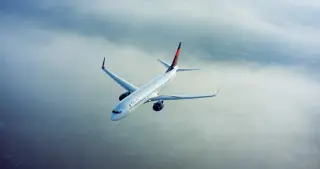
Delta Air Lines reported record third-quarter revenue of $20.2 billion but slashed its full-year profit forecast to $5.10-$5.60 per share due to soaring fuel expenses. While premium demand remained strong, fuel costs rose 62%, eroding margins. United Airlines is expected to report similar trends on October 20.
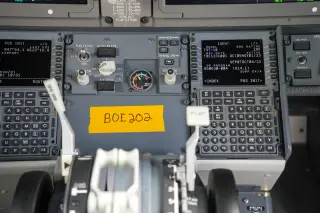
The FAA has determined that a vertical navigation glitch in the latest 737 Max flight management software is not a safety risk, clearing the path for the 737 Max 10 certification. However, major U.S. airlines continue to avoid the new software versions due to a history of other bugs, preferring older, less problematic updates despite their own known issues.
The US Treasury warned that Iranian airlines could be effectively shut out of international travel starting Sept. 23, as secondary sanctions would cut airports, fuel suppliers, and ticketing firms off from the dollar system; the move, part of a broader pressure campaign amid the US-Israel conflict with Iran, follows prior sanctions and comes as China engages in talks on enforcement and compliance.
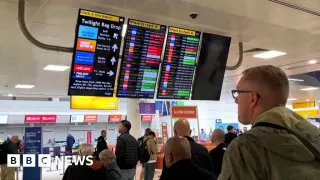
UK air traffic control operator Nats faced a second glitch in a month, causing widespread disruption across Scotland, Northern Ireland and northern England after a Prestwick connectivity fault, following a separate Swanwick software defect in September. About 200 flights were canceled or did not fly by mid‑afternoon, with EasyJet the worst hit. The Civil Aviation Authority said passengers are unlikely to get compensation due to extraordinary circumstances, while airlines and industry figures urged urgent reform and leadership changes at Nats. Nats said the issue is resolved and operations are being restored.
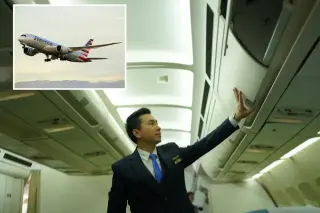
The FAA proposes a rule to preempt state meal-break laws for aircrews, arguing that federal rules should override local protections and help avoid a patchwork of regulations that could affect airline prices, routes and services. California currently guarantees an uninterrupted 30‑minute meal break for crews working more than five hours, prompting three major flight-attendant unions to warn the FAA lacks authority to override state law and to threaten litigation, claiming insufficient consultation and potential safety implications. The dispute underscores tensions between federal preemption under the Airline Deregulation Act and California protections, with potential legal battles ahead.
A KLM flight from Amsterdam to Curaçao reportedly diverted and returned after a power bank exploded onboard. Passengers described the device bursting into flames near a business-class passenger, with one account alleging former KLM CEO Camiel Eurlings was charging the power bank—a breach of inflight rules—though the airline has not confirmed his presence. The blaze damaged a window shade and seat before crews extinguished it and the aircraft landed safely in Amsterdam; a new aircraft carried passengers onward to Curaçao the following day. The incident follows a rise in fire scares involving lithium batteries onboard flights.
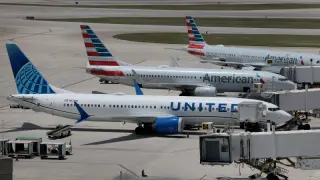
US carriers including United, American and Southwest say they will trim cheaper, less profitable flights for the rest of the year as jet-fuel costs stay elevated (jet fuel around $4.56/gal). With Spirit exiting and Frontier pivoting toward premium offerings, budget options are shrinking even as demand remains strong, potentially pushing fares higher and leaving fewer low-fare choices.
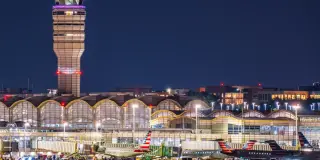
The FAA plans a cautious, limited rollout of SMART, an AI tool that will generate alternative flight routes and forecast weather impacts to ease airspace congestion. The 90-day testing phase at the DC-area airports will feed into existing systems rather than changing day-to-day procedures, addressing industry concerns of disruption. The effort is part of a broader, $875 million, 12-year modernization contract, with airlines and executives showing measured optimism after recent talks with FAA leadership.
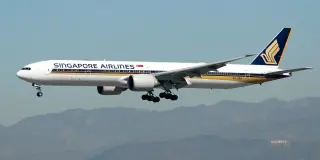
Skytrax's 2026 World Airline Awards crown Singapore Airlines as the world's best airline, marking its sixth win since the awards began in 1999, after a global passenger survey of over 100 nationalities across eight languages evaluating cleanliness, onboard Wi‑Fi, lounges, and cabin classes; Qatar Airways finishes second and Cathay Pacific third, with the rest of the top 20 featuring familiar carriers such as ANA, Emirates, Turkish Airlines, and Japan Airlines.
Airlines and regulators are proceeding with a cautious 90-day test of SMART, the FAA’s new AI tool (Strategic Management of Airspace Routing Trajectories) to propose alternative routes and forecast weather, aiming to ease congestion without changing existing procedures. The limited rollout at three DC-area airports will use SMART within current systems before wider deployment, amid industry questions but growing optimism as part of a $875 million modernization plan following past aviation incidents.
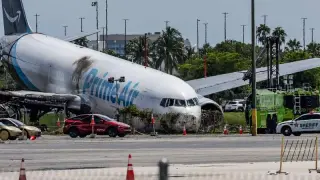
US prosecutors rarely charge pilots after crashes because proving gross negligence or recklessness is difficult; the NTSB focuses on safety, not liability, though criminal probes can occur if there’s evidence of a crime. The Miami Amazon Air crash is under NTSB review, with civil suits and potential FAA penalties possible. Past crashes like Comair 2006 and Asiana 2013 often did not yield charges, though isolated cases (e.g., a 2023 off‑duty pilot) show criminal action is possible. International rules vary and airlines can face penalties or lawsuits, but criminal charges against pilots after crashes remain uncommon in the US.
A female passenger on American Airlines Flight 1779 from Baltimore to Miami undressed and engaged in indecent acts mid-flight; the flight landed in Miami without diversion, and law enforcement took the passenger into custody upon arrival.
The article discusses flight disruptions and compensation amid post-9/11 air-traffic chaos, noting that disruptions cost travelers over £1,000 and left some passengers sleeping on airport floors, while raising questions about what rights passengers have to compensation.
A military aircraft submitted a spurious flight plan that disrupted the UK’s National Air Traffic Services computer system, triggering a nationwide air-traffic outage that grounded thousands of flights for several hours. The incident prompted crisis calls, a full-system reboot, and investigations by NATS and the Civil Aviation Authority, amid tensions with airlines and scrutiny of NATS chief executive Martin Rolfe. The disruption caused cancellations, diversions to continental airports, and long delays at major hubs like Heathrow, with schedules only slowly recovering in the days that followed. The government has signaled a review to determine the root cause and prevent a repeat, following a prior 2023 outage that was promised never to recur.
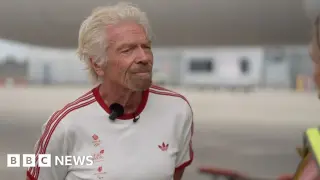
Virgin Atlantic founder Richard Branson says higher jet-fuel prices driven by Middle East tensions are pushing up airfares, with airlines adding surcharges and trimming schedules as oil costs spike (analysts estimate fares rose about 25%).