
Black Friday 2026: AI Tools and Inflation Shape a Cautious but Resilient Shopping Day
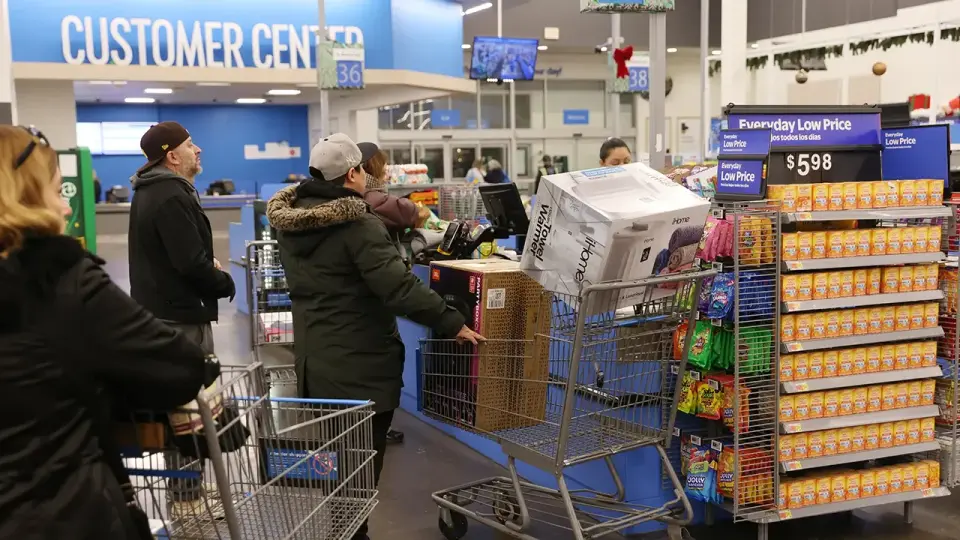
U.S. shoppers engaged in Black Friday 2026 with a mix of early in-store lines and heavy online activity, aided by AI tools. While the National Retail Federation projects $1.01 trillion in holiday sales, growth is largely driven by inflation rather than volume. Consumers are trading down, using AI for price comparisons, and prioritizing necessities, reflecting a resilient but financially stressed market.
Key points
- The National Retail Federation projects U.S. holiday sales will reach $1.01 trillion, a 4.2% increase, though higher prices account for roughly half the growth.
- Adobe Digital Insights reported $9.7 billion in online Black Friday spending by 6:30 p.m. EST, a 12.8% increase, with AI-driven traffic doubling compared to last year.
- Walmart U.S. Chief Merchandising Officer Julie Barber noted lines formed as early as 3 a.m. and that NeeDoh toys were over 80% sold by midday.
- Mall of America in Bloomington, Minnesota, saw 15,000 shoppers in the first hour, an 8.5% increase, with the first 1,000 customers receiving $100 goodie bags.
- 82% of consumers are taking steps to manage holiday costs, according to a National Retail Federation survey, while 87% plan to participate in the five-day shopping period.
Background
Black Friday has evolved from a single-day event into a multiweek period, with online deals starting weeks in advance. Recent archive coverage noted early laptop and speaker discounts, as well as warnings about verifying deals amid rising costs. The current event continues this trend, with retailers offering in-store exclusives to drive foot traffic despite the shift to e-commerce.
How outlets are covering it
Fox Business emphasizes the resilience of shoppers and the role of AI assistants like Walmart’s Sparky, noting strong in-store traffic and early lines. Bloomberg highlights a subdued start in some areas, with quiet malls and smaller budgets, suggesting a more cautious consumer. AP News reports on the dual nature of the day, with both in-store lines and record online spending, while noting that AI tools are helping shoppers navigate deals. NBC News focuses on the impact of inflation, noting that while spending is robust, it is driven by higher prices, and that lower-income shoppers are trading down. The outlets agree on the overall spending figures but differ on the level of consumer enthusiasm and the role of AI in driving traffic.
Why it matters
Black Friday serves as a key indicator of consumer confidence and economic health. The 2026 event shows a market that is resilient but stressed, with inflation driving sales rather than volume. The rise of AI in shopping could reshape retail strategies, as consumers use tools to find the best deals, potentially delaying purchases until deeper discounts appear closer to Christmas.
What to watch
Retailers will monitor final Black Friday sales figures, which are expected to reach $13 billion to $13.4 billion online. The five-day shopping period continues through Cyber Monday on November 30. Analysts will assess whether the current spending trends indicate a strong holiday season or a more cautious approach, especially as inflation and fuel costs remain high.
- Black Friday shoppers brave early lines, packed aisles to score in-store deals Fox Business
- Quiet Malls, Smaller Budgets Lead to Subdued Black Friday Bloomberg.com
- Black Friday shoppers undeterred by inflation and bad weather AP News
- Cautious consumers gear up for Black Friday as inflation woes bite NBC News
- Inflation has shoppers hunting for value. That bodes well for Black Friday CNBC
Want the full story? Read the original reporting
Read on Fox Business