
Pentagon injects $300M in loans to Stoke Space and Rocket Lab as launch capacity tightens
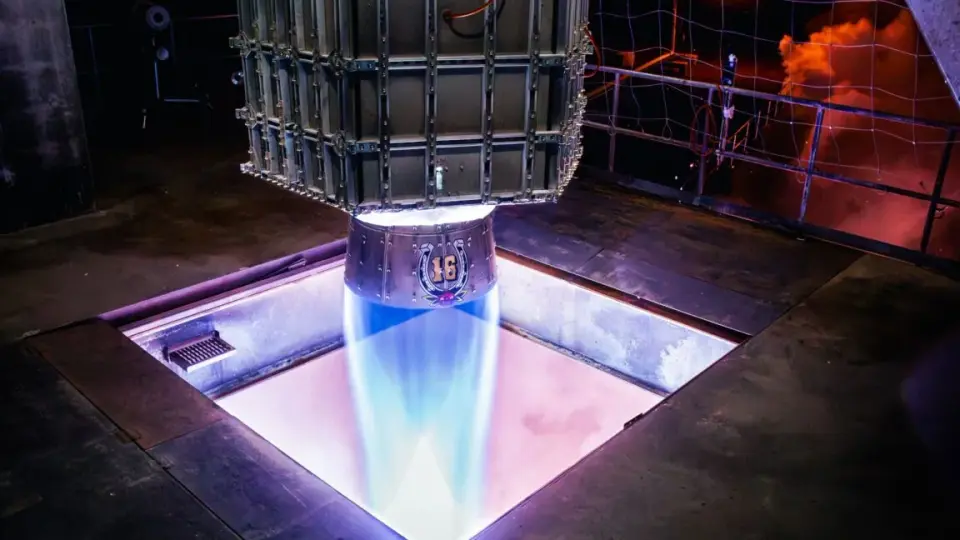
The US Department of War’s Office of Strategic Capital has committed $300 million in conditional loans to Rocket Lab and Stoke Space to expand domestic launch capacity. This move addresses concerns that SpaceX’s planned retirement of the Falcon 9 rocket by 2028 could create a national security gap, as the military requires up to 249 medium-to-heavy-lift launches through the early 2030s.
Key points
- The Office of Strategic Capital (OSC) announced a $150 million conditional loan to Rocket Lab on November 9, 2026, and a similar $150 million commitment to Stoke Space on October 26, 2026.
- The Rocket Lab loan aims to increase the flight rate of its reusable Neutron rocket, which is scheduled for its first launch in 2027, by funding recovery vessels, manufacturing upgrades, and infrastructure to reduce turnaround times.
- The Stoke Space loan supports the construction of a second launch pad at Cape Canaveral to support its Nova Block 2 rocket, an upgraded version of the Nova Pathfinder, which is set to debut in 2027.
- SpaceX has stopped taking commercial orders for Falcon 9 launches after 2028, shifting focus to Starship, while government contracts for Falcon 9 and Falcon Heavy extend through 2033.
- The Space Force now forecasts a need for up to 249 medium-to-heavy-lift launches through the early 2030s, more than double the estimate from two years ago, driving the need for additional providers beyond SpaceX and United Launch Alliance.
Background
The US military has maintained a policy of assured access to space since the 1990s, typically supporting at least two domestic rocket programs for national security satellites. Previously, support came through direct subsidies and premium launch contracts. Recently, the Space Force’s reliance on SpaceX increased after United Launch Alliance’s Vulcan rocket was grounded twice in the last two years due to solid rocket booster issues. The Office of Strategic Capital, established in 2022, has recently expanded its lending to sectors including batteries, drones, and semiconductors, marking a shift toward financial support for commercial space infrastructure.
How outlets are covering it
Ars Technica frames the loans as a response to a 'launch supply crunch' and a potential national security risk from SpaceX’s Falcon retirement, noting that the Pentagon is actively diversifying its launch providers. The Department of War emphasizes the loans as critical for 'space superiority' and economic resiliency, with Under Secretary Emil Michael linking the investment to President Trump’s vision. Yahoo Finance highlights the financial implications for Rocket Lab, noting that while the loan is non-dilutive and on attractive terms (SOFR plus 100 basis points), the company’s stock performance and profitability remain dependent on the successful first flight of the Neutron rocket, which has faced delays due to propellant tank issues. SpaceNews confirms the Pentagon’s focus on boosting Neutron production but provides limited additional detail due to paywall restrictions.
Why it matters
The Pentagon’s direct financial intervention signals a shift from traditional contract-based support to capital infusion for commercial launch providers, aiming to ensure the US maintains multiple viable launch options for national security missions. As SpaceX prioritizes its Starship program for commercial and data center uses, the military must secure alternative medium-lift capabilities to avoid over-reliance on a single provider. The loans aim to accelerate the operational readiness of next-generation rockets, ensuring uninterrupted access to space for government payloads through the 2030s.
What to watch
Rocket Lab and Stoke Space must meet various financial, legal, and technical requirements before the loans can close. Rocket Lab’s Neutron rocket is scheduled for its first launch in 2027, with the company aiming to turn adjusted EBITDA positive within six months of that flight. Stoke Space’s Nova Pathfinder is also set to debut in 2027. The Space Force will continue to evaluate these providers for eligibility in national security launch contracts, with the goal of meeting the projected 249 launches through the early 2030s.
- The US military seems to be getting nervous about the launch supply crunch Ars Technica
- The Department of War's Office of Strategic Capital Signs $150 Million Conditional Loan Commitment With Rocket Lab U.S. Department of War (.gov)
- Rocket Lab gets Pentagon financing to boost Neutron production SpaceNews
- The Pentagon Offers Rocket Lab a $150 Million Loan to Speed Up Its Neutron Rocket Yahoo Finance
- Pentagon commits $300 million in conditional loans to SpaceX rivals Mezha.net
Want the full story? Read the original reporting
Read on Ars Technica