Tag

Rocket Lab

All articles tagged with #rocket lab

Rocket Lab hits orbit milestone with eight Globalstar satellites under a $143M deal
technology8 days ago

Rocket Lab hits orbit milestone with eight Globalstar satellites under a $143M deal

Rocket Lab said its first eight 500-kg satellites built for Globalstar under a $143 million contract with MDA Space have reached orbit, are powering on, and undergoing commissioning as the 17-satellite program advances. Launched from Cape Canaveral, the milestone highlights Rocket Lab’s end-to-end, vertically integrated approach and supports its growing defense work, including SDA contracts that have pushed total awards well over $1.3 billion; RKLB shares rose about 1% after hours following the news.

Neutron First Flight May Slip to 2027 Amid Pad-Test Push
space13 days ago

Neutron First Flight May Slip to 2027 Amid Pad-Test Push

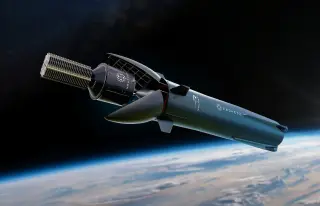
Rocket Lab warned its Neutron’s first flight could slip to 2027 despite ongoing progress, as pad testing and a first-stage static-fire remain the biggest risks before launch. The company still targets delivering Neutron to the pad in Q4 2026, but the actual launch window is tightening as risk trades are made to enable high-cadence production. A new contract to launch Kepler satellites no earlier than 2028 underscores strong demand, even as the program carries a history of delays since its 2021 reveal (initial 2024 target, later pushed to 2025 and 2026). The plan is a gradual ramp-up (one, three, five cadence) driven by Neutron’s reusability and reliability.

Rocket Lab’s Q2 Wins: Record Revenue, Iridium Acquisition, and Neutron Drive
business14 days ago

Rocket Lab’s Q2 Wins: Record Revenue, Iridium Acquisition, and Neutron Drive

Rocket Lab reported a record Q2 revenue of $234 million (up 62% YoY), with over $1 billion of new contracts and a backlog of $2.36 billion, as it announced the strategic Iridium Communications acquisition to become a self‑launching, integrated space company. Neutron development is progressing well, supported by strong demand from government and commercial customers, including notable Space Force-related work. However, the quarter showed a GAAP loss due to amortization, margins are pressured by space-systems mix, and free cash flow is still negative with positivity not expected until 18–24 months after the first Neutron flight; Iridium’s close is targeted for mid‑2027 with integration benefits and potential tuck‑ins ahead.

Rocket Lab tops Q2 revenue, lifts Q3 outlook amid ongoing losses
finance15 days ago

Rocket Lab tops Q2 revenue, lifts Q3 outlook amid ongoing losses

Rocket Lab reported Q2 CY2026 revenue of $234.1 million, up 62% year over year and beating estimates (consensus ≈$231.9M). GAAP loss was $0.08 per share, with Adjusted EBITDA margin at -3.8% and negative free cash flow of -$110.1 million; the company still narrowed losses and improved leverage. For Q3 CY2026, management guided to a midpoint revenue of $257.5 million and EBITDA of $20 million, above expectations of roughly $240.6 million and -$10.23 million, respectively, suggesting potential upside despite persistent losses. The stock traded about 1.8% lower after results, as investors weigh strong top-line guidance against continued profitability challenges.

Rocket Lab Posts Record Revenue, But Earnings Misses Forecast
business15 days ago

Rocket Lab Posts Record Revenue, But Earnings Misses Forecast

Rocket Lab reported Q2 2026 revenue of $234.06M, a 62% year-over-year increase and a quarterly record, but posted an adjusted loss of $0.08 per share, missing the $0.06 consensus. The backlog rose to a record $2.36B, with more than $437M in new launch contracts, and the company announced plans to acquire Iridium Communications while completing Mynaric and Motiv deals. For Q3 2026, the company guided revenue of $250–$265M (midpoint $257.5M) and an adjusted EBITDA loss of $17–$23M, aided by Neutron rocket milestones and a $397M Space Force contract.

Space Force bets on multi-vendor orbital target-tracking network with $615M
defense20 days ago

Space Force bets on multi-vendor orbital target-tracking network with $615M

The Space Force awarded $615 million to Rocket Lab, Systems & Technology Research (STR), and a third contractor under SB-AMTI to develop a space-based airborne target-tracking network, including Rocket Lab’s Flatellites to be launched on its Neutron rocket and operated from secure facilities; the awards diversify suppliers and explore alternative sensing approaches alongside SpaceX’s initial AMTI constellation.

Rocket Lab to open Kodiak suborbital hub under Space Force contract
military29 days ago

Rocket Lab to open Kodiak suborbital hub under Space Force contract

Rocket Lab will establish a new launch site at Alaska's Pacific Spaceport Complex Kodiak under a $266 million Space Force contract for up to 18 suborbital missions (12 launches with an option for six more); the first flight is scheduled no earlier than the end of 2026. The Kodiak facility expands Rocket Lab’s military launch capacity alongside its New Zealand and Virginia sites and will support hypersonic and missile-defense testing using its HASTE suborbital vehicle.

Rocket Lab's Iridium Takeover: A $8 Billion Space-Industry Pivot
finance1 month ago

Rocket Lab's Iridium Takeover: A $8 Billion Space-Industry Pivot

Rocket Lab is acquiring Iridium Communications in an about $8 billion deal (cash and stock) to create a vertically integrated space company that will design, build, launch, and operate its own satellite network; the deal, expected to close mid-next year after shareholder and regulatory approvals, leverages Iridium's profitable LEO network to accelerate Rocket Lab's growth, though investors should watch for integration risks and the high valuation.

Rocket Lab surges after Space Force suborbital contract win
markets1 month ago

Rocket Lab surges after Space Force suborbital contract win

Rocket Lab’s stock jumped in after-hours trading after the U.S. Space Force awarded a $266 million firm-fixed-price contract to launch 12 suborbital vehicles (with six options) from the Pacific Spaceport Complex in Alaska, with work through 2028; the award, issued by Space Systems Command, was competitive and about $112 million in FY2025 funds were obligated at the time of award, sending RKLB up roughly 5.9% to around $73.19.

Rocket Lab’s Iridium Move Aims to Forge a Global Space Infrastructure
business-technology1 month ago

Rocket Lab’s Iridium Move Aims to Forge a Global Space Infrastructure

Rocket Lab seeks to transform from a launch provider into a full-stack space infrastructure company by integrating Electron/Neutron launches with a spacecraft portfolio, Iridium’s global satellite network and Aireon’s aviation surveillance, and hosted-payload capabilities. The plan would enable recurring revenue across networks, spectrum, IoT, and government services, supported by Neutron’s medium-lift capability and an expanded supplier/production base. The upside hinges on successful integration, sustained government contracts, and achieving favorable margins as internal production scales; the base and bull cases hinge on Neutron’s cadence and reuse, with potential, sizable upside if the Iridium/Aireon combination yields durable cash flow and cross-selling opportunities, but significant execution and capital risks remain.

Rocket Lab's $8B Iridium Deal Signals a Bold Leap into Satellite Communications
business1 month ago

Rocket Lab's $8B Iridium Deal Signals a Bold Leap into Satellite Communications

Rocket Lab (RKLB) plans to acquire Iridium Communications (IRDM) for about $8 billion in a half-cash, half-stock deal, aiming to combine rocket-launch services with satellite-based mobile communications to compete with SpaceX’s Starlink and expand margins. The move could unlock significant long-term upside, but it comes with high risk: Rocket Lab is still unprofitable, the stock is volatile, and the acquisition’s closing and integration (expected in H1 2027) will drive the near-term trajectory. In Q1, Rocket Lab posted revenue growth of about 63.5% to $200.3 million, while reporting a per-share loss of $0.02; Iridium posted a net profit of roughly $114.4 million last year, and Rocket Lab’s own net loss was about $198.2 million, underscoring the substantial execution risk alongside potential synergy-driven gains.

Private satellites complete first orbital interception in Space Force’s Victus Haze test
space-exploration1 month ago

Private satellites complete first orbital interception in Space Force’s Victus Haze test

A Space Force TacRS mission, Victus Haze, achieved its first tactical interception between two private spacecraft: True Anomaly’s Jackal-0004 and Rocket Lab’s Puma. Jackal conducted proximity ops, imaging, and tracking after Puma’s Puma/ Pioneer platform was launched by Rocket Lab on June 19, 2026 (Jackal launched earlier in May). The intercept beat the 72-hour deadline and wrapped up 11 hours early, with Jackal’s control handed to Mosaic for mission planning. This milestone demonstrates the collaboration between the U.S. Space Force and commercial partners to rapidly acquire and characterize orbital objects, a key capability for space-domain awareness and defense.

NASA taps Rocket Lab for three Electron launches as SpaceX marks 1,000th Merlin engine
technology1 month ago

NASA taps Rocket Lab for three Electron launches as SpaceX marks 1,000th Merlin engine

Rocket Report mid-year recap: NASA awards Rocket Lab three dedicated Electron launches for 2027 (including PolSIR and TSIS-2); SpaceX hits a milestone with the 1,000th Merlin 1D engine amid a rare SXM-11 GEO mission; other items include India’s Vikram-1 test window, NASA delivering Rosalind Franklin braking engines, Isar Aerospace’s German launch with Planet satellites, Atlas V nearing its final flight as Vulcan approaches readiness, and Blue Origin pad cleanup ahead of return to flight; next launches slated for early July.

Rocket Lab pivots to space services with Iridium acquisition
business1 month ago

Rocket Lab pivots to space services with Iridium acquisition

Rocket Lab will acquire Iridium for $8 billion (54 per share in cash and stock), a move CEO Peter Beck calls the logical next step into space services, using Iridium’s L-band network to enable new applications and a vertically integrated model of rockets, satellites and services. The deal is expected to close in mid-2027 after regulatory approvals, and Iridium NEXT remains healthy, giving Rocket Lab time to scale opportunities and pursue recurring revenue beyond its launch manufacturing. The companies will maintain Iridium’s current service, with Rocket Lab aiming to expand the offering, although specifics were not disclosed; the transaction does not affect Rocket Lab’s ongoing work with Globalstar.