
Space Force awards $615M to diversify airborne tracking beyond SpaceX
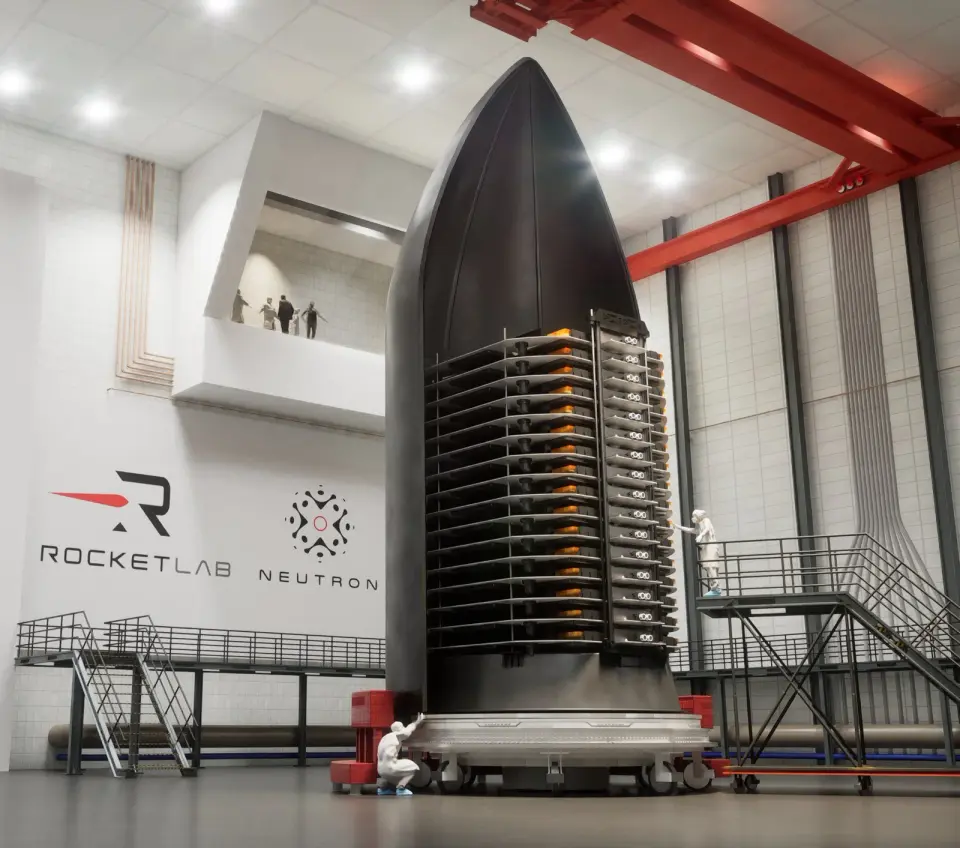
The U.S. Space Force has awarded a second task order totaling $615 million to three companies to develop alternative technologies for the Space-Based Airborne Moving Target Indicator (SB-AMTI) program. Rocket Lab received a $397 million contract to build and launch 'Flatellites' using its Neutron rocket, while Systems & Technology Research (STR) and an unnamed third firm received the remaining funds. These firm-fixed-price agreements aim to diversify the supplier base and test different sensing methods, complementing the initial $4.16 billion contract awarded to SpaceX. The program seeks to track aircraft and missiles from orbit, reducing reliance on vulnerable surveillance aircraft in contested areas.
Key points
- The Space Force awarded $615 million in total under the second SB-AMTI task order to Rocket Lab, STR, and one undisclosed company.
- Rocket Lab’s $397 million contract covers the development, launch, and operation of 'Flatellites' via the Neutron rocket, including options for additional units.
- STR, a Virginia-based defense tech firm, will contribute advanced sensors and signal-processing software to the program.
- The awards are designed to diversify the vendor base and avoid reliance on a single technical solution, following the initial $4.16 billion SpaceX contract.
- The Space Force aims to achieve a 'usable capability' for airborne target tracking by 2028, with further refinements planned thereafter.
Background
This development follows the Space Force’s earlier efforts to integrate commercial space capabilities into military operations. In July 2026, Rocket Lab secured a $266 million contract for suborbital launches from Alaska, and in June 2026, the Space Force demonstrated rapid-response launch capabilities with Rocket Lab. The SB-AMTI program is part of a broader Pentagon strategy to shift sensing missions from aircraft to space, enhancing resilience against anti-access/area-denial threats. The initial SpaceX contract established the baseline for the constellation, while these new awards focus on maturing alternative technologies.
How outlets are covering it
SpaceNews and Space Systems Command emphasize the strategic importance of diversifying the vendor base to ensure long-term competition and technological resilience. Rocket Lab highlights its vertically integrated model, noting that its ability to handle launch, spacecraft, and operations end-to-end is a key advantage. Air & Space Forces Magazine provides a broader perspective, noting that while the 2028 capability is a significant step, it will not be a complete solution and will complement existing airborne platforms like the E-7 Sentry. Some experts have questioned the readiness of space-based targeting, but officials maintain that the iterative approach will manage risks effectively.
Why it matters
The diversification of the SB-AMTI program reduces dependency on a single contractor and technology, enhancing the resilience of the U.S. military’s space-based sensing architecture. By integrating multiple vendors and sensing methods, the Space Force aims to create a more adaptable and robust system capable of operating in contested environments. This shift also reflects a broader trend in defense acquisition toward leveraging commercial innovation and rapid iteration to address emerging threats.
What to watch
The Space Force expects to begin launching the initial SpaceX constellation over the next 18 months, with an initial capability on orbit by 2028. Rocket Lab will proceed with the development and launch of its Flatellites, with options for additional units. The program will continue to stage competitions for further contracts to expand the vendor base and integrate complementary sensing technologies. Officials plan to refine data processing and orchestration systems to improve the speed and accuracy of target tracking.
- Rocket Lab, STR win Space Force contracts for airborne-target tracking SpaceNews
- Rocket Lab Awarded $397 Million Contract to Build and Launch Flatellites for U.S. Space Force’s Space-Based Airborne Moving Target Indicator Program Yahoo Finance
- Space Force Eyes ‘Usable’ Airborne Target Tracking by ’28, More Capability to Follow Air & Space Forces Magazine
- Space Force accelerates SB-AMTI capabilities with multi-vendor awards ssc.spaceforce.mil
- What's different about Rocket Lab's latest US military contract, SpaceX confirms plans go after telcos NZ Herald
Want the full story? Read the original reporting
Read on SpaceNews