
US Farmers Face Prolonged Crisis as Tariffs and Iran Conflict Spike Input Costs
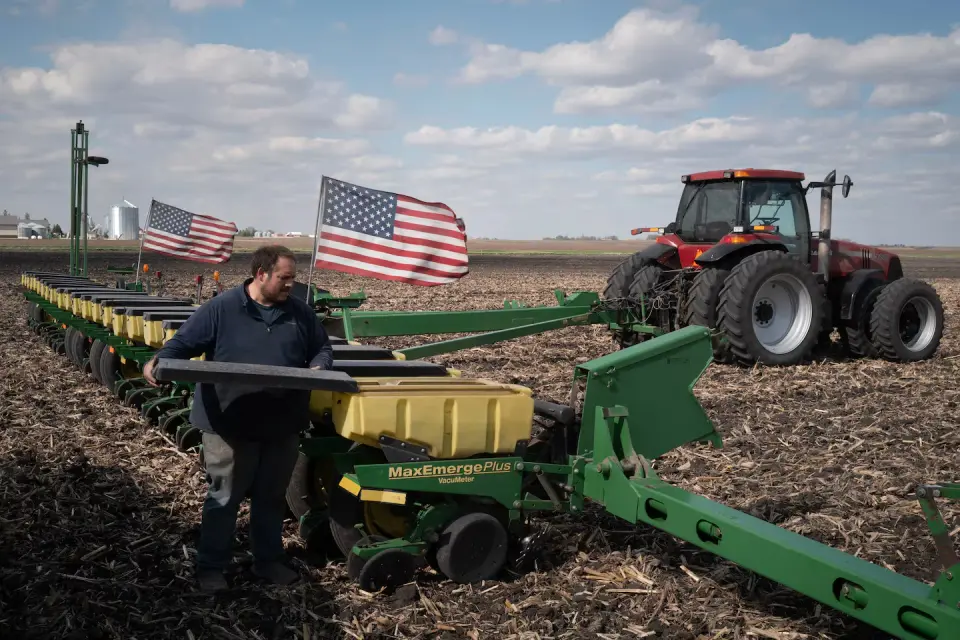
US farmers are experiencing a severe cost crisis driven by Trump administration tariffs and the ongoing Iran conflict, which have sharply increased prices for fertilizer, fuel, and machinery. While a $12 billion emergency aid package is stalled in Congress due to its linkage with war funding, experts warn that fertilizer prices will remain elevated through 2028 due to supply chain disruptions. This financial strain is forcing producers to cut back on essential inputs, threatening long-term soil productivity and crop yields.
Key points
- Tariffs and the Iran war have driven up costs for fertilizer, fuel, and farm machinery, creating a new economic crisis for US agricultural producers.
- A proposed $12 billion emergency farm aid package is stalled in Congress, partly because it is bundled with funding for the Iran conflict.
- Fertilizer prices are expected to remain above pre-war levels through 2028, as the Middle East supplies over 60 million tons of fertilizer annually, much of it via the Strait of Hormuz.
- Farmers are reducing phosphate and potassium applications by 10-15% to manage costs, a strategy that risks degrading soil productivity and future yields.
- The federal farm bill, the traditional source of agricultural subsidies, remains unresolved in Congress, leaving farmers without a stable policy framework.
Background
This crisis follows a period of rising input costs and policy uncertainty noted in July 2026, where farmers faced high diesel and fertilizer prices alongside the expiration of healthcare subsidies. The situation has worsened since the limited Iran deal signed in June 2026, as broader peace talks stalled and economic pressure intensified. Recent attempts to ease costs, such as beef tariff exemptions, have not addressed the broader agricultural input crisis.
How outlets are covering it
The Washington Post highlights the political gridlock, noting that emergency aid is stalled because it is tied to Iran war funding. The Financial Times characterizes the situation as the worst crisis in decades for grain farmers. AG Information Network of the West provides technical data, citing CoBank’s report that fertilizer prices will stay elevated through 2028 due to Middle East instability. While The Economist Enterprise’s content was inaccessible, the other sources agree on the severity of the cost shock and the lack of immediate relief.
Why it matters
The sustained high cost of agricultural inputs threatens the viability of US farms and could lead to reduced crop yields and soil degradation. The failure to pass emergency aid or a new farm bill leaves a key voting bloc without support, potentially influencing the political landscape ahead of the 2026 midterms.
What to watch
Congress must resolve the stalled $12 billion aid package and the farm bill. Farmers may continue to reduce fertilizer use, risking long-term productivity. If the Iran conflict persists, fertilizer prices are likely to remain high through 2028, further straining agricultural budgets.
- Farmers say they face a new crisis as Trump’s tariffs, Iran war raise costs The Washington Post
- US grain farmers face worst crisis in decades as Iran war sends costs spiralling Financial Times
- The Iran war and tariffs are costing farmers. Will Republicans pay in November? NPR
- Fertilizer Prices Expected To Stay Elevated Through 2028 AG INFORMATION NETWORK OF THE WEST
- Beyond the farm gate: lessons from the 2026 fertiliser shock Economist Enterprise
Want the full story? Read the original reporting
Read on The Washington Post