
Treasury's Bond Buyback Backfires as Inflation Expectations Spike
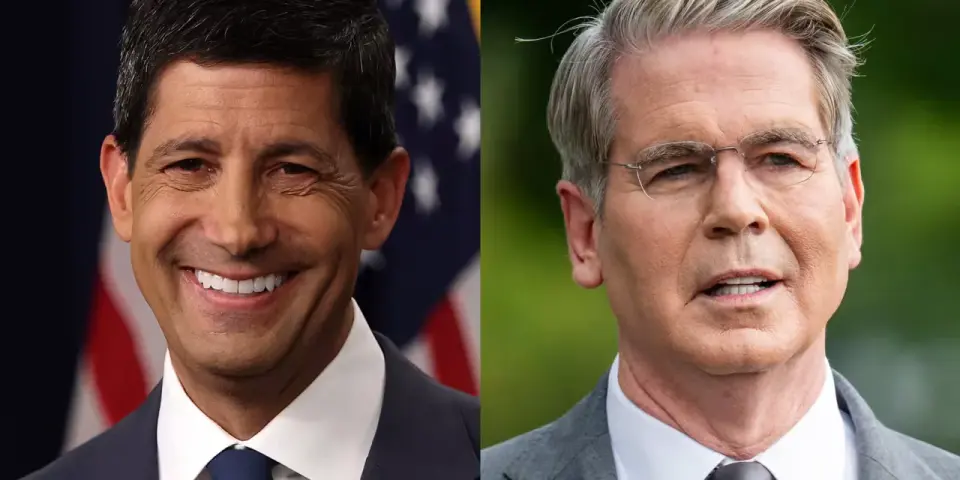
Treasury Secretary Scott Bessent's decision to double the size of long-term bond buybacks to lower borrowing costs has backfired, causing inflation expectations to rise and undermining the credibility of Fed Chair Kevin Warsh. While the move initially stabilized yields, markets have since reversed course, with 10-year and 30-year Treasury yields climbing back above pre-announcement levels. Analysts warn that this intervention creates a 'fiscal dominance' risk, where the Treasury dictates monetary policy, and has complicated the Fed's ability to manage inflation ahead of Warsh's upcoming Jackson Hole speech.
Key points
- Bessent announced the Treasury would at least double its typical $2 billion long-term debt buyback, financing it by selling short-term T-bills to 'twist' the yield curve.
- The move initially lowered long-term yields, but 10-year and 30-year yields rebounded by mid-week, with the 10-year reaching 4.73% and the 30-year hitting 5.27%.
- Inflation breakeven rates, which measure market expectations, rose to their highest levels in two months, with 10-year breakevens hitting 2.34%.
- The dollar weakened by nearly 0.9% this week, partly due to the 'signaling effect' of the Treasury's intervention, which markets interpreted as a precursor to looser Fed policy.
- Warsh, who has remained silent on rate paths since taking office, is scheduled to speak at the Jackson Hole symposium on August 28, a critical moment for market clarity.
Background
This development follows a series of recent Treasury interventions, including currency support for the yen and increased long-bond purchases, aimed at cooling long-term yields amid large deficits and inflation concerns. Prior to this week, Warsh's reduced communication style had already eroded Fed influence, leading to yield curve steepening and market volatility. The current crisis is a direct consequence of these earlier attempts to manage market pricing without clear coordination with the Fed.
How outlets are covering it
MarketWatch and CNBC agree that Bessent's intervention has created a crisis of credibility for the Fed, but they differ on the immediate market impact. MarketWatch emphasizes the structural risk of 'fiscal dominance,' where the Treasury dictates monetary policy, and notes that Bessent's claim that bond traders misjudged fundamentals directly contradicts Warsh's earlier acceptance of higher rates as a tool to fight inflation. CNBC, however, focuses on the immediate market backfire, highlighting that while yields initially dropped, they have since rebounded and inflation expectations have spiked. CNBC also notes that some strategists, like David Zervos of Jefferies, view the current yield levels as 'constructive' and 'healthy' for a thriving economy, arguing that the market is simply adjusting to a new, more tactical Treasury Secretary. Both sources agree that the lack of coordination between Bessent and Warsh is the core problem, but MarketWatch frames it as a threat to Fed independence, while CNBC frames it as a temporary market adjustment that may resolve itself if Warsh signals a hawkish stance at Jackson Hole.
Why it matters
The conflict between the Treasury and the Fed is not just a policy dispute; it is a test of the 1951 Treasury-Fed Accord, which established the Fed's independence in setting short-term rates. If the Treasury's interventions succeed in forcing lower long-term rates without corresponding Fed action, it could lead to a self-fulfilling inflationary spiral, as the dollar weakens and inflation expectations rise. This would force Warsh to either abandon his hawkish stance, undermining his credibility, or to raise rates aggressively, which could trigger a recession. The outcome of this standoff will determine the future of U.S. monetary policy and the cost of borrowing for the government and consumers for years to come.
What to watch
The next critical event is Fed Chair Kevin Warsh's keynote speech at the Jackson Hole symposium on August 28. Markets will scrutinize his remarks for any signal on whether he will support or resist the Treasury's 'twist' strategy. If Warsh signals a dovish stance, inflation expectations may rise further, undoing the stability in nominal yields that Bessent is trying to achieve. If he signals a hawkish stance, it could trigger a sharp rise in yields, potentially forcing the Treasury to halt its buybacks. The outcome of this speech will determine whether the current market volatility is a temporary blip or the beginning of a new era of fiscal dominance.
- Here’s how Bessent’s newly activist Treasury Department is undercutting the Fed’s Warsh MarketWatch
- Bessent's bond gambit aimed at calming markets is instead stirring inflation worries CNBC
- Treasury Is Buying Its Own Bonds. Where Is The Money Coming From? Forbes
- Morning Bid: So much for the Bessent bid Reuters
- Bessent’s Bond Maneuvers Giving Global Debasement Trade New Life Bloomberg.com
Want the full story? Read the original reporting
Read on MarketWatch