
Anthropic IPO and Hawkish Fed Signals Drive Mixed Market Reaction
Markets rallied on Anthropic's IPO, lifting tech stocks, while Fed Governor Waller's hawkish comments pressured commodities and boosted the dollar.

All articles tagged with #fed
Markets rallied on Anthropic's IPO, lifting tech stocks, while Fed Governor Waller's hawkish comments pressured commodities and boosted the dollar.
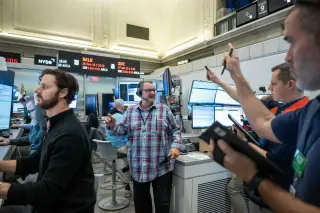
US stock futures traded mixed on Tuesday as investors awaited the October Consumer Price Index report, which is expected to show cooling inflation. Oil prices fell further, with Brent crude dropping below $91 per barrel, following President Trump's statement that the war in Iran is effectively over. Nvidia shares remained under pressure after its CEO admitted to an affair with a woman accused of being a Chinese spy, while Anthropic filed for an IPO with a $1.3 trillion valuation. Asian markets surged, led by South Korea's Kospi index, which jumped over 5%.
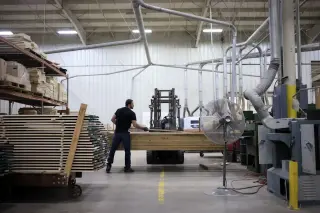
US business activity remained near a multi-year high in October, but price pressures surged to their fastest pace since 2022. Strong demand and AI investment drove expansion, while rising costs and supply bottlenecks raised inflation concerns for the Federal Reserve.

Bond traders say the risk of a deeper Treasury rout is rising as Fed Chair Warsh offers little guidance on how policy will evolve, prompting a steepening yield curve as longer-dated yields climb toward multi-year highs amid inflation concerns, geopolitical tensions, and looming Treasury auctions; options bets point to further moves in 10- and 30-year rates, while debate over reducing Fed meetings could heighten market volatility ahead of key data and elections.
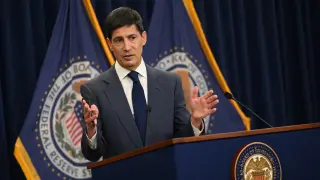
A commentary argues the Federal Reserve should raise interest rates at its upcoming meeting, outlining the rationale for a rate hike and its potential implications for inflation, growth, and financial markets.
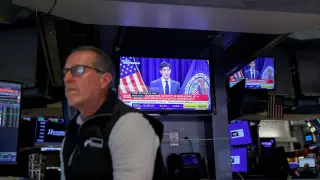
Oil prices jump toward $100 a barrel as U.S.-Iran tensions flare, stoking expectations the Fed will hike rates in September (FedWatch shows roughly 82% odds of a Sept move and about 38% for a 25bp lift at the next meeting). Strong labor data — weekly initial claims at 187,000, the lowest since 1969 — adds inflation concerns if energy prices keep rising. Markets slide, with the Dow down about 500 points and the Nasdaq more than 2% lower, while Kalshi traders lift bets on a September move; economists still expect no rate hike this year, with cuts anticipated in 2027.
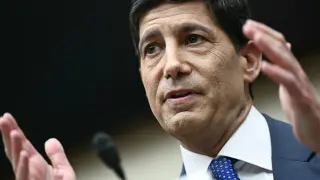
Fed chair Kevin Warsh has repeatedly used three phrases—'family fight,' 'first principles,' and 'inflation is a choice'—sparking debate among observers about whether he intends a less scripted, more debatable policymaking process, a shift back to core principles, and heightened accountability for inflation; analysts offer mixed views on whether these phrases will meaningfully change policy or simply shape communication and internal debate.

Bond traders and Fed chair Warsh agree the inflation fight isn’t over, with markets pricing in additional rate hikes later this year (likely September or October, possibly December) even after June’s CPI drop sparked relief. Two-year Treasury yields have risen, lifting borrowing costs and reinforcing a hawkish stance as Warsh emphasizes returning inflation to around 2%. Bank of America and other strategists anticipate hikes in the Sept/Oct/Dec meetings, and traders remain cautious ahead of the July blackout period amid data volatility and evolving energy and AI-driven growth dynamics.
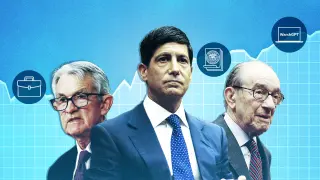
With Fed Chair Kevin Warsh steering toward shorter, less forward-looking statements, Wall Street is adapting by using AI tools—like F/m Investments’ WarshGPT—to parse thousands of Warsh-era documents and infer policy nudges. Banks such as UBS and JPMorgan have dashboards and contingency plans to gauge the central bank’s tone if traditional signals (like the dot plot) fade away. The reduced transparency raises uncertainty and potentially bigger market swings, prompting more hiring of Fed insiders and diversified strategies to stay ahead.
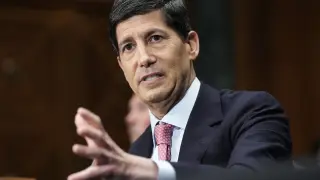
Warsh told Congress the Fed plans to return inflation to 2% using its tools, even as lawmakers pressed how prices can fall amid external shocks like the Strait of Hormuz and other policy factors. He argued inflation isn’t permanent and that rate moves and the balance sheet will prevent price increases from spreading, while expressing optimism that large private AI investment could boost long‑term growth. Lawmakers questioned the Fed’s independence and asked about new task forces on productivity, data, and communication, as immigration, tariffs, and AI’s impact on jobs shape the inflation outlook.
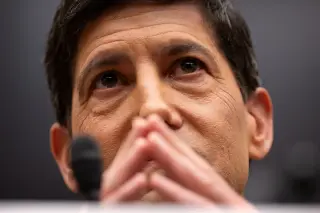
In two days of congressional hearings, Fed Chair Kevin Warsh faced Democratic scrutiny over independence and alleged Trump ties, while defending his inflation-focused approach and new reforms, including an AI-focused productivity and jobs task force led by Marc Andreessen. Warsh argued the panel’s recommendations would be subject to Fed oversight and emphasized he is “an independent guy for an independent job,” pledging to disclose asset divestments in the next reporting period. Democrats questioned forward guidance and transparency, and Warsh pushed back on concerns about cryptocurrency bailouts, insisting the Fed will not bail out private interests. Overall, the exchanges were pointed but less dramatic than typical politics-fed clashes, with Warsh signaling continued independence and inflation focus.

Federal Reserve Bank of New York President John Williams said policy remains well positioned to bring inflation back to 2% even as AI-driven demand could push prices higher. He expects AI-related supply-demand imbalances to recede as more supply comes online, with inflation peaking and then easing in coming quarters. Williams projects inflation around 3.25% by year-end and returning to 2% by 2028, as shelter and energy inflation trend down and the labor market stays resilient. He also cautioned that the magnitude and duration of AI’s inflation effects are uncertain, that policymakers are divided on near-term rate moves, and that tariffs are not expected to pressure consumer prices.
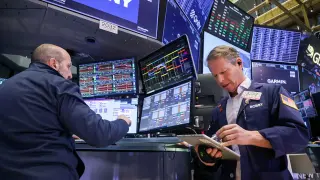
Treasury yields rose ahead of the June producer price index data, with the 10-year at 4.612%, the 2-year at 4.225% and the 30-year at 5.118%, as traders await the PPI print; consensus expects June PPI to be flat with a 0.3% core gain after a cooler CPI raised hopes for a potential Fed rate cut later this year.
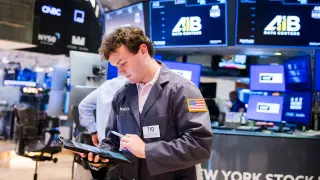
U.S. stock futures drift near flat as cooler June inflation cools expectations for aggressive Fed tightening, with CPI at 3.5% and July rate-hike odds around 17%; Asia markets rose on the news, led by South Korea’s Kospi. In the U.S., strong results from JPMorgan, Bank of America, Citi, Wells Fargo and Goldman Sachs buoyed stocks, while IBM tumbled 25% on weak guidance and Pentair fell 14% after prelims. Earnings from United Airlines, Morgan Stanley, Johnson & Johnson and BlackRock were set to be released next.
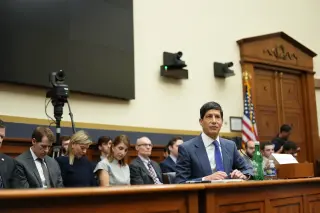
Federal Reserve Chair Kevin Warsh testified before the House Financial Services Committee and reaffirmed the central bank’s commitment to its 2% inflation target, signaling policy will stay restrictive for now even as June CPI showed inflation cooling to 3.5%. He cautioned against reading the data as victory, outlined five new Fed task forces to improve operations, and said he will follow the law and the data rather than provide forward guidance. Warsh described a largely stable labor market, a housing market that remains weak, and noted AI investment as a notable economic trend, with rates likely to stay elevated for the time being.