
Beijing Expands State Financial Recapitalization to Insurers Amid Margin Squeeze
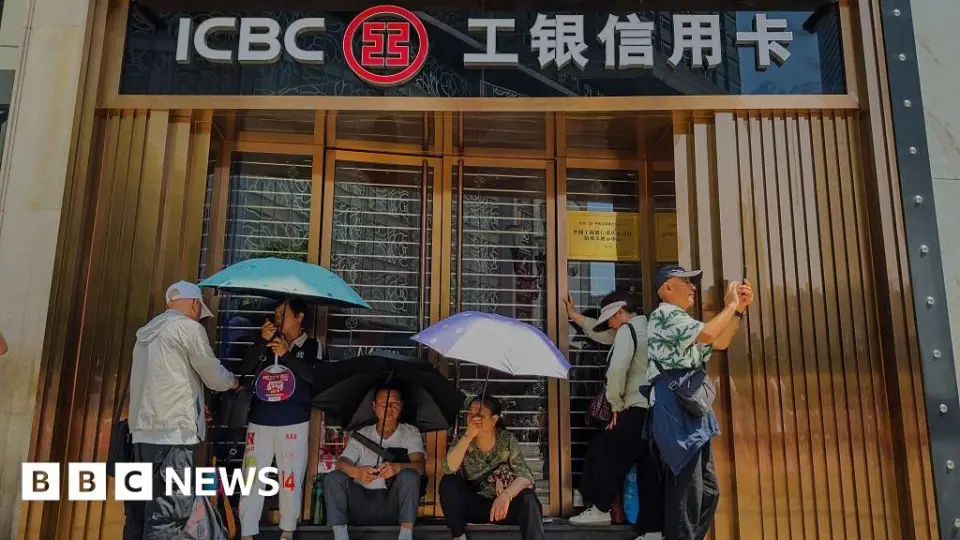
China is injecting 360 billion yuan ($53.6bn) into eight state-owned banks and insurers to stabilize the financial sector and support economic growth. The move, led by the Ministry of Finance, addresses declining profitability in banking and insurance due to low interest rates and a prolonged property market slump. While previous initiatives focused on major lenders, this expansion includes insurers and policy banks, marking a broader approach to strengthening state financial institutions against external shocks and domestic economic pressures.
Key points
- The capital injection totals 360 billion yuan, with 300 billion from the Ministry of Finance and 60 billion from state tobacco companies.
- Eight institutions are receiving funds, including Industrial and Commercial Bank of China, Agricultural Bank of China, and insurers such as China Life and China Reinsurance.
- The move aims to bolster risk resistance and support the real economy amid trade tensions, an aging population, and a property market downturn.
- Net interest margins for Chinese commercial banks have narrowed since 2019, currently standing at approximately 1.41 percent.
- Shares of affected institutions, including ICBC and Agricultural Bank of China, dipped by about 2 percent in Hong Kong following the announcement.
Background
This injection follows a previous 520 billion yuan funding initiative for major state-owned banks announced last year. Beijing has faced ongoing challenges including a shrinking workforce, a multi-year property market slump, and trade and technology rivalries with the US. The current move reflects a broader strategy to reshape the economy and ensure financial stability, which President Xi Jinping views as critical to national security.
How outlets are covering it
The BBC and Xinhua emphasize the injection as a measure to enhance sound operating capabilities and risk resistance, framing it as a response to broader economic challenges including trade tensions and an aging population. The Financial Times highlights the specific pressure on bank margins and insurer profits due to low interest rates and weak consumer spending, noting that the expansion to insurers and policy banks was a surprise to some analysts. While both sources agree on the scale and intent of the funding, the Financial Times provides more detail on the financial mechanics, such as the narrowing of net interest margins and the dilution of investor stakes, whereas the BBC focuses on the macroeconomic and geopolitical context.
Why it matters
The expansion of capital injections to insurers and policy banks signals a shift in Beijing's approach to financial stability, moving beyond just major banks to a 'full spectrum' recapitalization. This could provide more resources for credit to the real economy and strengthen the ability of state financial institutions to withstand external shocks. However, it also reflects the ongoing pressure on profitability in the financial sector due to low interest rates and a slowing economy, which may require continued state support to maintain stability and growth.
What to watch
Investors and analysts will monitor the impact of the capital injections on the profitability and lending capacity of the affected institutions. The move may also influence the broader financial market, as increased capital could allow insurers and banks to invest more in stocks and other assets. Additionally, the response to the dilution of investor stakes and the potential for further capital injections in the future will be key factors to watch.
- China to pump $54bn into state banks and insurers to boost economy BBC
- China Injects $45 Billion In Banks, Insurers to Boost Growth bloomberg.com
- China pumps $53bn into banks and insurers Financial Times
- China prepares £40bn stimulus for financial sector amid fears over sluggish growth The Guardian
- China to pump $54 billion into state banks, insurers in capital-boosting push Reuters
Want the full story? Read the original reporting
Read on BBC