
China’s $1.04 Trillion Trade Surplus Driven by AI Boom and Currency Undervaluation
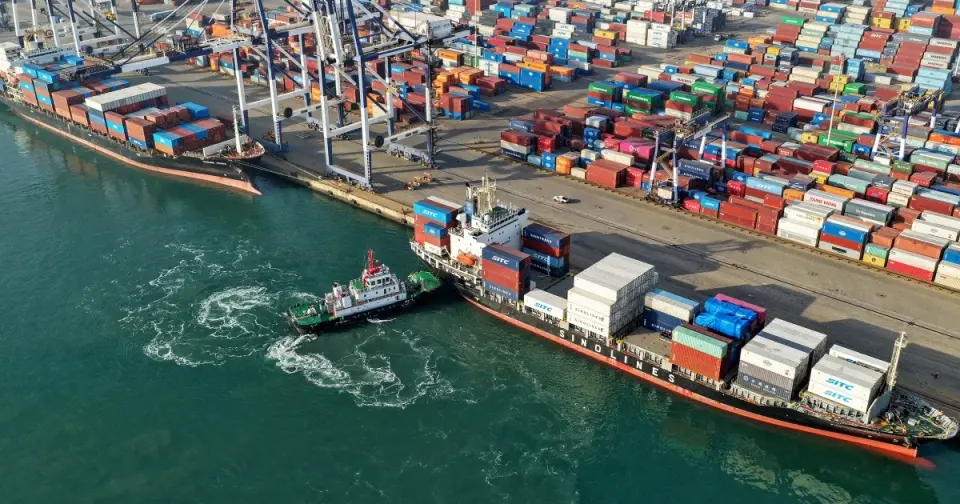
China’s trade surplus exceeded $1 trillion for the second consecutive year, reaching $1.04 trillion in the first ten months of 2026. This milestone, achieved a month earlier than in 2025, is driven by a 35.2% surge in exports, particularly in semiconductors and autos, fueled by global AI infrastructure demand. While this offsets weak domestic consumption and a property slump, it has intensified trade tensions with the U.S. and EU. Economists argue that a 20% currency undervaluation and structural imbalances make this surplus unsustainable, prompting calls for deeper domestic reforms and exchange rate adjustments.
Key points
- China’s cumulative trade surplus reached $1.04 trillion from January to October 2026, surpassing the $1 trillion mark a month earlier than in 2025.
- Exports surged 35.2% year-on-year in October, with semiconductor exports rising 137.1% and auto exports up 37.6%, driven by global AI infrastructure investment.
- Imports rose 41.6% year-on-year in October, partly due to increased crude oil shipments from the Persian Gulf, narrowing the monthly surplus to $105.3 billion from $133.5 billion in September.
- The trade surplus with the U.S. reached $266.5 billion in the first ten months, while the deficit with the EU exceeded $310 billion, intensifying trade frictions.
- Economists from PIIE argue China’s currency is undervalued by approximately 20%, contributing to the surplus, while others note that weak domestic demand and a property slump force reliance on exports.
- A two-month extension of the U.S.-China trade truce until January provides temporary relief, but tensions remain high ahead of the APEC summit in Shenzhen where Trump and Xi are expected to meet.
Background
China’s trade surplus has been a growing concern for years, with previous records set in 2025. Recent data shows a 'two-speed economy' where high-tech manufacturing thrives while domestic consumption and real estate stagnate. The current surge in exports is part of a broader trend of China leveraging global AI demand to offset internal economic weaknesses, a pattern that has led to increased trade barriers from the U.S. and EU.
How outlets are covering it
NBC News and CNN emphasize the role of AI-driven exports in boosting China’s trade surplus, noting that this external strength masks weak domestic demand. CNN highlights the risk of trade frictions with the EU, while NBC points to the potential vulnerability of exports if the AI boom slows. PIIE, however, focuses on the currency undervaluation as a primary driver, arguing that China’s real effective exchange rate is 20% below equilibrium, which artificially boosts exports. While NBC and CNN view the surplus as a result of global demand and domestic imbalances, PIIE sees it as a structural issue requiring currency appreciation and domestic reforms to resolve.
Why it matters
China’s record trade surplus exacerbates global trade tensions and risks further protectionist measures from the U.S. and EU. The reliance on exports to offset weak domestic demand highlights structural imbalances in China’s economy, which could lead to instability if global demand slows. Additionally, the currency undervaluation issue may prompt international pressure for exchange rate reforms, impacting global financial markets and trade dynamics.
What to watch
The APEC summit in Shenzhen will be a key moment for U.S.-China trade negotiations, with the two-month trade truce expiring in January. The outcome of these talks will influence the trajectory of trade policies and tariffs. Additionally, the sustainability of the AI-driven export boom will depend on global demand and potential corrections in the AI sector. China may face increased pressure to implement domestic reforms and adjust its currency to address trade imbalances.
- China’s trade surplus surpasses $1 trillion for a 2nd straight year, as exports surge 35% NBC News
- China’s Trade Surplus Passes $1 Trillion at Record Pace The New York Times
- China set for record trade surplus as AI boom pushes it past $1 trillion in just 10 months CNN
- Chinese Trade Surplus Tops $1 Trillion for Second Time Ever Bloomberg.com
- China's undervalued currency is driving its trade surplus higher Peterson Institute for International Economics
Want the full story? Read the original reporting
Read on NBC News