
Eurozone Leaders Recommend De Cos for ECB Presidency Amid Inflation and French Debt Concerns
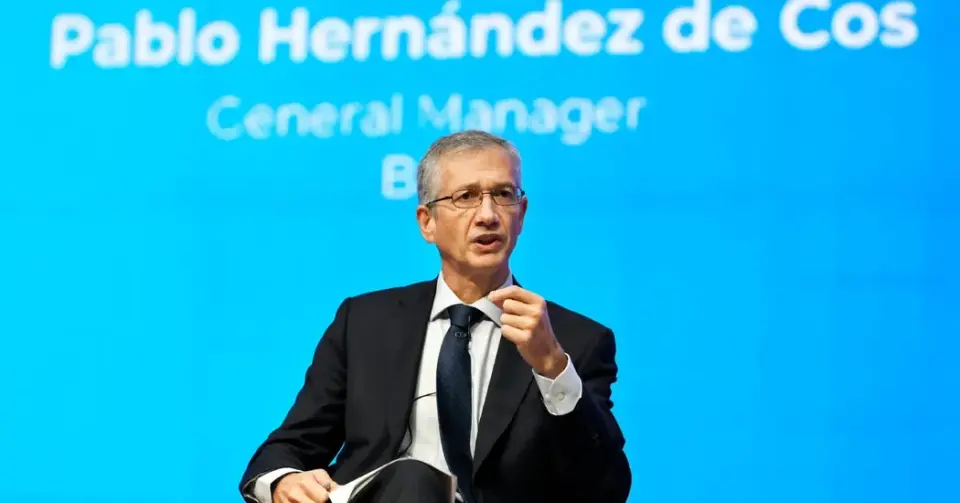
Eurozone leaders agreed Thursday to recommend Pablo Hernández de Cos as the next European Central Bank president, succeeding Christine Lagarde in February 2027. The 55-year-old Spanish economist and current Bank for International Settlements general manager will lead the institution amid rising inflation and French debt risks. Formal appointment is expected in mid-December.
Key points
- Eurozone leaders agreed to recommend Pablo Hernández de Cos as the next ECB president, succeeding Christine Lagarde, who will step down on February 7, 2027, to campaign in European elections.
- De Cos, 55, is a career central banker who served as Bank of Spain governor from 2018 to 2024 and has been Bank for International Settlements general manager since July 2025.
- The appointment requires formal consultation with the European Parliament and ECB Governing Council, with finalization expected in mid-December 2026.
- The selection balances northern and southern European representation, with Germany’s Markus Brunnermeier and France’s Laurence Boone reportedly tapped for other executive board roles.
- De Cos will face high inflation, euro area core inflation expected above target through 2029, and French sovereign debt risks amid political uncertainty ahead of April 2027 elections.
Background
The ECB leadership transition follows intense negotiations among major eurozone economies to secure executive board positions. Lagarde’s early exit, announced in 2026, accelerates the transition from her 2019 appointment. The ECB faces divergent economic conditions across 21 member states, with southern economies showing stronger growth than Germany, and rising inflation driven by energy costs from the Iran conflict.
How outlets are covering it
The New York Times emphasizes the critical juncture for the ECB, highlighting high inflation and French debt crisis anxieties. CNBC provides deeper analysis of the political negotiations, noting the Netherlands’ final push for Klaas Knot before backing de Cos, and frames the selection as a 'carefully crafted package deal' balancing northern and southern European representation. Both sources agree on the formal appointment timeline and de Cos’s background but differ in emphasis: The Times focuses on the institutional challenge, while CNBC details the political horse-trading and market implications.
Why it matters
The ECB presidency transition occurs amid rising inflation, French sovereign debt risks, and political uncertainty across multiple eurozone countries. De Cos’s appointment signals a commitment to central bank independence and price stability, potentially influencing monetary policy decisions on interest rates and fiscal discipline. The outcome affects eurozone economic stability, investor confidence, and the ECB’s response to divergent national economic conditions.
What to watch
Formal appointment procedures with the European Parliament and ECB Governing Council are expected to conclude in mid-December 2026. De Cos will assume the presidency in February 2027, facing decisions on interest rates, potential liquidity interventions for France, and supranational projects including the digital euro and capital markets integration.
- European Central Bank Chooses Pablo Hernández de Cos as Next President The New York Times
- Spain's De Cos to take over as ECB president from Lagarde Reuters
- Leaders choose Spain’s former central bank head as next European Central Bank president AP News
- De Cos Is Poised to Take ECB Presidency in Era After Lagarde Bloomberg.com
- Spain’s Pablo Hernández de Cos set to lead European Central Bank CNBC
Want the full story? Read the original reporting
Read on The New York Times