
China's August Trade Surplus Hits Record $119B as Exports Surge 25%
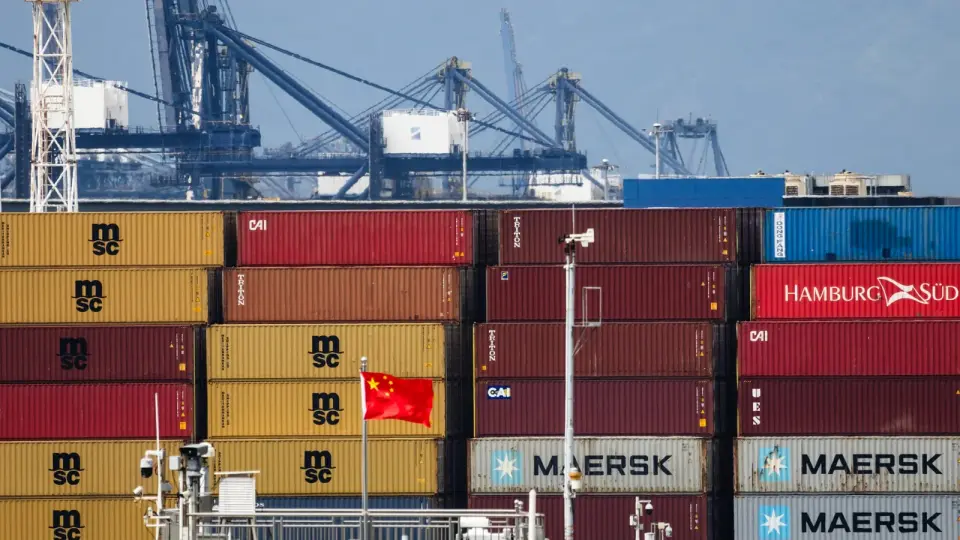
China's August trade surplus expanded to a record $119.09 billion, driven by a 25% year-on-year jump in exports that matched forecasts. While imports rose 28.2%, missing the 30% estimate, the data highlights continued reliance on external demand to offset weak domestic consumption and investment. The trade surplus growth has intensified scrutiny from Western partners, though Beijing maintains its currency and trade policies are not designed to gain competitive advantage.
Key points
- Exports grew 25% year-on-year in August, matching analyst forecasts and accelerating from 23.9% in July, driven by high-tech components for AI infrastructure.
- Imports rose 28.2%, missing the 30% economist estimate but increasing from 27.5% in July, signaling persistent weakness in domestic demand.
- The trade surplus widened to $119.09 billion from $112.5 billion in July, reflecting the gap between robust export performance and softer import growth.
- The offshore yuan remained stable at 6.7099 per dollar after the release, having appreciated 3.8% year-to-date against the greenback.
- PBOC Governor Pan Gongsheng stated at the G20 that China does not actively pursue trade surpluses or depreciate its currency for competitiveness, pushing back against Western criticism.
Background
China's GDP growth slowed to a three-year low of 4.3% in the second quarter, below the 4.5-5% target range, as domestic demand and investment weakened. Manufacturing activity contracted for a second consecutive month in July. Meanwhile, the U.S. trade deficit widened to $88.6 billion in July 2026, though year-to-date figures show a 29.6% decline versus 2025 due to revisions. Global tensions in the Gulf, including U.S. naval escorts in the Strait of Hormuz, have impacted oil flows but remain distinct from the current trade imbalance issues.
Why it matters
The record trade surplus underscores China's structural reliance on exports to sustain growth amid a domestic economic slowdown. This imbalance has triggered diplomatic friction, with G20 finance ministers criticizing export-heavy economies, though Beijing argues the complaints are politically motivated. The data suggests that without significant domestic demand recovery, China may face continued pressure from trading partners, potentially influencing future monetary policy and trade negotiations, including upcoming visits by Chinese leaders to Washington.
What to watch
Economists expect one or two interest rate cuts by year-end, contingent on Federal Reserve moves and yuan appreciation. A high-stakes visit by Chinese leader Xi Jinping to Washington is scheduled later this month, where trade relations may be discussed despite ongoing tensions. Fiscal spending acceleration and a planned $54 billion capital injection into state-owned banks are expected to support growth in the second half of the year.
Want the full story? Read the original reporting
Read on CNBC