
Fed Officials Signal Further Hikes as Inflation Stays Stubbornly Above 2% Target
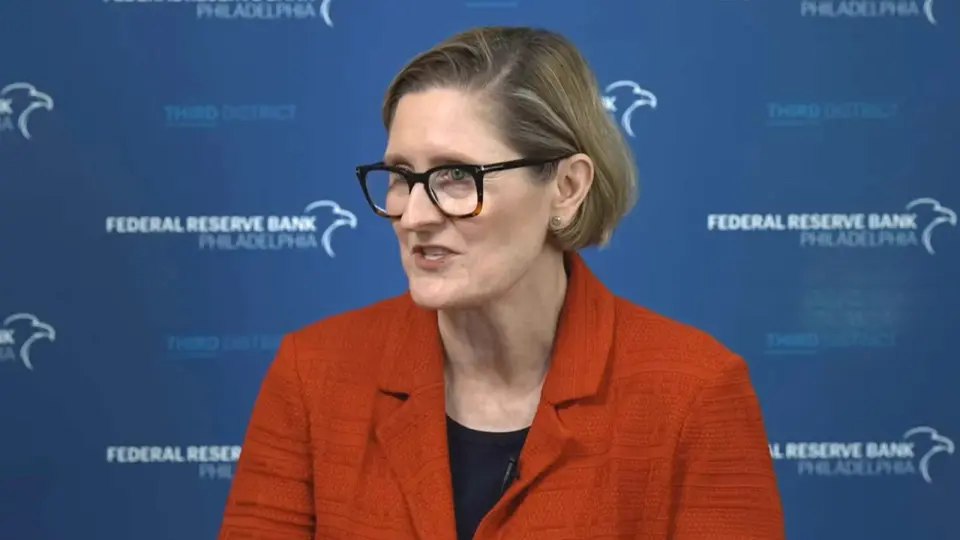
Philadelphia Fed President Anna Paulson and New York Fed President John Williams both indicated that further interest rate hikes are likely in 2026 to combat persistent inflation. Paulson noted that underlying inflation remains between 2.5% and 3%, well above the 2% target, despite recent rate increases. Market expectations have shifted significantly, with traders now pricing in a 64% chance of another hike in October and potentially four quarter-point increases by the end of 2027.
Key points
- Philadelphia Fed President Anna Paulson stated that 'modest' further tightening may be warranted to bring inflation back to the 2% target, noting that underlying inflation is still running at 2.5%-3%.
- New York Fed President John Williams said it is 'reasonable' to expect another rate hike before the end of 2026.
- The Federal Open Market Committee recently raised benchmark borrowing rates by a quarter percentage point, bringing the key funds rate to a target range of 3.75%-4%.
- Market expectations have shifted dramatically, with the CME Group’s FedWatch tool showing a 64% chance of a hike in October and another move in January.
- Fed funds futures contracts imply a rate of 4.8% by the end of 2027, suggesting as many as four quarter-point increases ahead.
- Paulson noted that inflation has held higher even outside of oil supply shocks from the Iran war and tariffs, while economic output remains 'solid' and the labor market is 'holding steady'.
Background
This development follows a series of recent Fed actions and statements. In late September 2026, the Fed raised its policy rate amid stubborn inflation and a growing economy, signaling a shift to a higher-rate regime. Earlier in September, Fed official Christopher Waller emphasized that upcoming inflation data would be pivotal for deciding whether to raise rates, with John Williams echoing a cautious stance. Prior to the recent hike, markets had priced in a 25-basis-point increase to 3.75%-4% with odds above 90%, driven by persistent inflation, a firming labor market, and crude oil prices above $100 per barrel. The 10-year Treasury yield had been near 5%, reflecting fears of energy-price impacts and supply bottlenecks.
How outlets are covering it
CNBC and Yahoo Finance both report on the hawkish stance of Fed officials, but emphasize different aspects. CNBC focuses on Anna Paulson’s detailed remarks about underlying inflation running at 2.5%-3% and the specific market expectations for future hikes, including the 64% chance of an October hike and the implied 4.8% rate by end-2027. Yahoo Finance highlights John Williams’ statement that it is 'reasonable' to expect another hike this year, framing it as a broader consensus among Fed leaders. Both outlets agree that inflation remains a significant concern, but CNBC provides more granular data on market pricing and Paulson’s specific comments on the gap between current inflation and the 2% target, while Yahoo Finance focuses on the immediate expectation of another hike in 2026.
Why it matters
The signals from Fed officials indicate that the era of ultra-low rates may be over, with higher borrowing costs likely to persist. This could impact mortgage rates, business investment, and consumer spending, potentially slowing economic growth. The persistent gap between current inflation and the 2% target suggests that the Fed is committed to a tighter monetary policy, which could lead to further increases in Treasury yields and higher borrowing costs for households and businesses. The shift in market expectations also reflects a broader concern about the durability of economic growth amid rising inflation and energy prices.
What to watch
The next FOMC meeting in October will be critical, as markets are pricing in a 64% chance of a rate hike. Traders will closely monitor inflation data and Fed statements to gauge the pace of future tightening. If inflation remains above 2.5%, the Fed may proceed with additional hikes, potentially reaching a rate of 4.8% by the end of 2027. The labor market and economic output will also be key indicators, as Paulson noted that the labor market is 'holding steady' and economic output is 'solid,' suggesting that the Fed may have room to tighten further without triggering a recession.
- Philadelphia Fed's Anna Paulson says 'modest' rate moves likely ahead to tame inflation CNBC
- Fed’s Barr Says More Rate Hikes Likely Needed to Return Inflation to Target wsj.com
- Fed's Williams says it is reasonable to see another US rate hike this year finance.yahoo.com
- Fed again hoping for a pain-free landing from current inflation spike Reuters
- Fed’s Williams Says More Work Needed to Lower US Inflation bloomberg.com
Want the full story? Read the original reporting
Read on CNBC