
Heating oil prices surge 60-75% as war-driven supply shocks strain Northeast budgets
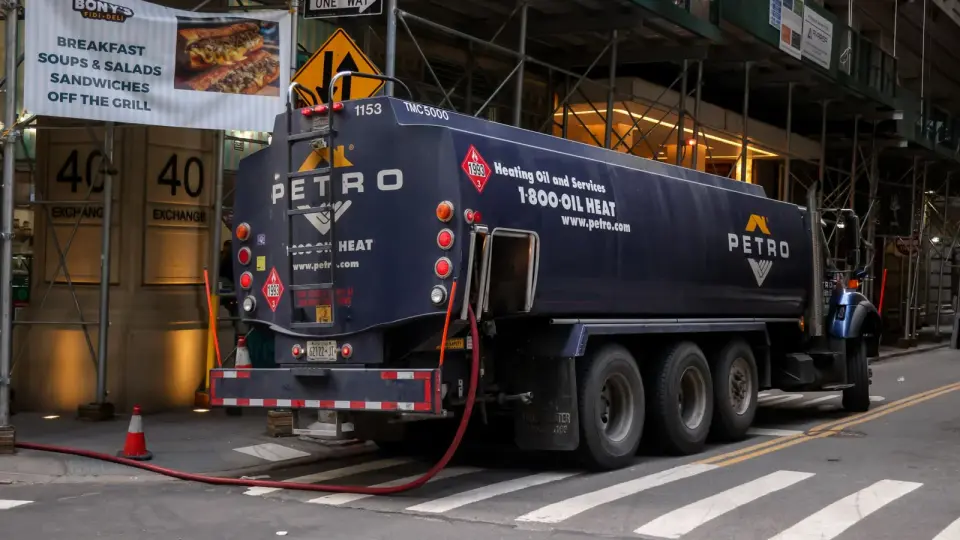
Heating oil costs have spiked significantly this winter, with national averages rising 59% to $5.91 per gallon and Maine prices jumping 75%. Supply constraints from the Iran and Russia-Ukraine wars, combined with limited refining capacity, are driving these increases. While the EIA forecasts a milder winter may slightly offset costs, households relying on oil face bills up to 21% higher than last year. Assistance programs are overwhelmed, with emergency fuel lines receiving hundreds of calls in the first hour, and federal funding remains uncertain pending congressional action.
Key points
- National heating oil prices reached $5.91 per gallon by Nov. 9, up 59% year-over-year, while Maine prices hit $5.83, up 75%.
- The EIA forecasts the average oil-heating household will spend $2,115 this winter, a 21% increase, though a milder Northeast winter may reduce consumption.
- Supply shocks from the Iran and Russia-Ukraine wars, low inventories, and limited refining capacity are constraining fuel supplies, according to the Federal Reserve Bank of Kansas City.
- AVEC Community Action in Maine reported 150 voicemail messages on its emergency fuel line in the first hour after opening on Nov. 2, indicating acute crisis.
- The Trump administration released 300,000 barrels from the Northeast Home Heating Oil Reserve on Nov. 4, but economists question its long-term impact on prices.
- Congressional lawmakers have requested an additional $3 billion in emergency LIHEAP funding, but disbursement depends on passing full-year or stopgap appropriations before a potential Dec. 11 shutdown.
Background
Heating oil costs have been rising steadily since October 2026, with earlier reports noting a 113% year-over-year spike driven by Middle East conflict and crude oil prices above $100 per barrel. The Iran war, which began in February 2026, has been a primary driver of supply disruptions, with the National Energy Assistance Directors Association (NEADA) attributing the current crisis to these geopolitical tensions. Previous coverage highlighted that low-income families faced a $500 winter gap due to capped LIHEAP assistance, and the broader economic fallout of the Iran conflict has added approximately $2,000 to the average household's costs, including gas and mortgage rates.
How outlets are covering it
CNBC emphasizes the human impact, citing specific cases like Catherine Lafleche in Maine, who ran out of fuel in October and relied on a wood stove, and notes that HEAP benefits of $750 are 'buying fewer gallons' than last year's $550. The New York Times and New York Post focus on the macroeconomic drivers, attributing the 70% price spike for oil users directly to the Iran war and noting that heating oil is essentially diesel, forcing refiners to choose between jet fuel and heating oil. The Athol Daily News highlights regional variations, noting that Massachusetts heating oil averages $6.21 per gallon, and that propane prices have also risen 40-50 cents per gallon due to Strait of Hormuz disruptions. While CNBC and the Post agree on the severity of the price spike, the Post emphasizes the volatility of oil prices, noting recent declines, whereas CNBC focuses on the sustained pressure on household budgets and the inadequacy of current assistance programs.
Why it matters
The surge in heating oil prices is exacerbating financial strain for millions of households, particularly in the Northeast, where 50% of homes in Maine rely on this fuel. The crisis is pushing low-income families into debt, with credit card balances hitting a record $1.29 trillion, and forcing difficult choices between heating and eating. The uncertainty surrounding federal funding for LIHEAP and the potential for a government shutdown adds to the anxiety, as households brace for a winter that could see prices remain elevated despite a milder forecast. The situation highlights the vulnerability of energy-dependent regions to geopolitical conflicts and the inadequacy of current assistance programs to meet rising demand.
What to watch
The EIA forecasts a milder winter in the Northeast, which may reduce heating oil consumption and offset some price increases. However, experts warn that prices could remain elevated due to ongoing supply uncertainties from the Strait of Hormuz. The Trump administration's release of 300,000 barrels from the Northeast Home Heating Oil Reserve may provide a short-term buffer, but its long-term impact is uncertain. Congress must decide on LIHEAP funding before Dec. 11 to avoid a government shutdown, and the timing of disbursement will determine whether additional assistance reaches households in time. Households are advised to prepay for fuel where possible and explore alternative heating methods, though options like wood stoves or heat pumps may not offer significant savings due to labor costs or high upfront expenses.
- Heating oil prices are up 59% from last winter. The spike is 'crushing folks,' Maine nonprofit says CNBC
- Average U.S. Heating Costs Will Rise 7% This Winter The New York Times
- Heating costs will surge this winter due to Iran war — with heating oil prices spiking as much as 70% New York Post
- Feeling the heat: As winter nears, soaring energy prices have residents bracing for bigger bills Athol Daily News
- US heating bills may average $1,030 this winter, but turning the heat to 60-65 can endanger older adults Yahoo Health
Want the full story? Read the original reporting
Read on CNBC