
Record $11.5 Trillion in Home Equity Remains Untapped as Borrowers Avoid Higher Rates
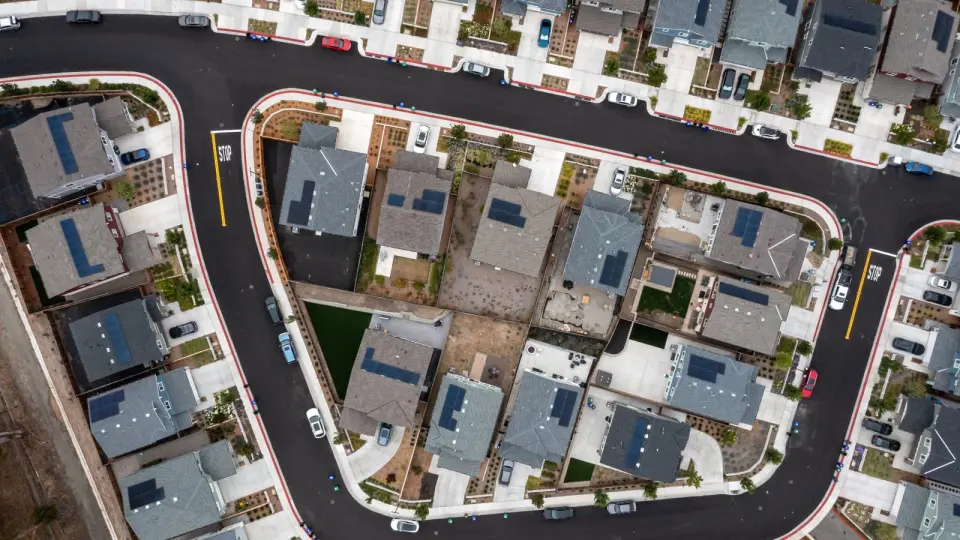
U.S. homeowners hold record housing wealth but are largely ignoring it. In the second quarter of 2026, total mortgage equity reached $17.9 trillion, with $11.5 trillion available for borrowing. Despite this, second-lien loans accounted for less than 0.1% of available equity. Homeowners with low locked-in mortgage rates and strong cash flow are avoiding new debt due to higher current interest rates and economic uncertainty.
Key points
- Total U.S. mortgage equity reached $17.9 trillion in Q2 2026, averaging $310,000 per homeowner, up $6,000 from the previous quarter.
- Of this total, $11.5 trillion is 'tappable' equity, meaning it could be borrowed against while still satisfying lender requirements.
- Second mortgages and home equity lines of credit (HELOCs) rose nearly 20% from Q1, but still represented less than 0.1% of the total tappable equity.
- Homeowners with the most equity are least likely to borrow, citing low existing mortgage rates, strong cash flow, and lack of need to move.
- Regional disparities are widening, with average equity exceeding $600,000 in Hawaii and $400,000 in Massachusetts, compared to just over $100,000 in Louisiana, Oklahoma, and Iowa.
- Home values are declining in Texas, Minnesota, Colorado, Maryland, and the District of Columbia, though underwater mortgages remain low at 2.1%.
Background
This situation follows years of rapid home price appreciation and historically low mortgage rates during the early pandemic period. Previous coverage noted that while housing prices continued to rise across most census regions, borrowing costs remained elevated above 7%, creating affordability pressures. The current data reflects the long-term impact of those locked-in rates on consumer behavior and regional equity accumulation.
How outlets are covering it
CNBC and Traders Union report identical figures from Cotality data, confirming the $17.9 trillion total equity and $11.5 trillion tappable equity. Both outlets emphasize that the reluctance to borrow is driven by the disparity between low locked-in primary mortgage rates and higher current rates for second-lien debt. CNBC highlights the behavioral aspect, noting that wealthy borrowers have 'little reason to move' or borrow, while Traders Union frames it as a broader economic caution, linking the trend to general economic nervousness and rising interest rates. Both agree that regional gaps are widening, with stronger price appreciation in high-equity markets like the West and Northeast.
Why it matters
The massive accumulation of untapped equity represents a significant dormant financial resource for the U.S. economy. If homeowners were to tap even a small percentage of this $11.5 trillion, it could inject substantial liquidity into consumer spending, home renovations, and other sectors. However, the current reluctance suggests that consumer confidence remains fragile and that the cost of borrowing is a primary deterrent. This dynamic also highlights the growing wealth inequality in housing, as equity gains are concentrated in high-cost regions, potentially widening the gap between affluent and lower-income homeowners.
What to watch
Monitor whether any shift in interest rates or economic conditions might trigger increased borrowing. Watch for further divergence in regional home prices, particularly in states like Texas and Colorado where values are currently dropping. Track the share of underwater mortgages, which remains low at 2.1%, to assess potential risks if the housing market softens further.
Want the full story? Read the original reporting
Read on CNBC