
Stagnant Housing Market: High Rates Freeze Sellers as Buyer Demand Collapses
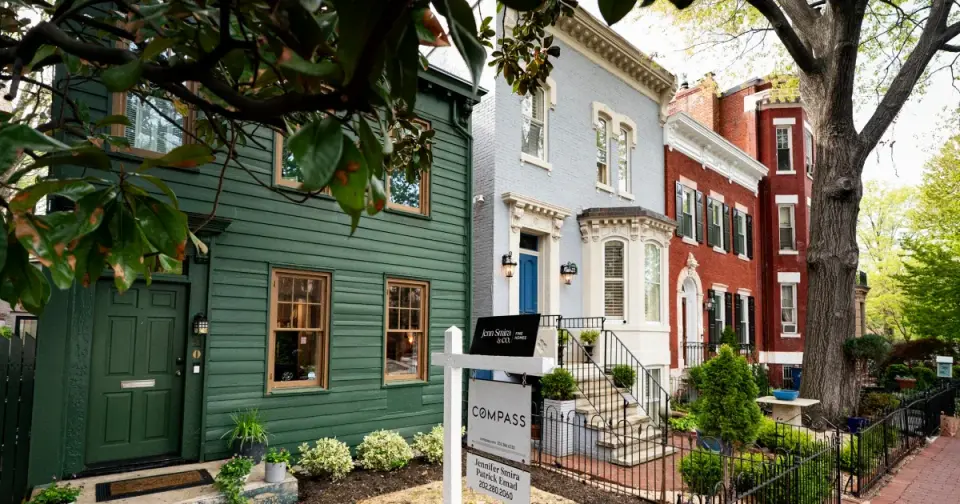
Soaring mortgage rates and elevated home prices have created a stalemate in the U.S. housing market. While buyer demand has plummeted to multi-year lows, supply remains constrained, leaving sellers unable to close deals. Recent data shows 30-year fixed rates hovering near 7.6%, a level that has stalled transactions for millions of potential homeowners.
Key points
- 30-year fixed mortgage rates are currently near 7.60%, marking a recent high but showing slight stabilization after a sharp spike.
- Buyer demand has collapsed, with purchase applications dropping significantly, while refinancing activity has fallen by more than 50% year-over-year.
- Sellers are facing a 'lock-in' effect where high rates make it difficult to sell homes because buyers cannot afford the resulting mortgage payments.
- Home prices remain stubbornly high, exacerbating affordability issues and preventing a drop in supply despite the lack of demand.
Background
This development follows a rapid escalation in mortgage rates earlier in 2026. In September, rates hovered around 7.02%, but by early October, they surged to a three-year high of 7.58%. Previous forecasts suggested rates would ease slowly, but recent volatility has outpaced those predictions, with the 10-year Treasury yield influencing current mortgage spreads.
How outlets are covering it
NBC News emphasizes the human impact, noting that sellers are feeling the pain of the market freeze just as acutely as buyers, with high prices and rates stranding properties on the market. In contrast, Mortgage News Daily focuses on the technical market mechanics, highlighting that while rates are near one-week lows, they remain historically high. Mortgage News Daily notes a potential 'double top' in rate behavior, suggesting momentum may be shifting, but cautions that it is too early to conclude a sustained downward trend. While NBC highlights the stagnation of the market, Mortgage News Daily provides a more nuanced view of short-term rate fluctuations versus long-term affordability issues.
Why it matters
The current housing market stagnation affects millions of Americans by limiting mobility and wealth accumulation. High mortgage rates prevent homeowners from selling and moving, while high prices exclude first-time buyers. This imbalance can lead to broader economic consequences, including reduced construction activity and slower economic growth, as the housing sector is a significant driver of the U.S. economy.
What to watch
Analysts are watching for signs of a sustained decline in mortgage rates, which could reignite buyer demand. However, if rates remain near 7.6% or higher, the market may continue to suffer from a lack of transactions. Sellers may need to adjust prices or offer incentives to attract buyers, while buyers may continue to seek alternative financing options or delay purchases until rates drop.
- High mortgage rates strand home sellers as buyer demand plummets NBC News
- Here's the latest sticker shock: Borrowing for a mortgage — or a car NPR
- How rising mortgage rates are hitting the housing market hard The Hill
- Mortgage rates are increasing, raising questions about where the Seattle housing market is heading KING5.com
- Mortgage Rates Near 1-Week Lows Mortgage News Daily
Want the full story? Read the original reporting
Read on NBC News