
Student Loans Shift from Investment to Liability Amid Rising Costs and Policy Changes
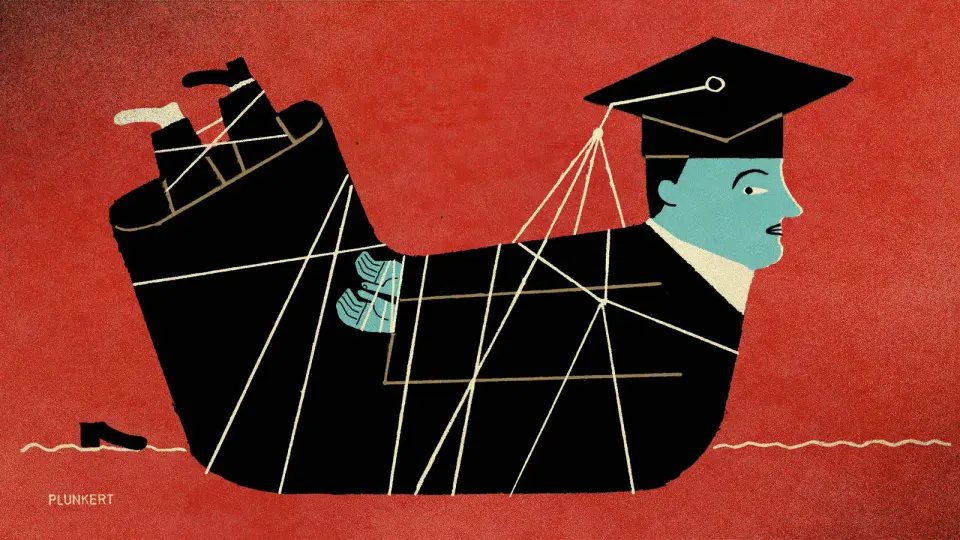
The concept of student loans as 'good debt' is eroding due to soaring tuition, expanded repayment terms, and a volatile job market. Over 42 million Americans now hold federal education debt totaling $1.7 trillion. Recent legislative changes have eliminated safety nets like unemployment deferments, while AI-driven shifts in hiring have reduced the traditional earnings premium for college graduates, making the long-term financial risk of borrowing significantly higher.
Key points
- Federal student loan debt has risen to over $1.7 trillion, with 42 million borrowers, up from $516 billion and 28 million borrowers two decades ago.
- Average annual tuition and fees at private four-year colleges reached $45,000 in 2025-2026, a significant increase from $14,550 in 1971-72 when adjusted for inflation.
- The 'One Big Beautiful Bill' Act (OBBBA) eliminated unemployment and economic hardship deferments, extending repayment timelines to 30 years under the new Repayment Assistance Plan.
- Default rates have surged, with 9.3 million borrowers in default as of June 2026, a 50% increase from 2016.
- Entry-level job openings dropped by 35% between 2023 and 2025, largely attributed to artificial intelligence, reducing the immediate financial return on a degree.
Background
This development follows a broader trend where financial experts have urged borrowers to abandon the 'good debt' label, citing risks from interest rate changes and over-optimistic income projections. Recent data also indicates that debt payments are consuming over half of U.S. income gains, while the lapse of a tax exemption has turned loan forgiveness into a potential IRS liability for millions. Additionally, the Education Department recently extended deadlines for autopay interest discounts, reflecting ongoing efforts to manage high delinquency figures.
Why it matters
The shift from 'good' to 'bad' debt alters the fundamental risk-reward calculation for higher education. With repayment terms stretching to 30 years and safety nets removed, borrowers face prolonged financial exposure that can hinder wealth-building milestones like homeownership and retirement savings. As AI disrupts entry-level hiring, the traditional guarantee of a stable, high-paying career post-graduation is weakening, forcing families to treat college loans as high-risk investments rather than secure pathways to the middle class.
What to watch
Borrowers should closely monitor the implementation of the new Repayment Assistance Plan and the absence of deferment options during economic downturns. Given the shrinking 'safety premium' of a college degree, prospective students may increasingly weigh alternative education paths or shorter-term certifications. Policymakers and institutions may face pressure to address the 'unprecedented crisis' in public trust, potentially leading to further debates on tuition pricing and federal loan structures.
- College was supposed to be ‘good debt.’ For many borrowers, it isn’t paying off CNBC
- The problem with 'good debt': Why borrowers should think twice about the label CNBC
- U.S. student debt strains household finances as college costs rise Traders Union
- Who gets to have 'good debt'? A sociologist, theologian, philosopher and other experts weigh in CNBC
Want the full story? Read the original reporting
Read on CNBC