
Tariff Refunds Boost Corporate Profits and Fuel 4.3% GDP Growth
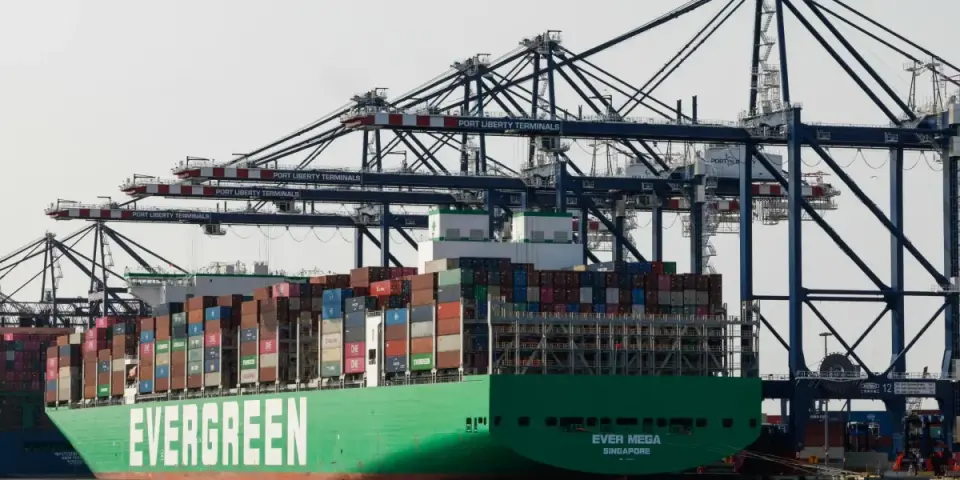
The US government has returned over $100 billion in tariff refunds to businesses, a move that is significantly boosting corporate earnings and contributing to a projected 4.3% GDP growth rate in the third quarter. While major corporations like Apple and Nike are recording billions in refunds, consumer access to these funds remains limited, with only specific shipping carriers like UPS and FedEx offering direct rebates. This influx of capital is combining with AI spending and tax cuts to accelerate economic activity, though it has sparked legal disputes and political scrutiny over whether consumers should receive a share of the money.
Key points
- The Trump administration has refunded more than $100 billion to importers, representing about 60% of the $166 billion collected under the International Emergency Economic Powers Act (IEEPA) before the Supreme Court struck it down in February.
- Apollo Chief Economist Torsten Slok estimates that these refunds will add approximately 0.2 percentage points to third-quarter GDP growth, which the Atlanta Fed projects at 4.3%, a sharp acceleration from the 1.5% growth seen in the second quarter.
- Forty companies in the S&P 500 have recorded $9.6 billion in refunds, with Apple alone receiving nearly $2.2 billion, according to a Wall Street Journal tally cited by Fortune.
- UPS, FedEx, and DHL have committed to passing refunds to consumers, with UPS expecting $5 billion in refunds and FedEx issuing $800 million in customer rebates, though the process is automatic and requires no action from shoppers.
- Amazon has stated it will only refund customers in limited circumstances where specific import charges can be traced, while other retailers like Nike and Walmart face class-action lawsuits from consumers seeking a share of the windfall.
- Bank of America analysts note that retailers are using refund money to fund promotions, offset supply-chain costs, or invest in AI and technology, rather than returning all funds to shareholders or customers.
Background
This development follows the Supreme Court's February 2026 decision to strike down the IEEPA tariffs, triggering a massive refund process. Earlier in August, Nintendo reported a 53.5% profit jump partly due to tariff refunds, though it refused to pass the money to customers, leading to lawsuits. The current surge in GDP growth also coincides with a broader AI spending boom and tax cuts from the One Big Beautiful Bill Act, which are cited as additional tailwinds for the economy.
How outlets are covering it
Fortune emphasizes the macroeconomic impact, highlighting how refunds are 'juicing' corporate profits and driving GDP growth to 4.3%, while downplaying the weak July jobs report as a seasonal anomaly. CBS News focuses on the consumer angle, detailing how shoppers can access refunds through shipping portals and the legal challenges they face, noting that most consumers will only recover a small share of the roughly $1,000 in additional duties paid. The Independent, while largely obscured by technical code in the provided text, aligns with the CBS News focus on consumer rebates, urging shoppers to check bank accounts for refunds from carriers like UPS and FedEx. There is a clear divergence between the corporate benefit narrative (Fortune) and the consumer recovery narrative (CBS News, The Independent), with the latter highlighting the opacity of retailer refund policies and the ongoing legal battles.
Why it matters
The distribution of $100 billion in tariff refunds is reshaping corporate balance sheets and influencing macroeconomic indicators, potentially keeping interest rates higher for longer as the economy accelerates. For consumers, the issue highlights the complexity of recovering costs from illegal tariffs, with only a fraction of the money likely to reach individual wallets, while the legal and political scrutiny of how corporations use these funds could set precedents for future trade policy disputes.
What to watch
The government is expected to continue issuing refunds, with the total amount potentially reaching the full $166 billion owed. Consumers should monitor their bank accounts and shipping portals for automatic rebates from UPS, FedEx, and DHL. Class-action lawsuits against major retailers like Amazon and Walmart are likely to proceed, though trade attorneys suggest they may not succeed. Senators, including Elizabeth Warren, are investigating seven major retailers to pressure them into returning more money to consumers. Companies may continue to use refund money for AI investments, shareholder returns, or supply-chain cost offsets, depending on their strategic priorities.
- Tariff refunds are juicing corporate profits and GDP, as tailwinds converge to propel growth to 4.3% Fortune
- Companies are getting tariff refunds of up to $2 billion from the Trump administration NPR
- How consumers can get a refund for Trump tariffs struck down by Supreme Court CBS News
- Shoppers should check bank accounts as tariff refunds begin flowing The Independent
- Tariff Refunds Are Here—and Turbocharging Earnings WSJ
Want the full story? Read the original reporting
Read on Fortune