
DOE Awards $100M to Lilac Subsidiary for Great Salt Lake Lithium Plant
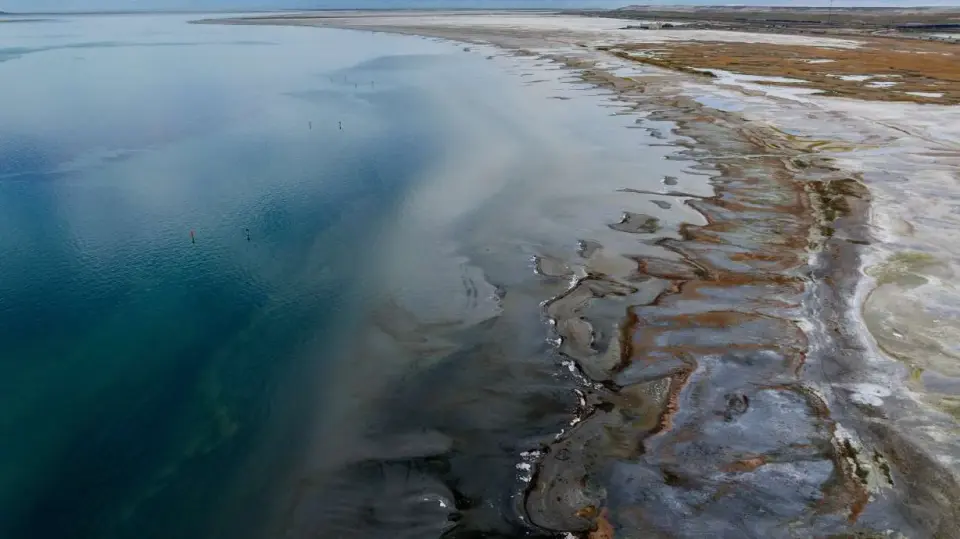
The U.S. Department of Energy has awarded a $100 million grant to Waterleaf P1 HoldCo, a subsidiary of California-based Lilac Solutions, to construct a commercial lithium extraction and refining facility on the northeastern shore of the Great Salt Lake in Utah. This project is part of a broader $500 million federal initiative aimed at doubling domestic lithium production and reducing reliance on foreign supply chains. While the facility promises to return processed brine to the lake with no net water loss, environmental concerns regarding contamination remain a focal point for state and federal regulators.
Key points
- The U.S. Department of Energy awarded $100 million to Waterleaf P1 HoldCo to build a lithium extraction and refining facility at West Promontory, Utah.
- The project is one of seven selected from a $500 million pool designed to expand critical mineral processing, battery manufacturing, and recycling capacity.
- The first phase of the project aims to double current U.S. lithium production, with the goal of producing battery-grade lithium carbonate.
- Utah is positioned as a leader in critical minerals, with 80% of the nation's critical mineral deposits located within the state.
- The facility is designed to return processed brine to the Great Salt Lake with no net water loss, addressing potential environmental concerns.
Background
This development follows a series of federal initiatives to secure domestic critical mineral supply chains. In August 2026, Democrats launched an oversight push regarding the Trump administration's multi-billion-dollar push into domestic critical minerals, citing potential conflicts of interest. Additionally, the U.S. recently provided $400 million in financing to build the world's first primary scandium mine in Australia, reflecting a broader strategy to diversify away from China's dominance in rare earths and critical minerals.
How outlets are covering it
KSL News emphasizes the strategic importance of Utah in the critical minerals race, highlighting that 80% of critical minerals are present in the state and noting the state's 'Mission Critical' initiative launched by Governor Spencer Cox. Metal Tech News provides a broader context, detailing the $500 million grant pool and listing other selected projects, including a cobalt refinery and battery recycling facilities, emphasizing the DOE's focus on the entire battery supply chain. The Duluth News Tribune, in an opinion piece, argues that 'Buy American' must start with 'Mine American,' criticizing the lengthy permitting process for new mines in the U.S. and urging Congress to advance bipartisan permitting reforms to unlock long-term investment in American minerals supply chains.
Why it matters
The award of a $100 million grant to develop a lithium facility in Utah is a significant step in reducing U.S. reliance on foreign sources for critical minerals, particularly lithium, which is essential for batteries and electric vehicles. This move is part of a broader federal strategy to strengthen domestic supply chains and enhance national security by ensuring a reliable source of critical materials. The project's success could set a precedent for future developments in critical mineral extraction and processing in the U.S., potentially leading to increased domestic production and reduced dependence on countries like China, which currently controls a significant portion of the global rare earth and critical mineral supply chain.
What to watch
The next steps for the Waterleaf P1 HoldCo project will likely involve the construction and operational phases of the lithium extraction and refining facility. The project's success will depend on its ability to achieve the goal of doubling U.S. lithium production and its capacity to address environmental concerns related to water use and contamination. Additionally, the broader $500 million grant pool will see the development of other critical mineral and battery manufacturing projects, which could have significant implications for the U.S. energy and technology sectors. The ongoing oversight by Democrats and the potential for bipartisan permitting reforms in Congress will also play a crucial role in the future of critical mineral development in the U.S.
- California company awarded $100M to develop critical mineral facility on Great Salt Lake shore KSL News
- EXCLUSIVE: Trump administration to back US minerals projects with $500 million in grants Reuters
- DOE adds $500M to battery supply buildout Metal Tech News
- Kensington VI (NYSE: KCA-UN) partner in DOE talks on battery metals plant Stock Titan
- National View: 'Buy American' must start with 'mine American' Duluth News Tribune
Want the full story? Read the original reporting
Read on KSL News