Modeling suggests the young Sun could have swallowed a super-Earth (5–10 Earth masses), leaving chemical and structural fingerprints such as a deeper convection zone and unusually low surface lithium; the scenario is not proven and would need independent confirmation.
A new study proposes the young Sun swallowed a planet several times Earth's mass (a super-Earth), with chemical fingerprints of that event possibly still embedded deep inside the Sun; this could help explain long-standing discrepancies between solar models and observations, including the Sun’s lithium depletion.
The Energy Department is awarding $500 million in grants to seven U.S. companies to develop domestic lithium, cobalt and other mineral processing and battery-manufacturing capacity, part of a broader push to reduce reliance on China and strengthen America’s mineral supply chain. The funded projects include Lilac Solutions’ $100 million lithium-extraction facility at Utah’s Great Salt Lake, Jervois’ $100 million cobalt refinery in Idaho, Nth Cycle’s $100 million facility to process battery black mass, and $50 million each for Princeton NuEnergy, Arcanum Ventures and Coreshell Technologies, with earlier grants to ioneer, Standard Lithium and Lithium Americas.
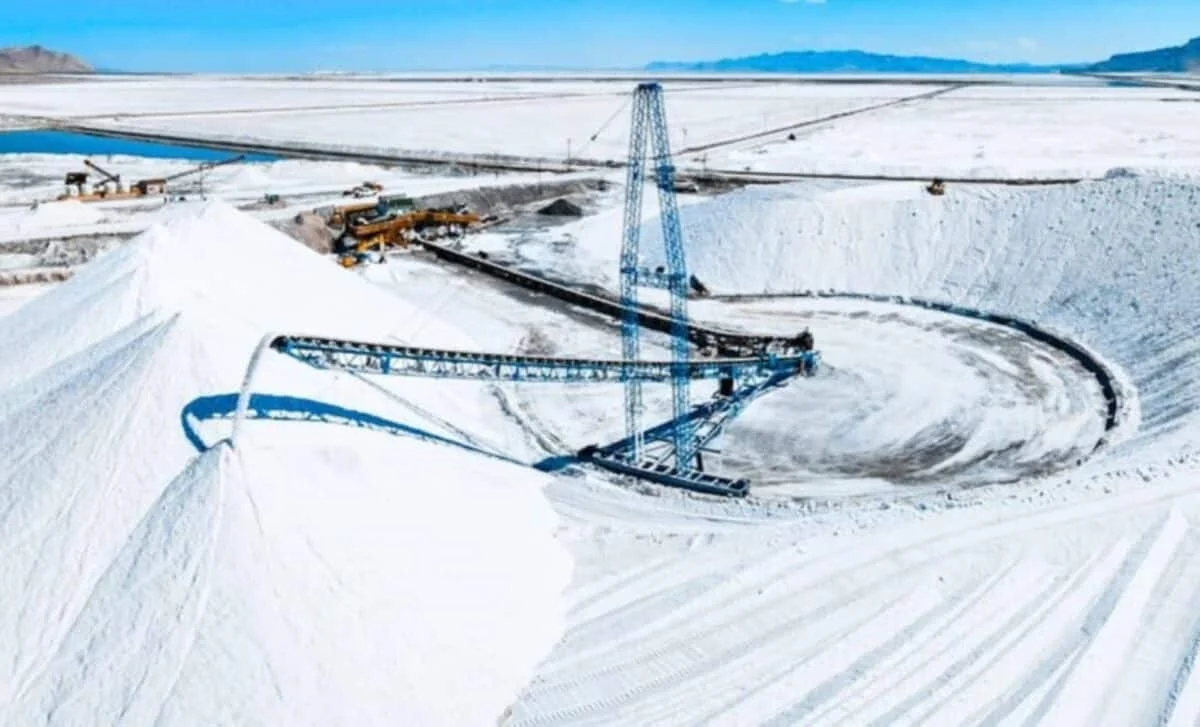
The U.S. Department of Energy awarded Waterleaf P1 HoldCo (a Lilac Solutions subsidiary) a $100 million grant to develop a commercial lithium extraction and refining facility on the Great Salt Lake’s northeastern shore, aiming to double U.S. lithium production and strengthen domestic supply chains; Utah is positioning itself as a leader in critical minerals, with federal coordination on water use and brine return amid environmental concerns as the project moves forward.
Harvard researchers analyzing metals in brains found lower lithium levels in the prefrontal cortex of people with cognitive impairment and dementia. In mice with Alzheimer’s-like symptoms, lithium—especially lithium orotate—appeared to reduce pathology by interacting with amyloid beta, but this does not translate to proven benefits in humans. Lithium supplementation for dementia prevention remains unproven and could carry toxicity risks, so more research is needed. In the meantime, brain health is best supported by Mediterranean/MIND-style diets, ensuring vitamin D and B12 sufficiency, and considering multivitamin supplementation for potential cognitive decline risk reduction.
Nevada’s economy is revving up as lithium reserves lure workers from California, expanding the state’s job market and diversifying away from gaming while AI infrastructure and favorable policies boost growth.
New research argues that low-dose lithium, a long-used bipolar disorder drug, may slow Alzheimer's progression by boosting brain resilience and countering neuroprogression, acting on multiple pathways (BDNF, bcl-2, GSK-3) to promote neuroprotection. While traditional psychiatric doses carry risks to kidney and thyroid function, the study suggests much lower doses could offer benefits with fewer side effects, and experts emphasize that rigorous clinical trials are needed before any change in medical practice. The findings fuel interest in repurposing an affordable, widely available drug as part of a multi-target approach to dementia, but caution remains about safety and efficacy in older adults.
Astronomers using Gaia-ESO data found six red-dwarf stars with unexpectedly high lithium in their atmospheres, a chemical that should be destroyed deep inside these stars. Because lithium should vanish quickly, its recent appearance signals the accretion of rocky planetary material, a phenomenon dubbed necroplanetology. The six stars (out of 318 examined in clusters) suggest roughly 3–10 Earth masses of planetary matter may have been swallowed, implying planet-devouring could occur in a notable fraction of red dwarfs depending on how long lithium lasts in their atmospheres. This finding offers a new way to study planet formation and early-system evolution.
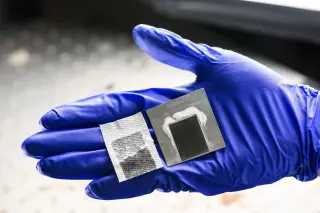
University of Rochester researchers have created a solar-powered desalination system using laser-treated, superwicking black metal that rapidly evaporates seawater, directs salts to a passive region to prevent clogging, and produces freshwater without liquid brine while recovering solid minerals (including lithium), offering a scalable path to both drinking water and mineral resources.
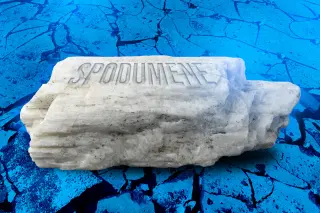
MIT researchers have developed a room-temperature, low-energy, closed-loop method that dissolves spodumene using an ammonium fluoride-water mix to release lithium, aluminum, and silica, with reagents recovered for reuse to nearly zero waste. The process could halve hard‑rock lithium extraction costs and be competitive with brine methods, demonstrated across 17 spodumene sources and moving toward commercialization via Rock Zero (MIT spinout); the work, published in Science, aims to boost onshore critical-mineral supply for batteries.
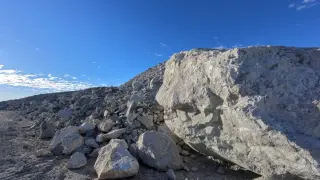
MIT researchers report a low-temperature, acid-free method to extract lithium from hard rock spodumene by dissolving the silicate matrix with ammonium fluoride, freeing lithium and aluminum for purification. Tested on 17 ore sources with >95% Li recovery, the process is closed-loop and avoids roasting, potentially lowering costs and carbon waste compared with traditional brine evaporation or hard-rock mining. A pilot via spinout Rock Zero is planned, but industrial-scale testing is still needed and could address the looming lithium supply challenge while reducing mining’s environmental footprint.
A UNU-INWEH report warns that surging demand for lithium, cobalt and nickel—the core of batteries and chips—drains water, contaminates rivers, hurts agriculture, and harms health in poor mining regions from the DRC to Chile and Bolivia. About 456 billion litres of water were used to extract 240,000 tonnes of lithium in 2024, while cobalt and nickel pose additional risks; 700 million tonnes of waste were generated by global rare-earth production. Although greener energy reduces emissions for consumers in the Global North, the costs fall on communities far away, prompting protests and calls for mandatory international due diligence, tighter pollution controls, and independent water monitoring as the green transition expands. Without reform, developing countries risk bearing the burden of a transition that wealthier nations benefit from.
Lady Gaga says a controversial drug helped her mental health, including filming A Star Is Born while on lithium. The article contrasts prescription lithium carbonate—dosed by psychiatrists and linked to side effects—with lithium orotate, an over‑the‑counter, low‑dose supplement marketed as a cheaper alternative. Prescribed doses are typically 600–1,800 mg daily, while supplements run around 1–5 mg daily. While some experts and studies note mood‑stabilizing and potential neuroprotective benefits, safety concerns persist and most doctors warn that low‑dose lithium is not a substitute for medical care. The piece also references water‑borne lithium research and a Harvard study on dementia, underscoring the need for medical guidance before starting any supplement.
Neptune Energy’s Altmark project in northern Saxony-Anhalt, Germany, has emerged as a major European lithium prospect after an independent estimate pegged 43 million tons of lithium carbonate equivalent across its licenses. The company is piloting direct lithium extraction from hot brine—leveraging decades of gas-field infrastructure—with a second pilot in 2025 successfully producing battery-grade lithium carbonate, and a third pilot starting later that year to test adsorption, all ahead of a full demonstration phase and commercial production tied to European aims for domestic supply.
European researchers using LiDAR traced a SpaceX Falcon 9 first-stage re-entry, finding about 30 kilograms of lithium deposited in the upper atmosphere—ten times the normal daily input—alongside aluminum oxide. The event highlights potential shifts in atmospheric chemistry and pollution from rocket traffic as satellite constellations grow, with implications for ozone chemistry and ground-based astronomy.