Japan and Australia bolster energy, defense and minerals ties amid global strain
Japan and Australia pledged deeper cooperation on energy, defense and critical minerals, signaling a strengthened strategic partnership as geopolitical tensions grow.
All articles tagged with #critical minerals

Japan and Australia pledged deeper cooperation on energy, defense and critical minerals, signaling a strengthened strategic partnership as geopolitical tensions grow.

Japan's PM Sanae Takaichi pledges deeper energy ties with Vietnam, signing six agreements including on technology, agriculture and space, with a focus on critical minerals and arranging crude oil supplies for Vietnam's Nghi Son refinery under the Power Asia Initiative, while both sides stress peaceful dispute resolution in the South China Sea and broader economic-security cooperation.

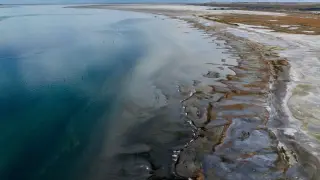
The Conversation piece by UNU researchers argues that the push to secure critical minerals for AI, EVs, wind, and digital tech risks concentrating pollution and water stress in poor communities. 2024 lithium mining alone consumed about 456 billion liters of water, with places like Chile’s Atacama using up to 65% of regional water and polluted rivers harming ecosystems. Health impacts include higher miscarriage rates, birth defects, infant mortality, cancers, and other illnesses linked to heavy metals, especially in the DRC’s cobalt and copper regions. The authors urge stronger international governance, binding supply-chain and environmental standards, local community co-governance, water-saving mining tech, better wastewater management, and greater recycling and product longevity to prevent “sacrifice zones” and ensure a just energy transition.

A UNU-INWEH report warns that surging demand for lithium, cobalt and nickel—the core of batteries and chips—drains water, contaminates rivers, hurts agriculture, and harms health in poor mining regions from the DRC to Chile and Bolivia. About 456 billion litres of water were used to extract 240,000 tonnes of lithium in 2024, while cobalt and nickel pose additional risks; 700 million tonnes of waste were generated by global rare-earth production. Although greener energy reduces emissions for consumers in the Global North, the costs fall on communities far away, prompting protests and calls for mandatory international due diligence, tighter pollution controls, and independent water monitoring as the green transition expands. Without reform, developing countries risk bearing the burden of a transition that wealthier nations benefit from.

Ambassador Jamieson Greer announced that the United States and the European Union have agreed on an Action Plan to coordinate trade policies for critical minerals, with the goal of negotiating a binding plurilateral agreement and exploring measures such as border-adjusted price floors to bolster domestic industries and downstream sectors.
As energy costs rise from the Iran conflict, Western allies push faster electrification and renewables to shield economies, but fear swapping one dependency for another as China dominates clean-tech supply chains and critical minerals. Countries weigh domestic production and foreign investment limits against rapid decarbonization, leading to a patchwork of strategies—strengthening energy security while navigating Beijing’s dominance and global markets.
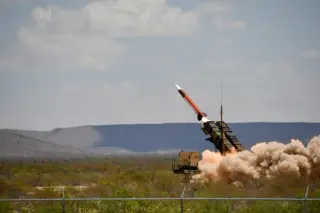
The Middle East conflict has damaged U.S. radar interceptors in the region, depleting stocks and forcing Washington to restock. A key bottleneck is gallium, a critical mineral largely processed in China, which could give Beijing leverage as the U.S. seeks to rebuild its weapons cache. Gallium prices have surged and experts warn diversifying and securing resilient supply chains will take years, prompting the U.S. to pursue allied deals (e.g., with Australia), stockpiles, and domestic refining capacity to reduce dependence on China.

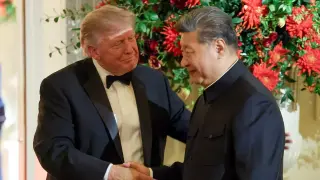
Trump and Prime Minister Takaichi unveil a broader U.S.–Japan partnership to strengthen economic security, supply-chain resilience, and regional deterrence in the Indo-Pacific, including major Japanese investments in power and natural gas, expanded critical minerals cooperation, joint AI/quantum/space initiatives, enhanced missile defense and cloud security, and visa facilitation for business travelers, while reaffirming commitments on Taiwan, North Korea denuclearization, abductee issues, and regional stability.

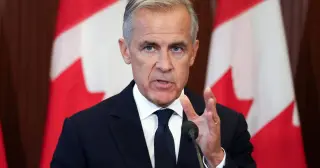
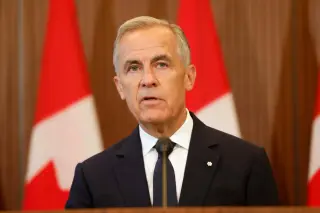
Canadian Prime Minister Mark Carney urged Canada and Australia to act as “strategic cousins,” advocating deeper cooperation on critical minerals, defence, trade, AI, and supply chains, while Australia joins the G7 critical minerals alliance. He framed the two nations as complementary middle powers countering dominant powers through enhanced collaboration and sovereign capacity, and he criticized the legality of recent Iran strikes as potentially unlawful, urging a more consultative international approach.

China unveiled a five-year plan to stabilize and reshape its commodity markets, targeting continued dominance in critical minerals, stronger domestic supply chains, expanded long-distance transmission and storage for a renewables-driven grid, and stricter carbon-intensity goals, while addressing excess capacity and food-security considerations as part of a broader shift toward a greener, more resilient economy.

India and Brazil signed a pact to boost cooperation on critical minerals and rare earths to diversify away from China, with Modi calling it a major step toward resilient supply chains and Lula stressing renewed energy and mineral collaboration. The nine additional agreements span digital cooperation and health as the two nations aim to push bilateral trade beyond $20 billion in five years. Brazil, a major critical minerals producer, supports a wide range of industries, while India looks to broaden its supplier base after engaging with the US, France, and the EU. 2024 trade data show India’s exports to Brazil at $7.23 billion (refined petroleum main export) and Brazil’s exports to India at $5.38 billion (raw sugar main export).

China has emerged as the dominant force in the global energy transition, leading in renewable deployment and low-carbon tech while the United States withdraws from climate leadership; yet China still relies on coal for reliability and tightly controls critical minerals and processing, creating security and dependency questions for Western economies as they race to catch up.

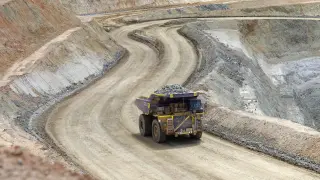
Global powers race to secure critical minerals to outflank rivals, but the DRC’s vast resources are linked to violence and suffering. The Guardian argues that deals and strategic reserves risk entrenching the country’s dependence, bypassing processing capacity and sovereignty, while artisanal miners are killed and communities bear environmental and social costs. It calls for stronger governance, transparency, and genuinely equitable partnerships to ensure energy transition goals do not come at the expense of people’s rights and stability.

The United States, the European Commission, and Japan announced plans to develop Action Plans to strengthen critical minerals supply chains, including coordinated trade policies and mechanisms such as border-adjusted price floors, with the aim of a binding plurilateral agreement and closer engagement among partners.

Washington hosts 50+ countries for a Critical Minerals Ministerial to strengthen diversified, resilient supply chains amid China’s dominance, with talks on a minerals price floor, the Project Vault stockpile, and expanding processing capacity with allies like Australia and the EU, signaling a push to onshore critical minerals and reduce reliance on a single supplier.