
Middle East Oil Exports Exceed Pre-War Levels Despite Ongoing Conflict
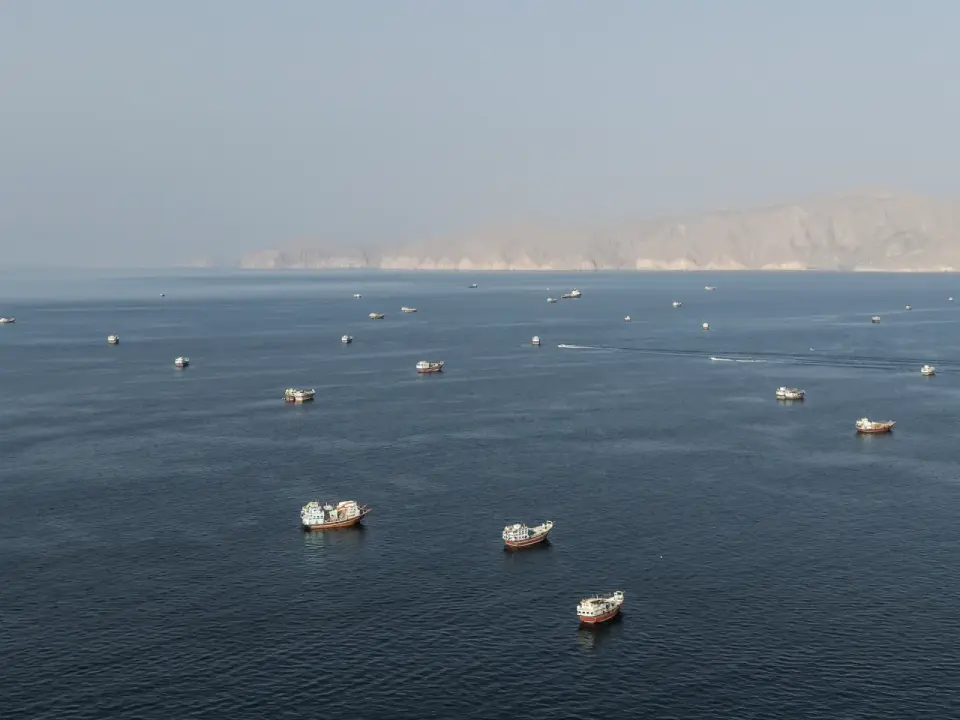
Provisional data from ship-tracking firm Kpler indicates that crude oil exports from the Middle East exceeded pre-war averages on four of the last seven days in September 2026. While overall regional exports averaged 22.4 million barrels per day (bpd) in late September, Iranian officials dispute the volume, claiming only 3-4 million bpd are moving through the Strait of Hormuz. The region has maintained high output despite active military tensions, including claims of attacks on US Navy vessels and the absence of US warships in the Gulf.
Key points
- Kpler data shows Middle East crude exports surpassed pre-war levels on September 24 and from September 27 to 29, reaching 19.5-22.5 million bpd.
- The seven-day moving average for crude exports stood at 18.5 million bpd on October 1, including transits via the Strait of Hormuz, Red Sea, and Gulf of Oman.
- IRGC commander Ali Fadavi stated that only 3-4 million bpd are moving through the US-supervised route in Hormuz, dismissing this volume as 'negligible' compared to pre-war traffic.
- Fadavi claimed for the first time that no US vessels are present in the Gulf, Strait of Hormuz, Sea of Oman, or northern Indian Ocean, labeling US warships as '100 percent vulnerable' to IRGC attacks.
- Liquefied natural gas (LNG) cargoes exiting the Strait of Hormuz reached their highest monthly level in September since February 2026.
- Iran’s parliament speaker Mohammad Bagher Ghalibaf stated on October 1 that the Strait of Hormuz would remain closed until the US accepts Tehran’s seven-day plan to reopen the waterway.
Background
Prior to the current escalation, Middle East oil exports averaged 18 million bpd between March 2025 and February 2026. Recent months saw significant logistical adjustments, including Saudi Arabia rerouting exports via ship-to-ship transfers near Sohar and using pipeline rerouting to mitigate supply fears. By early October, exports had recovered to nearly 92% of pre-war levels, though Brent crude prices remained elevated near $100 per barrel due to geopolitical risk premiums and depleted global stockpiles. Traffic through the Strait of Hormuz had previously dwindled to a trickle in mid-September, with only about a dozen vessels passing over a weekend, before rebounding in late September.
Why it matters
The divergence between shipping data and Iranian official claims highlights the complexity of measuring energy flows during active conflict. If exports are indeed exceeding pre-war levels, it suggests that alternative routes, such as the Red Sea and Gulf of Oman, are effectively compensating for disruptions in the Strait of Hormuz. This resilience in supply could stabilize global energy markets, but the persistent risk of attacks and the political standoff over the strait's closure introduce significant volatility. The absence of US naval presence, as claimed by IRGC officials, may alter the strategic balance in the region, potentially increasing the vulnerability of commercial shipping and influencing future diplomatic negotiations between Tehran and Washington.
What to watch
The situation will likely hinge on the outcome of the seven-day plan proposed by Iran for reopening the Strait of Hormuz. If the US rejects these conditions, the strait may remain closed, potentially forcing a further shift in export routes or a sharp decline in volumes. Conversely, if diplomatic efforts succeed, traffic through Hormuz may normalize. Market participants will closely monitor Brent crude prices and shipping insurance rates for signs of de-escalation or renewed conflict. The UK Maritime Trade Operations agency has reported at least one attack per day in the Strait of Hormuz or Gulf of Aden since October 2, indicating that security risks remain high despite the reported surge in export volumes.
Want the full story? Read the original reporting
Read on Al Jazeera