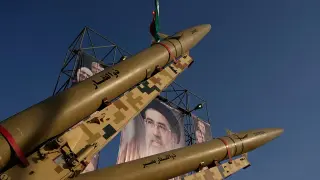
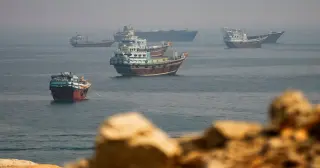
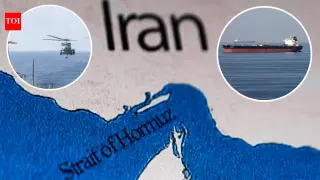
Iran’s oil minister resigned as the currency hit record lows and exports stalled, while military officials asserted control over the Strait of Hormuz despite US claims of a total blockade.
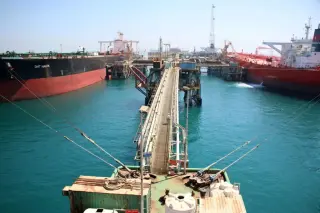
Iraq has shifted its oil export strategy by shipping two million barrels of crude through the Strait of Hormuz for the first time in decades, moving away from the traditional free-on-board model at Basra. This move aims to secure better pricing and bypass war-related risks, as Baghdad seeks to purchase its own tankers to regain control over its primary revenue source amid ongoing US-Iran tensions.
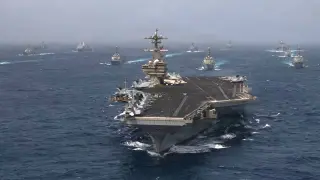
Provisional data from ship-tracking firm Kpler indicates that crude oil exports from the Middle East exceeded pre-war averages on four of the last seven days in September 2026. While overall regional exports averaged 22.4 million barrels per day (bpd) in late September, Iranian officials dispute the volume, claiming only 3-4 million bpd are moving through the Strait of Hormuz. The region has maintained high output despite active military tensions, including claims of attacks on US Navy vessels and the absence of US warships in the Gulf.
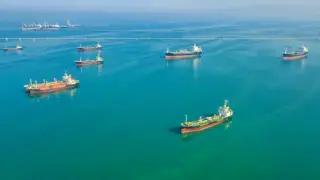
Persian Gulf oil exports have recovered to 72% of pre-war levels, with daily flows through the Strait of Hormuz reaching 7.3 million barrels. While the US reports Iran is economically 'exhausted' by its naval blockade, Tehran continues to threaten shipping and rejects US demands for a nuclear deal.
Saudi Aramco has informally told Asian refiners that crude loadings at Yanbu could resume soon as the East-West pipeline remains out; repairs could take 3-5 weeks with full capacity returning in about six weeks, easing export pressure and potentially boosting refinery runs and diesel margins in Asia.
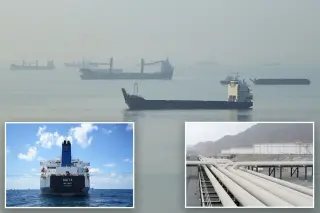
Saudi Arabia’s East-West Pipeline, a key route for moving crude to Yanbu, is expected to be largely out of service for 3–5 weeks after a drone attack blamed on Iranian-backed militias; a partial flow may resume sooner. The disruption compounds pressure on Saudi exports via alternative routes and comes as the Houthis expand control over Red Sea shipping lanes, contributing to a renewed spike in oil prices.
Saudi Arabia shut its East-West pipeline after drone strikes believed to have originated in Iraq, halting a major export artery that bypasses the Strait of Hormuz and carrying 4–5 million barrels per day. Iraq condemned the attack, Saudi Arabia has not yet retaliated, and analysts warn the disruption tightens global energy markets and could push more traffic through alternative routes like Suez/Sumed as tensions in the region, tied to Iran and the Yemen conflict, intensify.
Saudi Arabia shut down its crucial East-West crude oil pipeline as a precaution after attacks in Riyadh and Madinah, injuring several people and prompting emergency response. The Energy Ministry offered no blame attribution, though Iran-aligned Houthi militants have escalated strikes in the region, heightening concerns about oil exports routed through the Red Sea to bypass the Strait of Hormuz.
Explosions were heard in two southern Iranian locations—Kharg Island, a key oil-export hub, and the port city of Jask—on Tuesday night, with authorities offering few details on the cause or casualties. Iran's Fars News Agency reported the Jask blast, but there has been no official confirmation yet. Separately, Iran warned it would target U.S. bases if Iranian oil tankers were attacked, signaling heightened regional tensions.
Iran has gone about seven weeks without meaningful crude shipments passing through the Strait of Hormuz—the first recorded stall—as a U.S. maritime blockade blocks Tehran’s main source of foreign currency; data from Kpler, Vortexa and TankerTrackers show no Iranian cargoes reaching China since July 14, underscoring the economic strain even as diplomacy tries to revive talks on the Islamabad memorandum.
The U.S. naval blockade has dramatically reduced Iran’s crude exports, with August loadings around 260,000 bpd (down more than 80% from 1.7 million bpd a year earlier), as Washington relies on sanctions and escort operations to pressure Tehran to reopen the Strait of Hormuz; the Treasury has launched an economic onslaught to sever Iran’s financial connections, and the U.S. has redirected ships and boarded vessels to enforce the blockade, while Iran seeks leverage with Oman and continues to move oil via Asia from stockpiles.
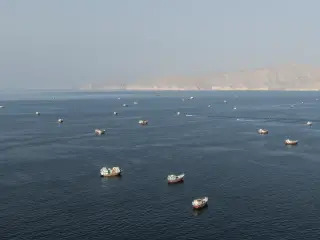
Traffic through the Strait of Hormuz remains well below recent averages, with only five vessels crossing in either direction as Iran and Oman discuss a temporary navigational corridor and mine-clearing efforts. Since late August, crossings have fallen, about 65% of Hormuz’s exports head to China, and Tehran warned the strait could stay closed unless the U.S. ends the war.
Iran has granted permission for some Iraqi oil tankers to pass through the Strait of Hormuz after Baghdad’s repeated requests, with Iraqi President Nizar Amidi saying Iraq’s territory will not be used to attack other states; the move comes as Iraq seeks to expand export routes and Baghdad and Tehran discuss arrangements amid broader regional tensions and ongoing US-Israel pressure.
For the past two months, the US has secretly guided 15–20 tankers per night through a southern channel of the Strait of Hormuz, moving about 10 million barrels of oil daily and sustaining global supply despite Iran’s closure and ongoing conflict. The operation, run from Fort Bragg with Gulf partners, involves inbound/outbound convoys, empty-tanker movements loading oil in Gulf ports, and air protection against drones and missiles. Iran’s surveillance is degraded, limiting traffic monitoring, though attacks continue; volumes remain below pre-war levels but still help ease global energy pressures.
U.S. officials warn of intensified economic pressure on Iran with new sanctions slated for Aug. 24, while the UAE moves to phase out trade and financial ties. Iran faces currency shortages and import bottlenecks and is pursuing alternative trade routes and partners (including Iraq and BRICS) to blunt sanctions, including shifting oil exports and seeking non-Western financial corridors, in a broader regional security drama with Houthis and Iraqi militias continuing to influence the dynamics.