
New studies show data centers raise wholesale power prices, but impact on household bills remains debated
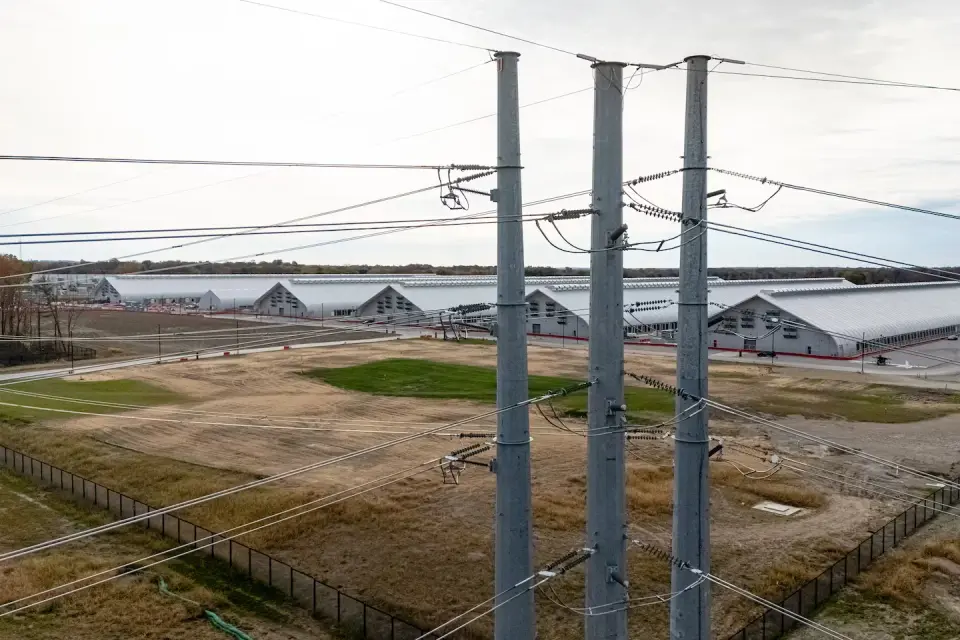
A Federal Reserve Bank of Dallas working paper estimates that data center demand increased national wholesale electricity prices by 6.9% in 2025, with a larger 14.7% impact projected for the Arizona-New Mexico region by 2028. While the Washington Post notes that data centers may have only a marginal impact on residential bills, other analyses suggest rising wholesale costs and infrastructure demands could eventually affect consumers. Senator Martin Heinrich has introduced bipartisan legislation to require large data centers to cover the costs of transmission upgrades, aiming to prevent ratepayers from subsidizing grid expansion for high-density computing facilities.
Key points
- A Federal Reserve Bank of Dallas working paper, revised October 9, 2026, estimates data centers raised national wholesale electricity prices by 6.9% in 2025.
- The study projects that data center demand could increase wholesale prices in the Arizona-New Mexico region by 14.7% by 2028, compared to a scenario without such demand.
- U.S. Senator Martin Heinrich introduced the Bipartisan American Affordability and Jobs Act of 2026 on September 30, proposing that data centers pay for transmission upgrades and incremental infrastructure costs.
- The legislation would require facilities with demand of at least 20 megawatts to cover generation, storage, and distribution costs, with implementation dependent on federal rulemaking and state regulatory action.
- A University of Illinois report found that while data centers generate significant property tax revenue and jobs, their electricity demand contributes to rising rates across regional grids, affecting residents even in communities without local facilities.
Background
In October 2026, a Consumer Reports survey indicated that rising electricity costs were forcing one in five Americans to cut food spending, with many consumers blaming data center demand and utility profits. The current developments provide specific economic modeling and legislative responses to the concerns raised in that survey, shifting the focus from general consumer hardship to specific wholesale market impacts and proposed federal cost-allocation rules.
How outlets are covering it
The Washington Post highlights a study suggesting data centers have had only a marginal impact on residential electricity prices, contrasting with the Federal Reserve Bank of Dallas working paper cited by Organ Mountain News, which projects significant increases in wholesale prices. RTO Insider notes that even if data centers do not increase peak demand, they can drive up wholesale prices by shifting demand toward more expensive generation resources. The University of Illinois report, cited by FOX Illinois, emphasizes that while data centers bring local economic benefits like tax revenue and jobs, their electricity demand raises costs across regional grids, affecting residents in areas without data centers. These perspectives differ on the direct link between data center growth and household bills, with some focusing on wholesale market dynamics and others on retail rate structures and infrastructure costs.
Why it matters
The debate over data center electricity costs is central to national energy policy and consumer affordability. If data centers are responsible for rising wholesale prices, it could lead to higher retail rates for all consumers unless new legislation shifts the financial burden to the facilities themselves. The proposed federal legislation could reshape how utilities recover infrastructure costs, potentially affecting the pace of data center expansion and the financial stability of regional power grids. Understanding these dynamics is crucial for policymakers, utility regulators, and consumers as the U.S. continues to expand its data center infrastructure to meet growing demand for computing power.
What to watch
The Bipartisan American Affordability and Jobs Act of 2026 must pass Congress and undergo federal rulemaking by the Federal Energy Regulatory Commission before it can take effect. State regulators and utility rate proceedings will also play a role in implementing cost-allocation rules. The Federal Reserve Bank of Dallas working paper is preliminary, and its findings may be updated as more data becomes available. Illinois lawmakers are expected to consider new data center legislation during the veto session, potentially addressing transparency and cost-sharing issues at the state level. The impact of data centers on electricity prices will continue to be monitored as new facilities come online and wholesale market dynamics evolve.
- Everyone blames data centers for high electricity prices. But these are the real reasons. The Washington Post
- Even if Additional Capacity Resources Aren’t Needed, New Data Loads Are Likely to Increase Market Prices RTO Insider
- Data centers raise Southwest power costs, study finds as Heinrich seeks ratepayer protections Organ Mountain News
- Could data centers drive up your electric bill? FOX Illinois
- Growth shouldn’t come at customers’ expense The River Reporter
Want the full story? Read the original reporting
Read on The Washington Post