
VLCC Freight Rates Shatter Records as Hormuz Crisis and Chinese Restocking Drive Unprecedented Market
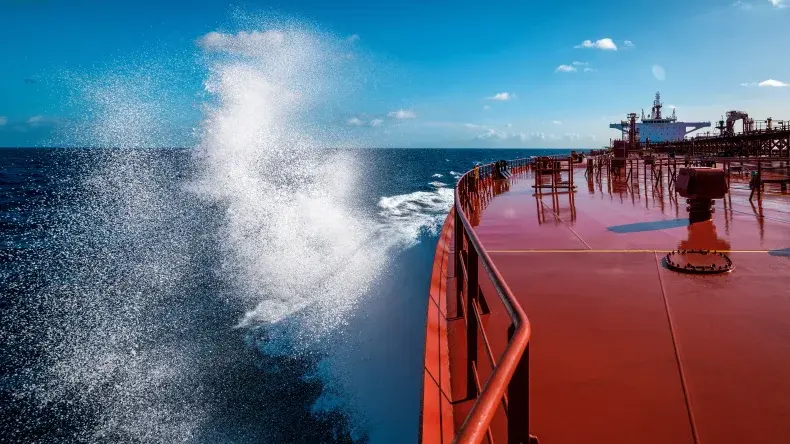
Spot rates for Very Large Crude Carriers (VLCCs) have surged to historic highs, with the Middle East Gulf-China route exceeding $1 million per day. This unprecedented spike is driven by severe supply constraints from Iranian attacks on the Strait of Hormuz, the shutdown of the Saudi Yanbu pipeline, and a resurgence in Chinese crude imports. While rates are currently limited by refining margins, the market shows no sign of easing, with owners benefiting from massive tonnage inefficiencies and strategic vessel consolidation by Sinokor.
Key points
- The Baltic Exchange TD3C index reached $982,072 per day, while Clarksons reported rates exceeding $1 million per day for the Middle East Gulf-China route.
- Transits through the Strait of Hormuz are at their most dangerous since the start of the conflict, with only Sinokor and a few other owners currently operating in the zone.
- The Saudi East-West pipeline feeding the Red Sea port of Yanbu was shut down after multiple attacks, disrupting a key workaround for Gulf oil exports.
- Chinese importers are aggressively rebuilding crude inventories, driving demand across all major VLCC routes, including the Atlantic basin.
- Sinokor has purchased 72 VLCCs since December 2025 for over $6 billion, using its fleet dominance to keep vessels idle and suppress supply.
Background
This market surge follows a period of elevated oil prices and inflation concerns noted in late August 2026. The current crisis is a continuation of the broader geopolitical tensions in the Middle East, specifically the US-Iran conflict that has disrupted global energy logistics. Previous archive coverage highlighted how oil price surges impacted financial markets, but the current VLCC spike is distinct, driven by physical supply constraints rather than just price speculation.
How outlets are covering it
Lloyd's List emphasizes the 'unprecedented' nature of the rates, highlighting the physical dangers of the Hormuz Strait and the inefficiencies of the Gulf of Oman shuttle tanker workaround. They note that rates are spiking worldwide, not just in the Middle East, due to the ton-mile effect of longer voyages. The Maritime Executive, citing Poten & Partners, provides historical context, comparing the current spike to the 2008 and 2020 rate booms. They warn that such high rates often precede a bust, especially given the high orderbook (40% of the fleet), but also note that owners should capitalize on the current market as it may not recur. Both sources agree on the role of Sinokor's consolidation strategy in tightening supply, but Lloyd's List places greater emphasis on the immediate impact of the Yanbu pipeline shutdown and Chinese restocking, while The Maritime Executive focuses on the long-term sustainability and potential for a subsequent downturn.
Why it matters
The surge in VLCC rates signals a severe disruption in global crude oil logistics, which could lead to higher energy prices for consumers. The inability to efficiently move oil from the Middle East to Asia, combined with the shutdown of key pipelines, threatens to exacerbate global inflation. The market's resilience, driven by wide refining margins, suggests that these high freight rates may persist until demand destruction occurs, potentially impacting the global economy and energy security for months to come.
What to watch
Analysts expect rates to remain high as long as refining margins (crack spreads) remain wide enough to justify the freight costs. The market will likely continue to tighten until crude prices rise enough to make end-user demand unaffordable, triggering demand destruction. The future of the VLCC market will depend on the resolution of the Hormuz crisis, the reopening of the Yanbu pipeline, and the pace of Chinese restocking. If the current situation persists, owners may see even higher rates, but a sudden resolution could lead to a rapid decline in freight values.
- Why VLCC rates just went ballistic and how they could go even higher Lloyd's List
- Oil tanker rates hit record highs following Iran, US shipping attacks Reuters
- Poten: VLCC Rates Hit Unprecedented Levels Amidst Mideast Conflict The Maritime Executive
- Surging Tanker Rates Signal a Deepening Global Energy Crisis Bloomberg.com
- Oil tanker rates reach record highs on surging risks to Middle East shipping (FRO:NYSE) Seeking Alpha
Want the full story? Read the original reporting
Read on Lloyd's List