
ITER Fusion Reactor Delays as Chlorine Corrosion Forces Three-Year Thermal Shield Overhaul
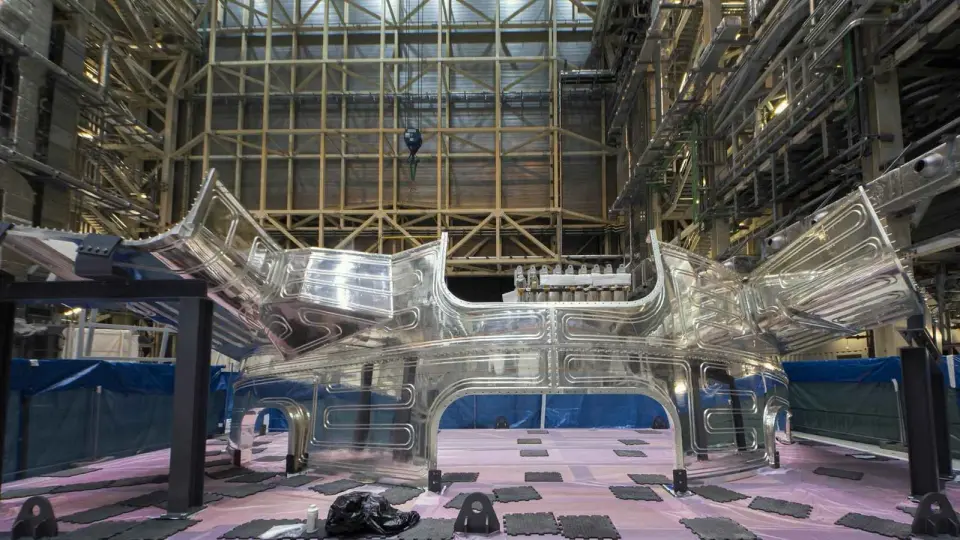
The ITER fusion project in southern France completed a three-year repair of its vacuum vessel thermal shield after chlorine trapped during cleaning caused stress corrosion cracks in cooling pipes. Workers removed 2,205 pounds of silver plating and cut 6.8 miles of piping to replace damaged sections. The fix, finished in July 2026, was completed ahead of schedule by contractor INOX-CVA, though the incident highlights how minor chemical residues can cause major delays in complex fusion hardware.
Key points
- Chlorine residue from a hydrochloric acid cleaning bath remained trapped near welds on the thermal shield panels, leading to stress corrosion cracking in the cooling pipes.
- The deepest crack measured 0.09 inches (2.2 millimeters) across the pipe wall, detected via helium leak tests in November 2021 before installation.
- Repair involved grinding off 2,205 pounds of silver plating and cutting 6.8 miles of cooling pipe out of the total 14 miles installed on the panels.
- The three-year repair program, launched in 2023, was completed in July 2026 ahead of schedule by contractor INOX-CVA.
- The fix required removing a module from the assembly pit, replacing pipes, and polishing panels to restore heat-reflective properties without re-plating.
Background
This incident underscores the precision required in fusion reactor assembly, where even minor chemical residues can cause cascading failures. Previous coverage noted ITER’s progress in assembling vacuum vessel sectors, with sector #1 installed in July 2026 and sector #3 handed over in September 2026. The thermal shield’s role is critical: it reflects heat away from superconducting magnets operating at 4 Kelvin, preventing cryogenic system overload. The repair method—grinding silver off and polishing steel—avoids re-introducing chlorine, a more elegant solution than re-plating.
Why it matters
The ITER project, a 35-nation, multibillion-dollar effort, faces persistent delays due to unforeseen technical issues like this. A single overlooked cleaning step caused a three-year halt to thermal shield installation, illustrating how small oversights can have massive consequences in complex, high-stakes engineering. The repair’s success, however, shows ITER’s ability to adapt and recover, with the contractor finishing ahead of schedule. This incident also highlights the difficulty of fixing coolant leaks in sealed tokamaks, where access is limited and errors are costly.
What to watch
ITER is now focusing on installing sector module #9, which is on the critical path for the final sector. The module’s thermal shield pipes and intercoil structures are being connected, with transfer to the assembly pit planned for early December 2026. Meanwhile, toroidal field magnet testing continues, with coil #17 undergoing a 34,000-amp test after resolving oxidation issues. The 68,000-amp tests will begin with coil #19 after structural reinforcement.
Want the full story? Read the original reporting
Read on Autonocion.com