Tag

Fusion Energy

All articles tagged with #fusion energy

Eni bets fusion will power its next refinery ambitions
energy2 days ago

Eni bets fusion will power its next refinery ambitions

Eni is expanding into nuclear fusion, aiming to commercialize a European fusion plant by the early 2040s via a partnership with Commonwealth Fusion Systems, and leveraging its hydrogen/hydrocarbon know-how. The plan includes a US plant expected in the 2030s and a European second site, plus a fuel-cycle venture with the UK Atomic Energy Authority, as it joins a broader industry race to commercialize fusion—though the technology has yet to prove it can scale commercially.

Diamond melts under extreme pressure, aligning with theory and boosting fusion energy prospects
space8 days ago

Diamond melts under extreme pressure, aligning with theory and boosting fusion energy prospects

LLNL researchers used the Omega Laser Facility to shock-compress synthetic diamond up to about 1 terapascals, directly observing melting via X-ray diffraction and finding the diamond retains its cubic structure all the way to melting. The results resolve a ~20-year gap between experiments and theory, show that a weaker initial shock could fully melt diamond in NIF implosions to improve fuel compressibility and energy yield, and provide tighter constraints on carbon behavior under extreme pressures relevant to ice-giant interiors (diamond rain).

Trump Media bets on fusion amid heavy losses
business15 days ago

Trump Media bets on fusion amid heavy losses

Trump Media & Technology Group posted a Q2 loss of $238m on $1.7m revenue, lifting its H1 2026 deficit to $644m as it blames bitcoin price declines; it is pursuing a more-than-$6bn merger with TAE Technologies to commercialize fusion by 2031, while expanding fast-access post fees for Truth Social posts to investors; the stock has fallen about 30% this year and Truth Social usage is down, with Devin Nunes stepping down and Trump’s trust holding a large stake in the company.

Graphene nanoribbons eye role as radiation sensors for fusion reactors
energy1 month ago

Graphene nanoribbons eye role as radiation sensors for fusion reactors

US researchers demonstrate that graphene nanoribbons can survive gamma irradiation with their lattice intact and still produce a measurable electrical signal, enabling GNR-based sensors that could operate closer to a fusion reactor's first wall, improving monitoring and potentially reducing shutdowns; the work used nine-atom-wide armchair GNRs integrated into field-effect transistors and analyzed with Raman spectroscopy after exposure.

AI-Driven Fusion Design Could Break the Costly Bottleneck
technology2 months ago

AI-Driven Fusion Design Could Break the Costly Bottleneck

Beijing startup VeloAlpha claims its FusionAlpha AI-powered simulation platform can test fusion reactor designs 100–10,000x faster than current codes while keeping errors under 5%. If independently validated, this could dramatically reduce the industry’s costly trial-and-error cycle and mirror the semiconductor field’s move from hardware testing to software-driven design. However, practical commercial fusion remains years away and validation is still pending.

Moon Helium-3: The expensive hunt for a future fusion fuel
science2 months ago

Moon Helium-3: The expensive hunt for a future fusion fuel

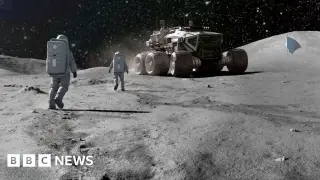
Helium-3, a costly isotope used in cooling quantum computers and potentially powering future fusion reactors, is currently produced mainly from tritium decay in nuclear weapons; as demand grows, researchers look to lunar regolith as a new source. Startups like Interlune and Astrotech are developing lunar mining concepts with targets around 2027, but extracting helium-3 on the Moon faces uncertainty over concentrations and economics. Earth-based alternatives and ongoing research keep the prospect speculative for now.

The World’s Biggest Fusion Bet Heads Toward Reality in France
technology3 months ago

The World’s Biggest Fusion Bet Heads Toward Reality in France

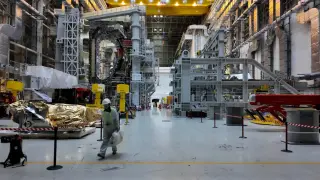
In southern France, ITER—the world’s largest fusion reactor and a $22 billion multinational project—strives to sustain 150-million-degree plasma in a tokamak using superconducting magnets, aiming to prove fusion can provide abundant, emission-free energy; despite delays, heat-shield cracks, and a $5 billion cost overrun, ITER’s open-science model and global collaboration are shaping the path for private fusion startups.

US sets lighter path for fusion power regulation
technology3 months ago

US sets lighter path for fusion power regulation

Federal regulators are closing public comments on a proposed fusion-energy rule, with final regulation expected this fall; the framework treats fusion as different from fission, aiming for a much lighter oversight that could even exempt fusion from NRC jurisdiction while state regulators supervise facilities. Industry leaders say this move is a pivotal step toward commercial fusion in the 2030s–2040s, lowering financial risk even as scientific and engineering hurdles remain.

China Demonstrates Plasma Regime That Cuts Divertor Heat and Eliminates ELMs
science3 months ago

China Demonstrates Plasma Regime That Cuts Divertor Heat and Eliminates ELMs

Researchers on the EAST tokamak demonstrated a Detached divertor and Turbulence-dominated Pedestal (DTP) regime by precise light impurity seeding, achieving partial divertor detachment, full ELM suppression, and a boosted pedestal temperature with sustained confinement for about one minute, offering a path to reduce divertor heat while maintaining strong fusion performance.

Seven Tech Frontiers Set to Define 2026
technology7 months ago

Seven Tech Frontiers Set to Define 2026

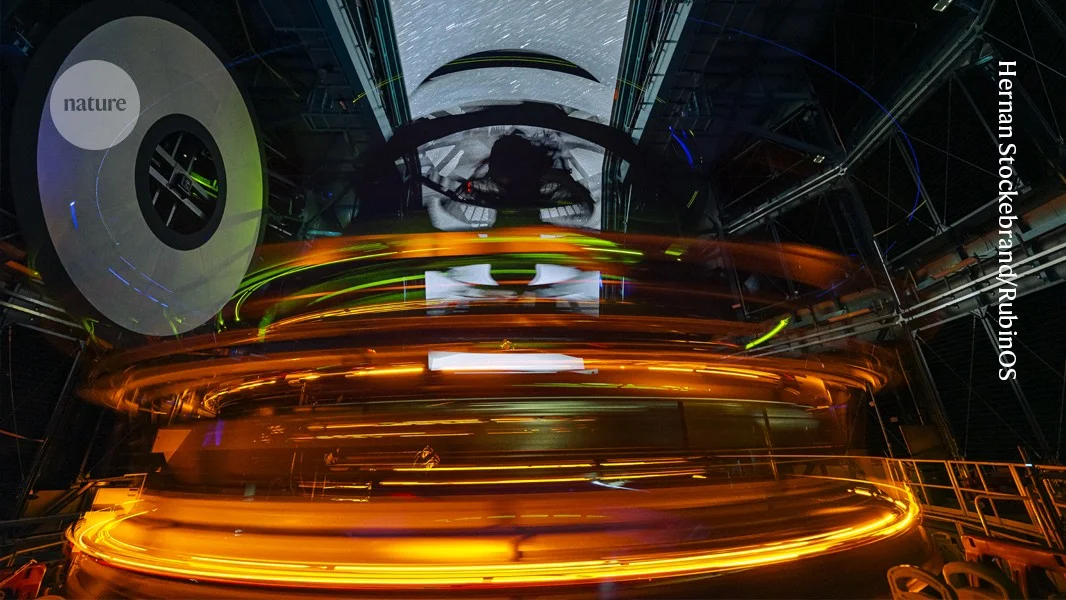
Nature highlights seven technologies set to shape 2026, from xenotransplantation using CRISPR-edited animal organs to reduce immune rejection, to AI-powered weather forecasting and climate modelling, a renewed push in next-generation nuclear power including small modular reactors and fusion, and advances in light-microscopy brain mapping alongside a massive Vera C. Rubin Observatory sky survey that will catalog billions of celestial objects over a decade—portending gains in medicine, energy, climate science, neuroscience, and astronomy.