
IEA: $240bn Investment Could End Global Dependence on Strait of Hormuz
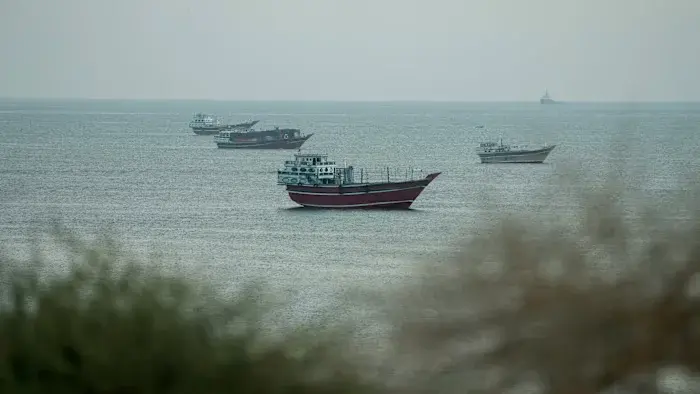
The International Energy Agency (IEA) states that the world can reduce reliance on the Strait of Hormuz by investing $240 billion in alternative pipelines and energy sources. This shift follows the Iran war, which disrupted 20% of global oil and gas flows. The agency projects that Hormuz traffic could drop from 20 million to 2 million barrels per day by 2035, accelerating a global move toward electrification and domestic energy production.
Key points
- The IEA estimates that $240 billion in new investments, including $40 billion for pipelines and $200 billion for oilfields, could bypass the Strait of Hormuz.
- The Iran war caused cumulative losses of 2.8 billion barrels of oil and 60 billion cubic meters of gas, marking the largest energy shock in history.
- Saudi Arabia’s East-West pipeline saved the country $60 billion in revenue by rerouting exports to the Red Sea during the conflict.
- Under an accelerated response scenario, global oil demand could fall to 85 million barrels per day by 2050, driven by electrification and efficiency measures.
- LNG markets face uncertainty as Asian buyers hesitate to commit to new import terminals, potentially leaving 260 billion cubic meters of capacity surplus by 2035.
Background
This development follows the IEA’s earlier warnings that the Iran war has permanently reshaped global energy security. Previous reports noted that while Gulf exports have recovered to over 80% of pre-war levels, confidence in the Strait of Hormuz remains fragile. The current outlook coincides with COP31 climate talks, where nations debate balancing fossil fuel security with decarbonization goals.
How outlets are covering it
The Financial Times emphasizes the feasibility of bypassing the strait through massive investment, highlighting Saudi Arabia’s successful rerouting of oil. The New York Times frames the conflict as a permanent break from pre-war energy norms, stressing the shift toward domestic power generation. NBC News focuses on the scale of the disruption, noting that the conflict could cut world oil demand by more than 4% by 2035 if governments accelerate electrification. All sources agree that the energy landscape has fundamentally changed, but they differ on the emphasis: the FT highlights infrastructure costs, the NYT highlights structural change, and NBC highlights demand reduction.
Why it matters
The IEA’s assessment signals a potential end to the era of heavy reliance on Middle Eastern oil transit. If governments accelerate energy security measures, global oil and gas demand could drop significantly, impacting billions of dollars in planned LNG investments. This shift could reshape global trade routes, energy policies, and climate strategies, as nations prioritize domestic production and electrification over imported fossil fuels.
What to watch
Investors and policymakers will monitor the pace of pipeline construction in Saudi Arabia, the UAE, and Iraq. The IEA will track whether Asian governments commit to new LNG import terminals or pull back from foreign gas dependence. Oil prices may remain volatile as markets adjust to potential supply gluts and shifting demand patterns.
- Energy markets can ‘manage without’ the Strait of Hormuz, says IEA Financial Times
- How the War in Iran Will Remake the Global Energy Order The New York Times
- Middle East conflict triggers biggest disruption ever to global oil trade, IEA warns NBC News
- Energy markets are not going back to the way they were, says Fatih Birol The Economist
- The Iran War Could Permanently Slash Reliance on Hormuz, IEA Says WSJ
Want the full story? Read the original reporting
Read on Financial Times