
IEA Warns Diesel Shortage Will Persist Until Mid-2027 Despite Russian Deal
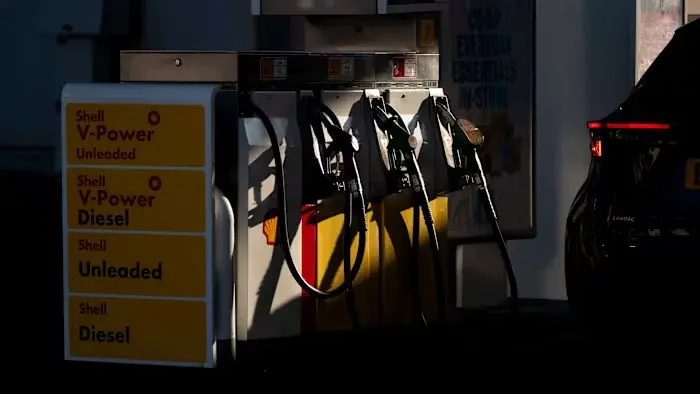
The International Energy Agency (IEA) warned that global diesel prices will rise again in Europe, Africa, and Latin America due to a shortage expected to last until mid-2027. Driven by the Middle East war and Ukrainian drone strikes on Russian refineries, global stockpiles have been depleted. While wholesale prices hit record highs of $220 per barrel in Europe and the US, the IEA noted that a recent US-Russia deal for 300,000 metric tons of diesel is unlikely to materially alter market conditions due to limited Russian refinery capacity. Global oil demand is forecast to drop by 2.6 million barrels per day in 2026, with significant contractions in Africa and Southeast Asia, though Latin America remains resilient.
Key points
- The IEA projects a global diesel shortage until mid-2027, with replenishment of lost inventories unlikely before the second half of 2027.
- Wholesale diesel prices reached record highs of $220 per barrel in Europe and the US, while US retail prices averaged $6.28 per gallon.
- Global diesel exports fell by 700,000 barrels per day year-on-year in September, with a 1.3 million barrel per day loss from Russia and the Middle East.
- The IEA stated that the US-Russia deal for 300,000 metric tons of diesel is unlikely to have macroeconomic significance due to Russian refinery constraints.
- Global oil demand is expected to fall by 2.6 million barrels per day in 2026, with Africa seeing a 2.5% contraction and Southeast Asia deliveries dropping 3.7%.
- Renewed attacks in the Gulf, including Houthi strikes on Saudi Aramco facilities, threaten the fragile recovery of oil supply routes.
Background
This development follows the G7 agreement on October 2 to release 100 million barrels of fuel from strategic reserves to avert a US diesel export ban. The IEA had previously released 325 million barrels under a March emergency plan. Recent reports indicate that while Gulf oil exports have recovered to over 81% of pre-war levels, prices remain elevated due to security threats in the Strait of Hormuz and high shipping costs. The current shortage is a continuation of the energy crisis triggered by the US-Israeli war on Iran and Ukrainian attacks on Russian energy infrastructure.
How outlets are covering it
The Financial Times and CNBC both report on the IEA’s warning of a prolonged diesel shortage, but they emphasize different aspects. The Financial Times highlights the regional impacts, noting that Africa’s oil demand reversed from 3.4% annual growth to a 2.5% contraction, while Latin America remained resilient with a 1.9% demand rise. It also mentions a fuel shortage in Bali, Indonesia. CNBC focuses more on the market mechanics, detailing the 700,000 barrels per day drop in diesel exports and the IEA’s view that the Russian diesel deal is insignificant. Both sources agree that the shortage will last until mid-2027, but the Financial Times provides more detail on the specific regional demand shifts, while CNBC emphasizes the broader oil demand destruction and the fragility of the supply recovery due to Gulf attacks.
Why it matters
The prolonged diesel shortage will impact global economic activity, as diesel is deeply intertwined with transportation and industry. Rising prices could lead to inflation and reduced consumer spending, particularly in regions dependent on imported fuel like Africa. The geopolitical tensions in the Middle East and the US-Russia deal highlight the complex dynamics of global energy markets, where political decisions may not translate into immediate price relief. The situation also underscores the vulnerability of global supply chains to geopolitical conflicts and the need for strategic reserve management to stabilize markets.
What to watch
The IEA expects refinery throughputs to recover into year-end, but gasoil supply will still fall short of meeting demand in the fourth quarter of 2026. The market will closely monitor the impact of the US-Russia diesel deal and any renewed attacks in the Gulf, which could derail the supply recovery. Analysts will also watch for changes in global oil demand, particularly in emerging markets, and the effectiveness of strategic reserve releases in stabilizing prices. The situation in Southeast Asia and Africa will be critical indicators of the broader impact of the diesel shortage.
- Global diesel prices set to rise again, warns IEA Financial Times
- Diesel squeeze set to last well into 2027 as Iran war disrupts supply, IEA says CNBC
- Oil Market Report - October 2026 IEA - International Energy Agency
- Global Diesel Squeeze to Drag Into 2027, IEA Says WSJ
- Global diesel shortages could persist well into 2027, IEA says Reuters
Want the full story? Read the original reporting
Read on Financial Times