
NRC Grants Landmark Construction Permit for Dow’s Four-Unit Texas Nuclear Plant
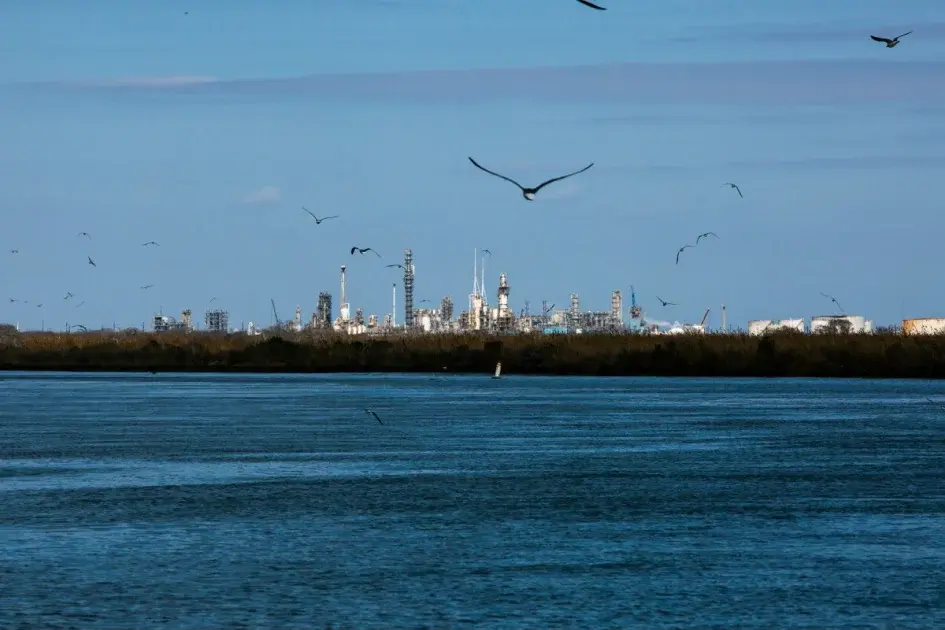
The Nuclear Regulatory Commission (NRC) has issued a construction permit for the Long Mott Generating Station, a facility planned to host four next-generation nuclear reactors at Dow’s Seadrift, Texas, petrochemical complex. Developed by X-energy, the Xe-100 reactors are small modular units designed to provide electricity and high-temperature steam for industrial use. The approval, finalized in November 2026, marks the first construction permit for a high-temperature gas-cooled reactor in the US in nearly 60 years. While Dow has not yet made a final decision to proceed with construction, the permit allows the company to advance engineering and supply chain preparations, with potential construction starting before 2030. The project is part of the US Department of Energy’s Advanced Reactor Demonstration Program, aiming to revitalize the nuclear sector through factory-built, modular designs that eliminate the need for traditional concrete containment structures.
Key points
- The NRC approved construction for four 80-megawatt Xe-100 reactors at Dow’s Seadrift Operations complex on the Texas Gulf Coast.
- The project, known as the Long Mott Generating Station, is a flagship of the US Department of Energy’s Advanced Reactor Demonstration Program.
- The reactors use helium gas cooling and TRISO-X fuel, which proponents claim makes meltdown physically impossible, eliminating the need for massive concrete containment domes.
- Dow has not yet made a final investment decision, but construction could begin before 2030 if approved, with startup expected in the early 2030s.
- The NRC completed its safety review in 18 months, citing executive orders aimed at accelerating energy sector approvals.
Background
The US nuclear industry has struggled to build new plants in the last three decades, with only one new conventional reactor completed recently. Federal authorities have recently pushed for a revival through advanced reactor designs, issuing its first permit for an advanced test reactor in 2023 and a commercial reactor in March 2026. This project follows a 2023 joint development agreement between Dow and X-energy and a 2025 pledge by Dow to support tripling global nuclear capacity by 2050. Background from our archive notes that TRISO-X, the fuel manufacturer, completed the core structure of its Tennessee fuel plant in October 2026, targeting production in 2028, though it faced schedule delays and quality concerns.
How outlets are covering it
Supporters, including X-energy CEO J. Clay Sell and Dow officials, view the permit as a major milestone that validates the safety and efficiency of advanced nuclear technology. They argue that the new fuel design provides 'functional containment' that is safer and cheaper than traditional concrete structures. Critics, however, express deep skepticism. Diane Wilson of San Antonio Bay Waterkeeper called the project 'outrageous,' citing the indefinite on-site storage of spent nuclear waste in a community without a permanent national disposal site. Edwin Lyman of the Union of Concerned Scientists criticized the NRC for approving construction before fully resolving safety questions, particularly regarding the fuel's ability to contain radioactive materials in severe accidents. Lyman noted that X-energy has faced quality issues at its Tennessee fuel factory and that the NRC’s expedited timeline, driven by executive orders, may have compromised rigorous safety reviews. The Texas Tribune noted a financial disclosure that X-energy has been a supporter of the outlet, while World Nuclear News highlighted the regulatory firsts achieved, including the first approval of a pebble-bed core and online refueling design in the US.
Why it matters
This permit represents a pivotal shift in US nuclear policy, moving from large, centralized power plants to distributed, industrial-scale small modular reactors. If successful, the Long Mott project could serve as a template for other industries, including data centers and manufacturing, to generate clean energy on-site. It also tests the limits of the NRC’s new, accelerated licensing framework, which prioritizes speed over traditional, lengthy safety reviews. The outcome will influence future investments in advanced nuclear technology and the regulatory standards for next-generation reactors in the US and globally.
What to watch
Dow is expected to consider a preliminary investment decision in 2027. If the project proceeds, construction could begin before 2030, with reactor startup in the early 2030s. The NRC will continue to review the operating license application, which is required before the reactors can be fueled or operated. X-energy and Dow will also work on maturing the supply chain for long-lead components. The outcome of the fuel testing campaign at Idaho National Laboratory, which may take years, will be critical in validating the safety claims of the TRISO-X fuel.
- Dow gets approval for four advanced nuclear reactors in Texas The Texas Tribune
- 3 Nuclear Stocks Retail Investors Are Watching After The X Energy SMR Approval Yahoo Finance
- US issues landmark construction permit for Texas SMR plant World Nuclear News
- Approval of Construction of Four Containment-Free Reactors is Another Clear Sign of a Broken Nuclear Regulatory Commission Union of Concerned Scientists
- Is nuclear finally moving faster? Latitude Media
Want the full story? Read the original reporting
Read on The Texas Tribune