
German Pool Proves Vertical Solar on Fences and Pergolas Can Power Pumps
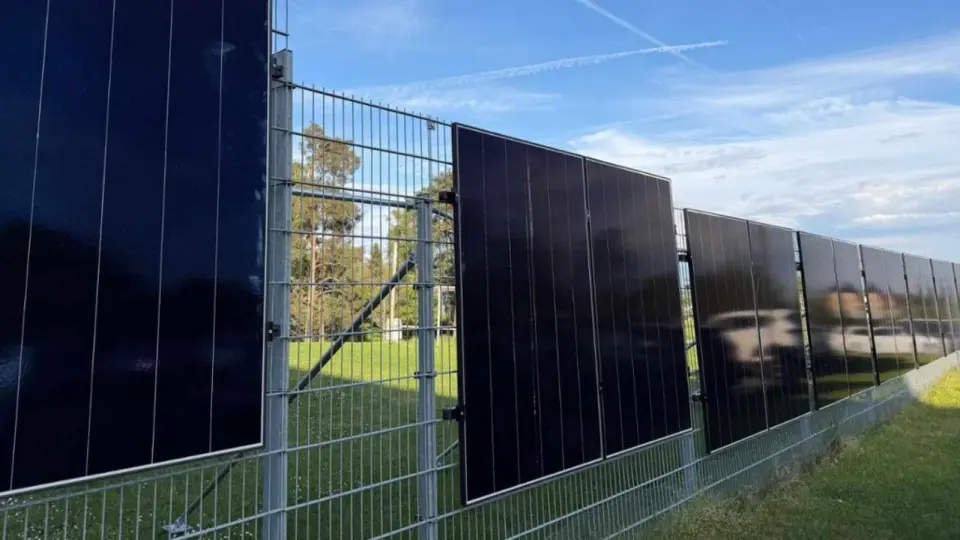
Stadtwerke Oberursel installed 180 solar panels on three pergolas and 64 bifacial panels on a fence at the TaunaBad public pool in Oberursel, Germany. The setup generates an estimated 107,000 kWh annually, powering pool pumps and filtration systems directly. The fence panels capture reflected light from the parking lot, while the pergolas provide shade for the children's area. The project avoids grid reliance and reduces carbon emissions by 30.1 metric tons per year.
Key points
- The TaunaBad pool in Oberursel, Germany, features 180 solar panels on three pergolas and 64 bifacial panels on a fence, totaling over 107 kWp.
- The installation is forecast to produce 107,000 kWh annually, with the fence panels contributing 38,000 kWh and the pergolas 69,500 kWh.
- Bifacial fence panels capture direct sunlight and reflected light from the adjacent parking lot, optimizing energy capture during early morning and late afternoon hours.
- The generated electricity powers the pool's pumps and filtration systems directly, eliminating the need for battery storage due to matching demand and supply windows.
- The project avoids 30.1 metric tons of CO2 emissions annually and was partially funded by Hessen’s state climate protection program.
- The outdoor pool season ended September 13, 2026, after serving approximately 95,000 visitors, with the new pergolas becoming popular shaded areas.
Background
This project follows similar initiatives in Germany, such as solar panels installed along Frankfurt Airport runways, which utilize vertical surfaces to maximize energy capture. It contrasts with large-scale projects like Disneyland Paris, where solar output is sold to the grid rather than consumed on-site. The TaunaBad installation highlights the potential for integrating solar energy into existing municipal infrastructure, particularly in areas with limited rooftop space.
Why it matters
The TaunaBad project demonstrates that unconventional solar installations, such as vertical fence panels and pergolas, can effectively power local infrastructure without grid reliance. By leveraging bifacial technology and existing structures, municipalities can reduce carbon emissions and energy costs while enhancing public amenities. This approach offers a scalable model for other regions with limited rooftop space, emphasizing the importance of creative energy solutions in urban planning.
What to watch
The TaunaBad pool will reopen indoors on September 14, 2026, after a summer of retiling. Stadtwerke Oberursel will monitor the solar installation's performance over the coming year to validate the forecasted energy output and carbon reduction claims. The success of this project may inspire similar initiatives in other municipalities seeking to integrate renewable energy into public spaces.
Want the full story? Read the original reporting
Read on Autonocion.com