
Ceres Report: Data Center Power Use Outstrips California’s Urban Water Demand
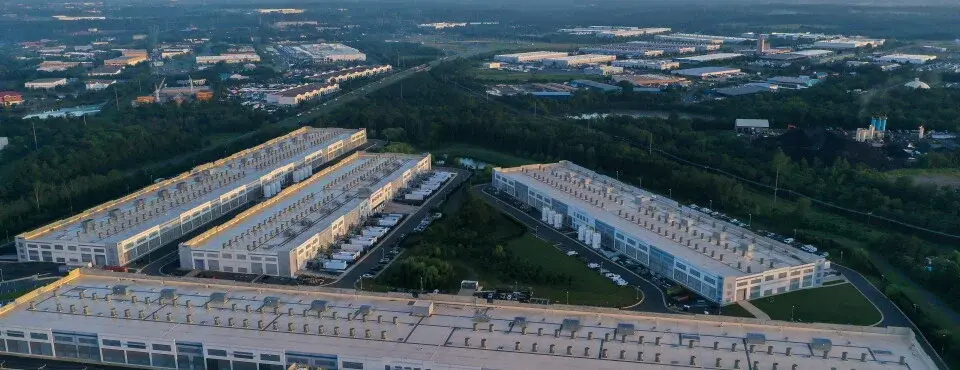
A new report by the think tank Ceres reveals that electric power generation for data centers in the seven most concentrated US states consumes 3.4 trillion gallons of freshwater annually. This volume exceeds the average annual urban water demand of California and equals 12 times the combined usage of Los Angeles, Phoenix, and Washington, DC. While Ceres focuses on total water withdrawals, including water returned to rivers, other experts argue that consumptive use is a more accurate measure of environmental impact. The report highlights that 66% of power plants in these states face medium to high water stress, prompting concerns about local supply risks despite national trends showing declining overall water use in some states due to coal plant retirements.
Key points
- Ceres estimates data center power generation uses 3.4 trillion gallons of water annually in seven key US states.
- This volume exceeds California’s average urban water demand and equals 12 times the combined use of three major US cities.
- 66% of power plants in these states are exposed to medium or high water stress.
- Virginia’s overall water use dropped 5% from 2019 to 2024, primarily due to coal plant retirements, despite data center growth.
- Arizona State University researchers argue consumptive use, not withdrawal, better reflects actual water loss from local systems.
Background
Recent debates over data center development have intensified across the US, particularly in water-scarce regions like Texas, Arizona, and New Mexico. Previous coverage noted that while data centers account for a small percentage of total water use, their impact is unevenly distributed and often concentrated in drought-prone areas. Communities have protested against new facilities, citing concerns over local water stress and energy consumption. Technological shifts toward liquid cooling and renewable energy are being pursued to mitigate these impacts, but transparency and local oversight remain contentious issues.
How outlets are covering it
Ceres emphasizes the scale of water withdrawals for power generation, arguing this metric indicates risk exposure to local water systems. In contrast, Sarah Porter of Arizona State University contends that counting water returned to rivers, such as in hydropower, overestimates the true environmental impact. She advocates for measuring consumptive use, which reflects water permanently lost from the local cycle. Cardinal News highlights that while data centers are growing, Virginia’s total water use has declined due to the retirement of coal plants, suggesting that broader efficiency gains may offset data center demand. Knowable Magazine notes that while data center water use is small compared to agriculture, it poses significant risks in drought-stricken areas and can be mitigated through strategic siting and advanced cooling technologies.
Why it matters
The debate over data center water use is central to the expansion of AI infrastructure. As demand for AI grows, the strain on local water supplies could exacerbate existing shortages, particularly in arid regions. Policymakers and communities must balance economic benefits from data center development with environmental sustainability. Understanding the difference between water withdrawal and consumptive use is crucial for accurate impact assessments and effective regulation. The future of AI infrastructure depends on adopting water-efficient technologies and strategic siting to minimize environmental harm.
What to watch
Regulators and local authorities may implement stricter water use standards for data centers, as seen in Australia’s recent enforcement of power and water standards. Tech companies are likely to accelerate the adoption of liquid cooling and renewable energy to meet sustainability goals. Further research and transparency in water usage metrics will be essential to inform policy decisions and public discourse. Communities in water-stressed regions may continue to oppose new data center projects, leading to potential legal challenges and moratoriums.
- Data Centers Use More Water Than California Cities, Study Says Bloomberg Law News
- Data centers are drinking more water, but overall water use in Virginia has gone down anyway. Here are the numbers. Cardinal News
- US datacenters tripled their water footprint in 10 years The Register
- How much of a problem is AI’s water use? Knowable Magazine
- DAILY DIGEST, 9/25: Study: Data centers use more water than California cities; Paper: Biggest carbon polluters are to blame for half of water lost to climate change; California likely to get the worst of El Niño; Nevada sues to block federal Colorado River cuts. I Maven's Notebook
Want the full story? Read the original reporting
Read on Bloomberg Law News