
U.S. Targets Banque Misr’s UAE Branches, Signals Further Sanctions Amid Iran War
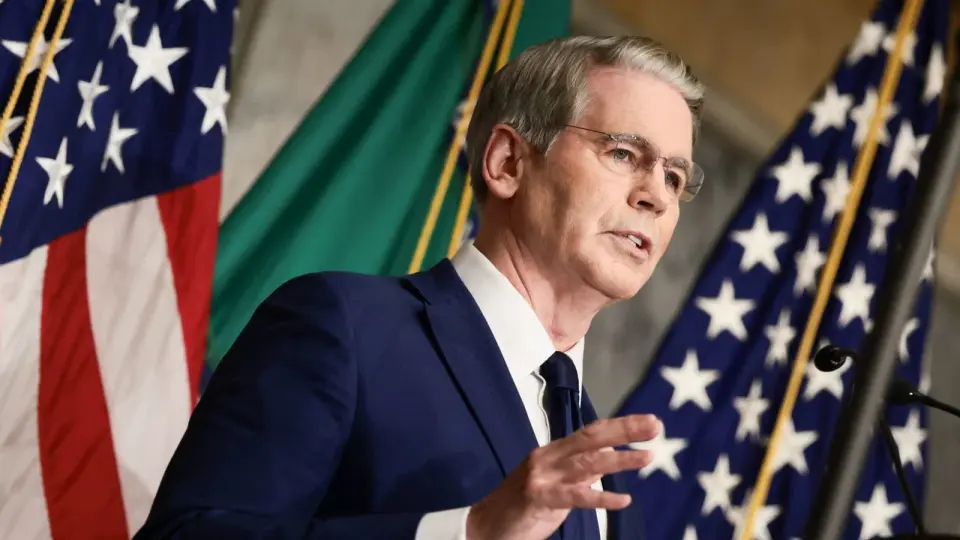
The U.S. Treasury has proposed cutting off the UAE branches of Egypt’s Banque Misr from the American financial system, accusing the bank of facilitating $1.8 billion in transactions for Iranian shadow networks. Treasury Secretary Scott Bessent warned of further sanctions this week, including potential measures against China, as Washington shifts from military strikes to economic pressure in its six-month conflict with Iran.
Key points
- The U.S. Treasury proposed a rule to revoke correspondent banking access for Banque Misr’s UAE branches, citing $1.8 billion in transactions linked to Iranian entities between January 2024 and June 2026.
- Treasury Secretary Scott Bessent stated that additional sanctions on another bank are planned for the current week, describing the strategy as 'financial violence' to isolate Iran.
- The UAE central bank announced a 'special and urgent examination' of Banque Misr’s operations in the country following the U.S. action.
- Bessent indicated that 'all options are on the table' regarding sanctions on China, Iran’s largest oil buyer, during upcoming G20 meetings in Asheville.
- The U.S. struck Iranian rocket launchers in the Strait of Hormuz on Sunday, marking the first military action in a month and breaking a recent lull in hostilities.
Background
This escalation follows the U.S. launch of 'Operation Economic Outcast' on August 24, 2026, which targeted nearly 60 entities globally. The move reflects a broader strategic shift by the Trump administration from military strikes to economic pressure, as the war with Iran enters its sixth month with limited military success. Previous archive coverage noted concerns about Treasury staffing levels and market reactions to the 'economic D-Day' sanctions package.
How outlets are covering it
While CNBC and AP emphasized Bessent’s aggressive rhetoric and the imminent threat of sanctions against China, Al Jazeera focused on the specific mechanics of the Banque Misr action and the reactions from Egyptian and Emirati authorities. The New York Times highlighted the UAE’s regulatory response and the broader implications for the Emirates as a trade hub. Analysts cited by Al Jazeera argued that the sanctions are unlikely to force Iran’s surrender, noting Tehran’s historical resilience to financial pressure, whereas the U.S. administration frames the measures as a decisive 'economic D-Day.'
Why it matters
The proposed sanctions on Banque Misr and the threat of action against China signal a significant intensification of U.S. economic warfare against Iran. This could disrupt global energy markets and financial flows, particularly if major trading partners like China and India face penalties for continued oil purchases. The concurrent military strikes in the Strait of Hormuz underscore the dual-track strategy of combining financial isolation with military pressure.
What to watch
The U.S. Treasury expects the proposed rule against Banque Misr to take effect 30 days after a public comment period. Bessent is set to meet with counterparts at the G20 in Asheville to push for cooperation against Iran. The UAE central bank will complete its forensic review of Banque Misr’s branches. The administration may announce further sanctions on other banks or entities, potentially including measures targeting China, in the coming weeks.
- U.S. plans to sanction another bank in effort to clamp down on Iran transactions: Bessent CNBC
- Banque Misr, Egypt’s second-largest, hit by US sanctions: What to know Al Jazeera
- U.A.E. to Review Egyptian Bank as Part of U.S. Sanctions on Iran The New York Times
- US targets Egyptian bank’s UAE branches under new push for Iran’s economic isolation AP News
- Opinion | Trump’s New Iran Sanctions Put China on Notice WSJ
Want the full story? Read the original reporting
Read on CNBC