
Beijing freezes IPOs and slashes buyback rates to stem China’s equity slide
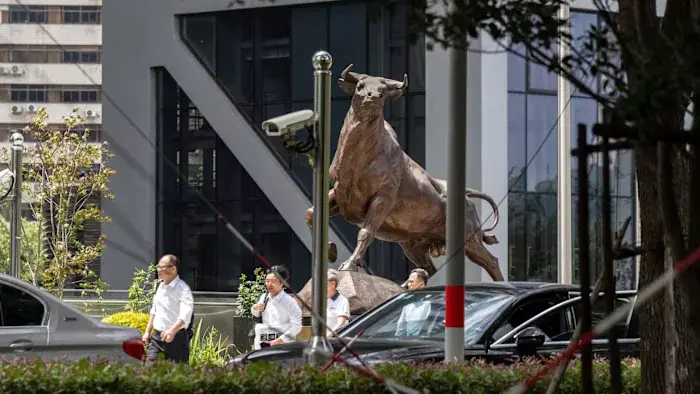
Chinese regulators have suspended initial public offerings and large share sales to stabilize a market that suffered its worst monthly drop in over a decade. The China Securities Regulatory Commission issued informal 'window guidance' to banks, pausing listings until markets recover. This move follows an 8.5% decline in the CSI 300 index in October, marking its worst performance since 2016. Concurrently, the People's Bank of China cut the relending rate for share buybacks to 1% from 1.25% and launched swap operations to inject liquidity. These measures aim to reverse a prolonged downturn driven by weak consumption, property sector issues, and skepticism regarding AI investments. While the CSI 300 is down 15% this year, the S&P 500 has gained 10%. Analysts suggest these interventions may provide short-term support but lack the structural fixes needed for a lasting recovery.
Key points
- The China Securities Regulatory Commission halted IPOs and large shareholder sales via informal 'window guidance' to preserve market liquidity.
- The CSI 300 index fell 8.5% in October, its worst monthly performance in over a decade, and is down 15% for the year.
- The People's Bank of China reduced the relending rate for share buybacks to 1% and initiated swap operations to inject over 100 billion yuan into the market.
- Regulators urged major index constituents and technology firms to actively buy back shares and encouraged fund managers to increase equity exposure.
- IPO deal volume in China reached 292 billion yuan this year, the highest since 2023, before the freeze was implemented.
- Market reaction was muted, with the CSI 300 ending 0.2% lower on Tuesday, while the tech-focused Star 50 index fell 3.8%.
Background
This intervention follows a series of stabilization efforts since July, including state-backed fund purchases and restrictions on equity sales. In late October, Beijing deployed state-aligned funds to halt a crash driven by AI skepticism, with the CSI 300 down 20% from its June peak. Earlier in 2026, the 'national team' sold ETF holdings, renewing doubts about market sustainability. The current freeze aligns with a global trend of IPO pauses due to valuation concerns, as noted in October 2026 when major global listings were delayed. Chinese equities have underperformed global markets, with the S&P 500 gaining 10% while China’s benchmark fell 15%.
How outlets are covering it
The Financial Times emphasizes that the IPO freeze threatens to halt dealmaking in a market that had shown signs of revival, with 2026 IPO volume reaching its highest level since 2023. It highlights the view that these measures are unlikely to create a lasting turnaround without addressing structural issues like earnings growth. Yahoo Finance focuses on the liquidity injection, noting that the new swap operation could inject over 100 billion yuan and that 31 brokerages have already applied for quotas. It frames the move as a clear signal that Beijing does not want the selloff to spiral, potentially putting a floor under sentiment for major tech stocks like Alibaba and JD.com. Both sources agree that while liquidity measures may help, they do not resolve underlying economic weaknesses such as weak consumption and property sector problems.
Why it matters
The freeze on IPOs and large share sales directly impacts the flow of capital into Chinese markets, potentially stifling growth for companies like chipmaker YMTC that were expected to list. The reduction in buyback rates and increased liquidity support aim to prevent a further collapse in a market that has been a poor performer globally. However, the lack of a strong market reaction suggests that investors remain skeptical about the long-term outlook, viewing these interventions as temporary supports rather than fundamental solutions. The effectiveness of these measures will determine whether China can reverse its 15% annual decline and compete with the S&P 500’s 10% gain.
What to watch
Regulators are studying whether to ease margin rules to further improve market liquidity. The success of the swap operations and buyback incentives will be monitored in the coming weeks to assess their impact on market sentiment. If the measures fail to reverse the decline, further fiscal or monetary support may be required to address structural challenges. The next few months will be critical in determining whether the 'national team' and regulatory interventions can sustain a recovery or if the market will continue to struggle with weak domestic demand.
- China halts listings in bid to bolster struggling markets Financial Times
- China’s Revival of 2024 Stock Rescue Tools Faces Skepticism Bloomberg.com
- China regulator tells banks to pause IPOs, FT reports Reuters
- China Tech Stocks Get Fresh Lifeline From Beijing Yahoo Finance
- Beijing launches barrage of measures to stabilise stock market after sell-off South China Morning Post
Want the full story? Read the original reporting
Read on Financial Times