
Berkshire’s Abel Dismisses Japanese Bond Yield Spike as Threat to Trading House Stakes
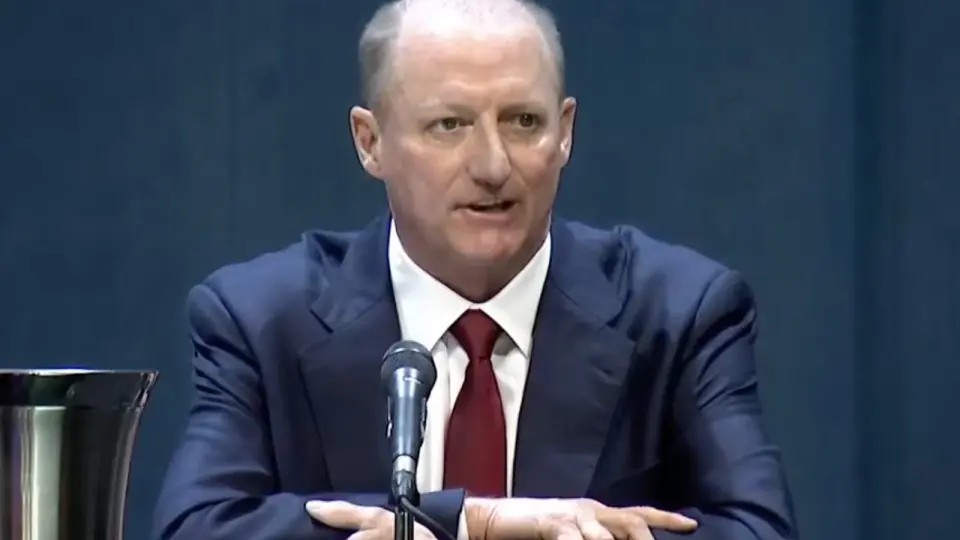
Berkshire Hathaway CEO Greg Abel stated that the recent spike in Japanese bond yields does not pose a fundamental challenge to the company’s major trading house investments. During a CNBC interview, Abel noted that while Japan’s 10-year bond yield reached a 30-year high above 3%, it remains modest compared to the U.S. 10-year Treasury yield, which recently crossed 4.8%. Abel confirmed that Berkshire now holds stakes exceeding 10% in five major Japanese trading firms, a change from the original agreement that capped ownership below that threshold. He emphasized that these are long-term investments intended to be held for decades, with strong relationships facilitating further opportunities in Japan and abroad.
Key points
- Greg Abel stated that no major Japanese trading house has cited high bond yields as a fundamental business challenge.
- Japan’s 10-year bond yield hit a 30-year high above 3%, while the U.S. 10-year Treasury yield recently exceeded 4.8%.
- Berkshire Hathaway now holds stakes greater than 10% in five major Japanese trading houses: Itochu, Marubeni, Mitsubishi, Mitsui, and Sumitomo.
- Abel confirmed that Berkshire obtained permission from each firm to exceed the original 10% ownership cap six years after the initial investment.
- Abel described the trading house investments as long-term holdings intended to be maintained for many decades.
Background
Berkshire Hathaway’s Japanese trading house investments were originally structured with a commitment to keep stakes below 10%. The company’s recent expansion of these stakes marks a significant shift in its approach to these long-term holdings. Meanwhile, global bond markets have experienced volatility, with U.S. mortgage rates recently rising to 6.87% and oil prices surging toward $100 due to geopolitical tensions, highlighting broader market stress that contrasts with the relative stability of Japanese trading houses.
How outlets are covering it
CNBC reported Abel’s direct comments dismissing the bond yield spike as a challenge, emphasizing the relative modesty of Japanese yields compared to U.S. levels. Barron’s previewed Abel’s TV appearance, noting potential discussions on corporate developments like stock repurchases, but did not detail the bond yield specifics. The sources align on the fact of the TV appearance but differ in focus, with CNBC providing direct quotes on the bond issue while Barron’s framed it as a broader corporate update.
Why it matters
Abel’s comments signal Berkshire’s confidence in the long-term viability of its Japanese trading house investments despite rising global bond yields. The expansion of stakes beyond the original 10% cap indicates a deeper commitment to these firms, potentially influencing market perceptions of Berkshire’s strategy in Asia. This stance contrasts with broader market concerns over rising yields, suggesting that trading houses may be insulated from current bond market volatility.
What to watch
Investors will monitor whether Berkshire’s trading house stakes continue to generate strong returns as bond yields remain elevated. Future TV appearances or earnings calls by Abel may provide further clarity on Berkshire’s broader Japanese investment strategy and potential new opportunities in the region.
- Berkshire CEO Greg Abel says Japanese bond yields not a challenge for trading houses right now CNBC
- Berkshire Hathaway remains confident in Japanese holdings for the long term, CEO says (BRK.B:NYSE) Seeking Alpha
- Berkshire CEO Abel to Make Rare TV Appearance. What He Might Talk About. Barron's
- Berkshire’s Abel Says Borrowing Costs in Japan Are Still ‘Relatively Modest’ WSJ
- Itochu Chief Says Japan's Diversified Trading Houses 'Suited' for Uncertain Times - Non-GAAP Earnings dars.gov.et
Want the full story? Read the original reporting
Read on CNBC