
China's AI Boom Collapses as $2.4 Trillion Vanishes Amid Weak Demand and US Sanctions
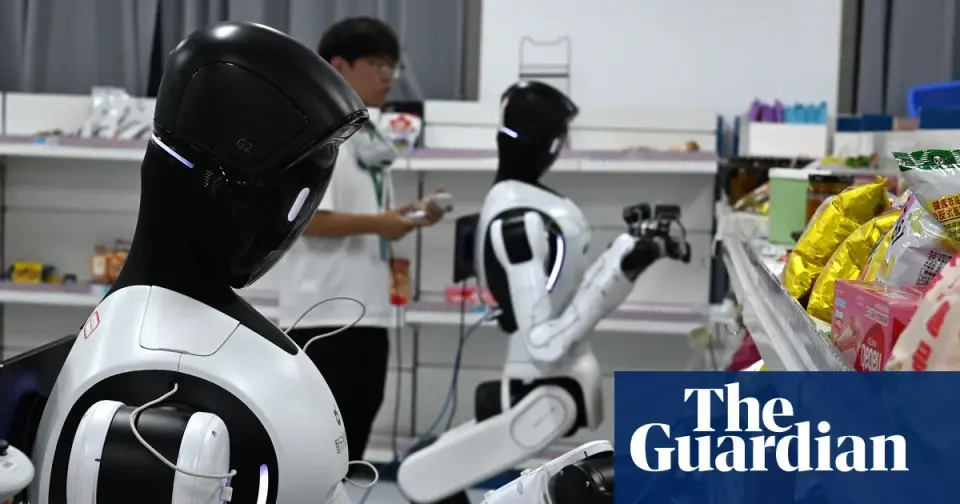
China's stock market has entered a bear market, losing $2.4 trillion since May as AI stocks, which make up over 40% of market value, plunged 40%. The sell-off is driven by weak consumer demand, thin profit margins, and fears of US sanctions on Chinese tech. While Beijing injected 60 billion yuan into AI, domestic consumers remain reluctant to spend, and US restrictions on robots and data center components threaten exports. Analysts note that while the crash is severe, some see it as a confidence crisis rather than an economic collapse, predicting a potential rebound in 2027. No major stimulus is expected before the upcoming Party Congress, as policymakers avoid risky measures during a politically sensitive period.
Key points
- China's STAR 50 Index, tracking tech and AI companies, fell 40% since June, wiping out $2.4 trillion from the market.
- AI stocks account for over 40% of China's market value, meaning their decline has triggered a broader bear market in the CSI 300 index.
- Weak domestic consumer demand and thin profit margins have made it difficult for tech companies to sustain growth, despite government investment.
- The US has banned Chinese humanoid robots and is considering restrictions on data center components, threatening China's export-heavy tech sector.
- China's government has injected 60 billion yuan into AI but has not introduced broad stimulus measures due to the upcoming Party Congress and political sensitivity.
- Analysts disagree on the outlook: some view the crash as a confidence crisis with a potential 2027 rebound, while others warn of further declines due to structural overcapacity.
Background
China's tech sector had been a key driver of economic growth, with the government heavily investing in AI and robotics to address demographic challenges and compete with the US. However, consumer spending has remained weak, and the property sector has slowed, creating a fragile economic environment. The recent crash follows a period of speculative growth, with AI stocks trading at valuations far above global peers. The US has also tightened restrictions on Chinese technology, citing national security concerns, which has further pressured Chinese firms reliant on exports.
How outlets are covering it
The Guardian emphasizes the structural weakness of China's domestic economy, noting that despite government investment, consumer demand is too weak to sustain a booming tech market. It highlights the anxiety among tech companies about the viability of state-backed models in the face of low profits and US sanctions. CNBC focuses on the broader bear market, attributing the decline to years of excess capacity and overinvestment, and notes that China's retail investors, who drive 90% of trading, are prone to panic selling. It also points to resilient exports and property recovery as signs that the crash may be a confidence crisis rather than an economic collapse. Yahoo Finance highlights the extreme valuation gap between China's AI stocks and the US, noting that China's STAR 50 trades at 100 times earnings compared to the Nasdaq's 30 times. It also raises the question of whether the US AI bubble could burst next, given similar high valuations and spending by US tech giants.
Why it matters
The collapse of China's AI sector signals a shift in the global tech landscape, as the US and China compete for dominance in AI. The crash could have ripple effects on global supply chains, as Chinese firms are key players in robotics and data center components. It also highlights the risks of state-driven tech booms without strong consumer demand, and the potential for further US-China trade tensions. For investors, the crash raises questions about the sustainability of AI valuations globally, as US tech giants also face high spending and uncertain returns.
What to watch
China's policymakers are expected to avoid major stimulus measures before the upcoming Party Congress, as they seek to avoid risky policies during a politically sensitive period. The US may extend bans on Chinese technology, further pressuring Chinese firms. Analysts predict that China's stock market could bottom out in 2027, but the timeline depends on whether consumer demand recovers and whether the US eases restrictions. The US AI sector will be tested by upcoming earnings reports from Microsoft, Alphabet, and Amazon, which could signal whether the US market is also vulnerable to a bubble burst.
- Chinese markets lose trillions as race for AI supremacy with US takes its toll The Guardian
- In China, the AI bubble has already burst Reuters
- China Steps In to Rescue Stocks, But the Market Continues to Fall The New York Times
- China's stock market sinks into bear territory as CSI 300 extends 10-week rout CNBC
- AI Bubble Bursts in China, Wiping $480 Billion: Is America Next? Yahoo Finance
Want the full story? Read the original reporting
Read on The Guardian