
Moderna's Melanoma Vaccine Success Sparks Market Rally and Misinformation Concerns
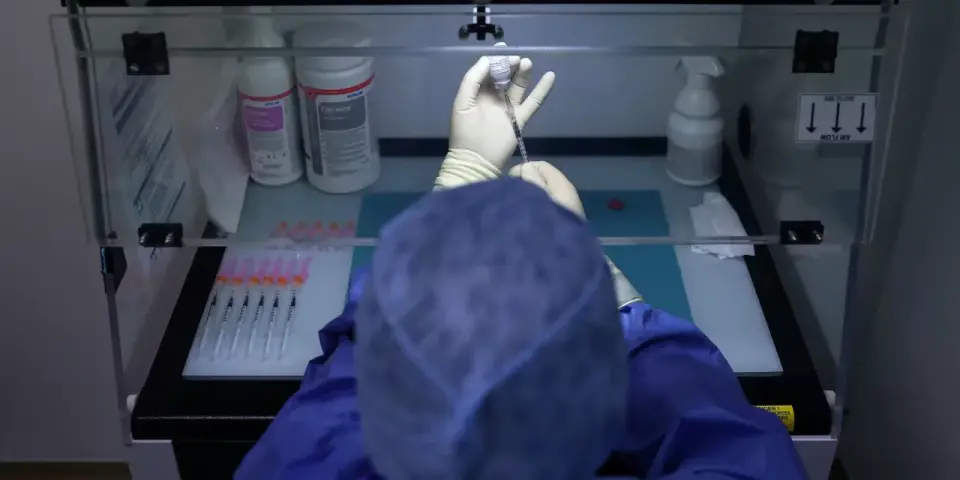
Moderna and Merck announced that their personalized mRNA cancer vaccine, intismeran autogene, successfully prevented melanoma recurrence in high-risk patients when combined with immunotherapy. The positive late-stage trial results triggered a significant stock surge and a short squeeze, with analysts projecting a potential $3 billion market by 2035. However, experts warn that widespread misinformation about mRNA technology could hinder public adoption of this new treatment class.
Key points
- Moderna and Merck confirmed that intismeran autogene reduced cancer recurrence in melanoma patients, marking the first late-stage success for an mRNA cancer vaccine.
- Moderna's stock price doubled following the announcement, leading to a historic short squeeze that impacted broader semiconductor and AI chip sectors.
- One analyst estimates annual sales for the vaccine could reach $3 billion by 2035, though some investors believe much of this potential is already priced into the stock.
- Health communication researchers warn that 'turbo cancer' misinformation, which falsely links mRNA vaccines to aggressive cancers, could erode public trust and limit future uptake.
- Moderna and Merck plan to present detailed trial results at an upcoming medical conference to further validate the commercial viability of the treatment.
Background
This development follows years of research into mRNA technology, initially popularized by COVID-19 vaccines. While over 120 clinical trials have tested mRNA for various cancers since the early 2000s, this is the first to achieve late-stage success. The announcement builds on previous discussions regarding the potential of personalized vaccines to harness the immune system against tumors without harming healthy cells.
How outlets are covering it
Barron's focuses on the financial implications, noting that while executives express high confidence, Wall Street is waiting for complete trial data and some analysts believe the stock has already priced in the success. The New York Times emphasizes the medical breakthrough, quoting oncologists who view the results as a potential catalyst for a new wave of cancer therapies. CNN highlights the social challenge, warning that misinformation campaigns could undermine the vaccine's public acceptance despite scientific progress. The Washington Post provides a human element, detailing the experiences of trial participants like Mark Orwig, who described the process as groundbreaking and revolutionary for future patients.
Why it matters
The success of intismeran autogene validates mRNA technology for cancer treatment, potentially creating a multibillion-dollar market. However, the stock's rapid rise and the threat of misinformation highlight the complex interplay between scientific breakthroughs, market speculation, and public perception in the biotech sector.
What to watch
Moderna and Merck will share more detailed trial results at an upcoming medical conference. Investors will monitor whether the stock can sustain its gains beyond the initial short squeeze, while public health officials may need to address misinformation to ensure broad adoption of mRNA cancer therapies.
- What Moderna Must Do to Take Its Stock to the Next Level Barron's
- A New mRNA Vaccine Could Prevent Skin Cancer From Returning The New York Times
- Cancer vaccines could transform treatment and prevention – but misinformation about mRNA vaccines threatens their potential CNN
- What it was like to go through a trial that could revolutionize cancer treatment The Washington Post
- Inside Moderna and Merck’s cancer vaccine triumph STAT
Want the full story? Read the original reporting
Read on Barron's