Recent mixed results in cancer vaccine trials have forced the biotech industry to reassess the scope of mRNA-based therapies. While a late-stage melanoma trial showed promise, other programs have failed or been halted, raising questions about which cancers can effectively be targeted by this technology.
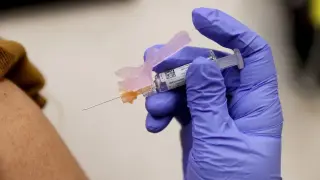
Medical societies issued fall vaccination guidelines after the CDC advisory panel faced legal delays. Experts urge getting flu shots by late October, noting a two-week delay for immunity. New options include an mRNA flu shot for adults 50+ and updated COVID-19 boosters for high-risk groups.
Medical societies issued fall vaccination guidelines after the CDC failed to update its advice due to a court battle. Experts urge everyone aged six months and older to get flu shots now, as protection takes two weeks to develop. New options include an mRNA flu vaccine for adults 50 and older, while updated COVID-19 and RSV shots are available for high-risk groups. Vaccination reduces hospitalization risks significantly, particularly for seniors and children.
Boeing secured a $20 billion contract for next-generation fighter jets, boosting shares, while ADP reported 90,000 jobs added in September, exceeding forecasts. Treasury yields hit multi-year highs, pressuring equities, and consumer confidence fell to a 12-year low.
Moderna and Merck reported positive Phase 3 results for a personalized mRNA cancer vaccine, intismeran autogene, in melanoma patients. While the therapy remains investigational, early data suggests it reduces recurrence when combined with immunotherapy. Experts highlight the potential for personalized treatments across various cancers, though access and cost remain significant hurdles.
Moderna’s mFlusiva, the first mRNA-based flu vaccine, is now available at over 13,000 US locations for adults 50 and older. While it offers roughly 27-30% better protection than traditional shots, availability is limited and insurance coverage for those under 65 remains uncertain.
Moderna stock climbed to approximately $199 on September 25, 2026, marking a significant rise from its position two months prior. Yahoo Finance notes the stock has tripled in value over the last 60 days, moving from $63 to $195, and suggests the upward trend is not yet complete. Benzinga reports that the stock is trending after hours, with recent trading activity involving Merck & Co. The archive provides no relevant background for this specific financial movement, as previous coverage focused on unrelated tech and telecom topics.
Moderna’s mFlusiva is the first mRNA-based flu shot and is now available in the US for adults 50 and older (50–64 traditional, 65+ accelerated approvals). In Phase 3 it was about 27% more effective than a standard flu shot; it uses mRNA and can be produced in 2–3 months, but it does not protect against COVID. Younger than 50 can’t get it this season. Price is about $171 per dose without insurance, with coverage varying by insurer, and it’s rolling out to CVS/Walgreens as stock permits ahead of the October vaccination window.
The FDA approved Moderna’s mFLUSIVA (mRNA-1010) for adults 50+, marking the first influenza vaccine using mRNA technology. In trials it was about 26.6% more effective than traditional flu vaccines and produced a stronger immune response in adults 65+, with safety data from roughly 70,000 participants. Real-world data from the 2026–27 season will show performance in broader populations. The mRNA platform enables faster updates to match circulating strains, potentially changing regulatory and rollout dynamics, but questions remain about cost, availability, and uptake. Traditional egg-based and recombinant vaccines will remain available for now, and long-term adoption will depend on real-world effectiveness and public acceptance.
The FDA approved Moderna’s mFLUSIVA (mRNA-1010) for adults 50 and older as the first influenza vaccine using mRNA technology, with trial data showing about 26.6% greater effectiveness than traditional flu vaccines and a stronger immune response in older adults, plus a safety profile based on roughly 70,000 participants. The mRNA platform promises faster updates to match circulating strains, which could alter regulatory and manufacturing timetables. Real‑world performance will be tested in the 2026–27 season; meanwhile, cost, access, and how widely it will be stocked or adopted remain uncertain, and traditional flu shots will continue to be available this season. Uptake may hinge on vaccine confidence in mRNA technology, and long‑term changes to vaccine recommendations could follow real‑world effectiveness data.
The FDA has approved four updated COVID-19 vaccines from Pfizer (Comirnaty), Moderna (Spikevax and mNexspike) and Novavax (Nuvaxovid) that target the Omicron XFG variant; Moderna’s mNexspike uses a lower 10 µg dose. Vaccines are being shipped to clinics and pharmacies; the guidance is to vaccinate unvaccinated or high‑risk individuals (65+ or with certain conditions). For timing, aim to receive the shot around October to cover the winter season, bearing in mind protection wanes after about six months. If recommended, the vaccine is usually free with insurance, while uninsured Utahns can use the Utah Vaccines For Adults program to obtain vaccines cheaply.
Moderna stock jumped about 6% midday after GSK moved its rival mRNA influenza vaccine to Phase III, a development investors view as platform validation for mRNA tech rather than direct competition to Moderna's mFlusvia, which recently received FDA approval. The move underscores the market’s focus on the broader potential of mRNA platforms (including Moderna’s melanoma program with MRK) rather than near-term vaccine revenue, with analysts cautioning that sustained upside hinges on broad solid-tumor success and continued adoption amid a backdrop of policy and financing developments for the modality.
The FDA has approved updated COVID-19 vaccines from Moderna, Pfizer, and Novavax for the 2026–2027 season, all targeting the XFG variant. Distribution will begin soon, with eligibility continuing to favor older adults and people with high-risk conditions, while vaccination remains available to others. The vaccines use the flexible mRNA platform for rapid redesign and aim to prevent severe illness, hospitalization, and death, with benefits varying by individual risk.
The FDA has approved updated COVID-19 vaccines from Moderna, Pfizer‑BioNTech and Novavax for broad use: Pfizer‑BioNTech’s shot is approved for adults 65+ and ages 5–64 with risk factors; Moderna’s Spikevax is approved for ages 6 months–64 with underlying conditions and 65+, and its mNexspike for ages 12–64 with underlying conditions and 65+; Novavax’s Nuvaxovid is approved for 65+ and 12–64 with underlying conditions. The vaccines target LP.8.1 and XFG strains (Moderna) and JN.1 (Novavax). Rollout is expected in September, with a shift toward provider-guided vaccination and no official CDC variant recommendation yet, even as CDC data show rising positivity.
Moderna and Merck’s personalized cancer vaccine intismeran autogene would have its mRNA sequence selected by a computer algorithm, potentially making it the first approved medicine with AI-crafted genetic instructions; full details are in a STAT+ exclusive article.