Tag

Melanoma

All articles tagged with #melanoma

Dermatologist's Personal Vigilance for Early Skin-Cancer Detection
health4 days ago

Dermatologist's Personal Vigilance for Early Skin-Cancer Detection

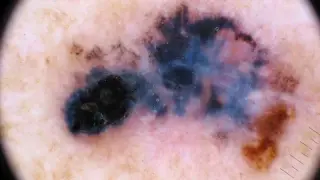
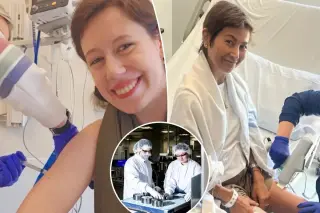
Dermatologist Dr. Michelle Henry stresses her own routine of monthly self-checks, scalp inspections with help from a hairstylist, and photo comparisons to spot melanoma and other skin cancers early. She watches for the ABCDE signs, ugly-duckling moles, nail streaks, and changes in new or existing spots, while advocating sunscreen use and new UVA-covering options like Bemotrizinol to improve prevention.

Just Five Sunburns in Your Teens Could Double Melanoma Risk, Experts Warn
lifestyle10 days ago

Just Five Sunburns in Your Teens Could Double Melanoma Risk, Experts Warn

Five or more blistering sunburns during ages 15–20 can boost melanoma risk by about 80%, with risk rising with burn severity and age; sun exposure damages skin DNA, and while there’s no proven way to reverse damage after a sunburn, prevention—covering up, applying broad‑spectrum sunscreen generously 30 minutes before sun exposure, and reapplying about every two hours—is the best defense; with roughly 88 million U.S. adults experiencing sunburn annually, reducing exposure is crucial.

Watch for a New Pigment Spot: Dermatologists Warn About the Early Sign of Skin Cancer
health11 days ago

Watch for a New Pigment Spot: Dermatologists Warn About the Early Sign of Skin Cancer

Dermatologists say the most commonly missed early sign of skin cancer is a new pigmented spot that looks like a mole or freckle. Changes in existing moles matter, but a new lesion can be the first clue, so see a dermatologist if you notice one. Protect your skin from UV exposure with SPF 50+ and protective clothing, especially during peak sun hours. A family history or fair skin increases risk, so annual (or higher-risk) skin checks are advised. Early detection dramatically improves melanoma survival (about 99% five-year survival when caught early, vs. 68% after it has spread).

Antarctic Sea Toxins Could Fuel a New Melanoma Drug
science13 days ago

Antarctic Sea Toxins Could Fuel a New Melanoma Drug

USF researchers collected Antarctic ascidians (sea squirts) and found toxins they produce can kill melanoma cells in mice, suggesting potential for a new melanoma treatment. Developing a safe, human-approved drug will require extensive lab work, animal studies, and synthetic production, with ongoing NSF-funded collaborations to reproduce the toxin and move toward trials while addressing ecological and safety concerns.

Mole Check 101: ABCDE Signs That Could Signal Skin Cancer
health19 days ago

Mole Check 101: ABCDE Signs That Could Signal Skin Cancer

Heat waves raise sunburn and skin cancer risk, so doctors advise using the ABCDE checklist to spot melanoma early: A for asymmetry, B for irregular borders, C for color variation, D for diameter over 6mm, and E for evolution (changes over time). If a mole looks suspicious or changes, consult a clinician promptly since early diagnosis improves outcomes. Those at higher risk—pale-skinned individuals, tanning bed users, or those with a family history—should be especially vigilant, and self-referral options may be available for cancer care.

TikTok, toxic masculinity and tanning culture fuel UK melanoma rise
life-style28 days ago

TikTok, toxic masculinity and tanning culture fuel UK melanoma rise

UK melanoma diagnoses are at record highs, driven by an aging population and cumulative UV exposure, while tanning trends, sunbeds, and online misinformation from wellness influencers push risky sun habits. Experts warn there’s no safe tan, note that traditional masculine norms can deter sunscreen use, and call for stronger online regulation, UV-safety education in schools, campaigns to debunk myths, and policies to curb sunbed use and improve sunscreen affordability as climate change increases sun exposure.

Pioneering Melanoma Expert Dies at 59 After Self-Experimented Brain Cancer Therapy
science1 month ago

Pioneering Melanoma Expert Dies at 59 After Self-Experimented Brain Cancer Therapy

Renowned melanoma pathologist Richard Scolyer, named Australian of the Year in 2024, died at 59 from a grade‑4 brain cancer (glioblastoma) after he and colleague Georgina Long pursued a bold, self‑initiated immunotherapy approach. The treatment combined immune drugs and a personalized vaccine, with early brain tissue showing increased immune activity and a case report later published in Nature Medicine (2025). The effort has spurred ongoing research and a new clinical trial at Duke University.

Personalized mRNA Vaccine Plus Immunotherapy Cuts Melanoma Recurrence by Half
health1 month ago

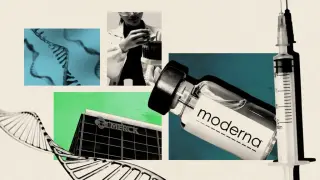
Personalized mRNA Vaccine Plus Immunotherapy Cuts Melanoma Recurrence by Half

A phase 2b trial (KEYNOTE-942) shows adding the personalized mRNA vaccine intismeran to pembrolizumab after melanoma surgery reduces recurrence or death by 49% over five years. The combo also lowers distant metastasis risk by 59% and yields 92.2% overall survival versus 71.3% with pembrolizumab alone. Five-year follow-up found 68.8% cancer-free in the combo group vs 50.9% in controls. The study, conducted in the US and Australia with 107 patients in the combo arm and 50 in control, reported manageable side effects and is guiding a phase 3 trial, with Moderna and Merck funding.

Tailored mRNA vaccine halves melanoma recurrence at five years
health1 month ago

Tailored mRNA vaccine halves melanoma recurrence at five years

A Moderna-developed personalized mRNA vaccine added to surgery and pembrolizumab reduced five-year melanoma recurrence by about half, with roughly 70% cancer-free in the vaccine group versus 49% in the standard group and a nearly 60% reduction in metastasis risk; the vaccine targets 34 neoantigens, is given post-surgery alongside immunotherapy in up to nine doses, and was well tolerated, though results from a larger phase 3 trial are needed to confirm efficacy and potential paradigm shift.

Edge-Guard Macrophages Attack Live Melanoma Cells, Poised to Boost Immunotherapy
science1 month ago

Edge-Guard Macrophages Attack Live Melanoma Cells, Poised to Boost Immunotherapy

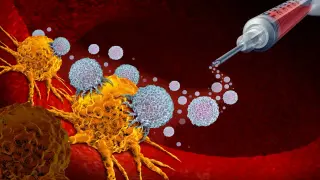
Researchers using real-time imaging show CD169-positive macrophages at the edges of melanoma tumors actively engulf live cancer cells and help signal the immune system, constraining tumor growth even without T cells or B cells. Similar macrophages are found in human samples, suggesting these cells could be mobilized to convert cold tumors to hot and broaden the reach of immunotherapies like checkpoint inhibitors.

science1 month ago

Real-time imaging reveals macrophages devouring live melanoma cells

Using intravital two-photon microscopy, researchers watched CD169-expressing macrophages in the skin’s hypodermis engulf live melanoma cells without T or B cells, a finding that depletion of these macrophages worsened tumor growth and that similar macrophage populations were found at human melanoma margins—suggesting a way to turn ‘cold’ tumors ‘hot’ and possibly enhance responses to immune checkpoint inhibitors.

Regeneron’s fianlimab setback puts melanoma program at a crossroads
business1 month ago

Regeneron’s fianlimab setback puts melanoma program at a crossroads

Regeneron’s phase 3 trial of fianlimab with Libtayo failed to beat Merck’s Keytruda as first-line therapy for unresectable melanoma, missing the primary endpoint of progression-free survival despite a numerical edge at the high dose; analysts say late separation of survival curves drove the non-significant result, signaling renewed pipeline pressure even as Regeneron pursues potential salvage paths (head-to-head vs Opdualag) and continues other programs (Factor XI, cemdisiran-pozelimab) as future catalysts.