
FDA Approves Roche’s Giredestrant for Early-Stage Breast Cancer
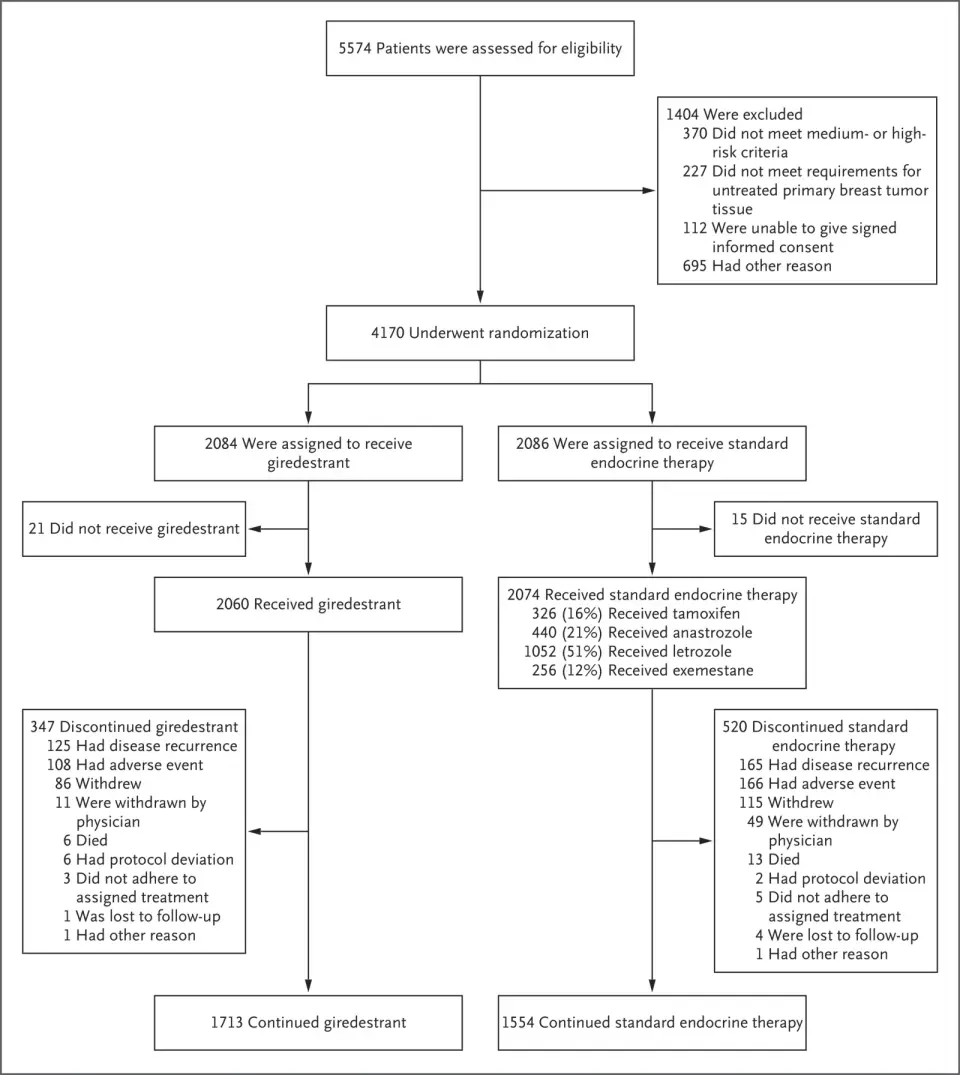
The FDA has approved giredestrant (Wilserdly), a new oral selective estrogen receptor degrader developed by F. Hoffmann-La Roche, for the adjuvant treatment of intermediate- to high-risk early-stage ER-positive, HER2-negative breast cancer. This decision follows the publication of phase 3 lidERA trial results in the New England Journal of Medicine, which showed a 30% reduction in invasive disease recurrence or death compared to standard endocrine therapy. The approval marks the first time a selective estrogen receptor degrader has been approved for both early-stage and advanced breast cancer in the US.
Key points
- The FDA granted approval to giredestrant (brand name Wilserdly) for adjuvant treatment of adults with ER-positive, HER2-negative stage I, II, or III breast cancer at intermediate to high risk of recurrence, according to Yahoo Finance.
- The approval was based on the phase 3 lidERA trial, which randomized 4,170 patients to giredestrant or standard endocrine therapy, showing a 30% reduction in the risk of invasive disease recurrence or death (hazard ratio 0.70), according to the New England Journal of Medicine.
- Giredestrant is the first selective estrogen receptor degrader approved for both adjuvant (early-stage) and advanced breast cancer in the United States, following an earlier approval in November 2026 for advanced disease in combination with everolimus, according to Yahoo Finance.
- Adverse events were similar between groups, with arthralgia reported in 48.0% of giredestrant patients and bradycardia in 11.3%, compared to 3.2% in the standard therapy group, according to the New England Journal of Medicine.
- Roche is advancing additional phase 3 studies, including pionERA and heredERA, to evaluate giredestrant in combination with CDK4/6 inhibitors and Phesgo for advanced breast cancer, according to Yahoo Finance.
Background
Giredestrant, developed by Genentech and F. Hoffmann-La Roche, is a next-generation oral selective estrogen receptor degrader. It received its first FDA approval in November 2026 for advanced ER-positive, HER2-negative breast cancer with ESR1 mutations, based on the evERA trial. The lidERA trial, which supports the new adjuvant approval, is noted by researchers as the first trial in 25 years to show benefit with a novel endocrine agent in early breast cancer. Breast cancer is diagnosed in approximately 225,000 women in the US annually, with nearly 90% detected at an early stage.
How outlets are covering it
The New England Journal of Medicine focuses on the clinical efficacy and safety data from the lidERA trial, highlighting the 30% reduction in recurrence and similar adverse event profiles. Yahoo Finance emphasizes the regulatory milestone, noting that giredestrant is the first selective estrogen receptor degrader approved for both early-stage and advanced breast cancer, and discusses Roche’s broader clinical development program. STAT News confirms the FDA approval as part of its biotech news roundup but does not provide detailed clinical data.
Why it matters
The approval of giredestrant for early-stage breast cancer provides a new treatment option for patients at intermediate to high risk of recurrence, potentially improving outcomes for a significant portion of the 225,000 women diagnosed with hormone receptor-positive, HER2-negative breast cancer annually in the US. As the first selective estrogen receptor degrader approved for both early-stage and advanced disease, it may become a standard treatment option across different stages of the disease.
What to watch
Roche is advancing several phase 3 studies, including pionERA (evaluating giredestrant with CDK4/6 inhibitors) and heredERA (evaluating giredestrant with Phesgo), to explore its potential in advanced breast cancer. Additional studies, novERA and kalitERA, are assessing treatment adherence and patient-reported outcomes. The FDA’s approval was granted under priority review, ahead of the scheduled decision date.
- Giredestrant in the Treatment of ER-Positive, HER2-Negative Early Breast Cancer NEJM
- Roche expects approved cancer pill to become its best-selling drug Reuters
- Early-stage breast cancer gains first newly approved hormone therapy in more than 20 years Medical Xpress
- FDA Grants Approval to RHHBY's Wilserdly for Early-Stage Breast Cancer Yahoo Finance
- Roche’s potential breast cancer blockbuster drug wins second FDA nod STAT
Want the full story? Read the original reporting
Read on NEJM