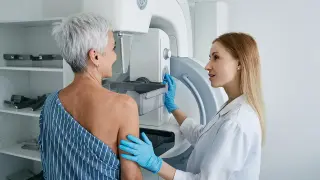
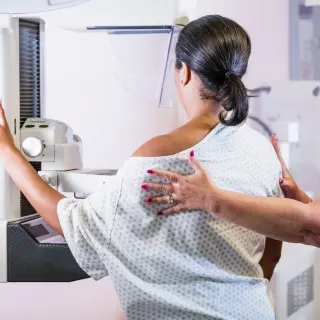
New AI tools analyze 3D mammograms to predict five-year breast cancer risk, with one startup launching a direct-to-consumer service at $249 while researchers validate models on large datasets.
Women who tested negative for cancer-related gene mutations in the 1990s and 2000s are now advised to retest due to significant advancements in genetic screening technology. Early tests focused only on BRCA1 and BRCA2 genes, but modern panels analyze dozens of additional genes linked to breast and ovarian cancer. A 2023 study found that 17.3% of individuals who initially tested negative were found to have a variant upon retesting. Experts warn that many patients remain unaware of this need, potentially delaying preventive measures. While barriers like cost and limited insurance coverage exist, retesting provides critical data for risk management and future medical decisions.
During Breast Cancer Awareness Month, three separate cases highlight how routine mammograms detected early-stage breast cancer in women with varying risk profiles. Laura Baxter in Utah found stage 0 cancer at age 41, leading to a double mastectomy and genetic testing for her family. Andrea Helmbach in Virginia, a nurse with no family history, discovered cancer via routine screening despite feeling healthy. Bridget Kilgallen in New York had a 3mm abnormality detected, confirming cancer despite negative genetic tests. All three emphasize that early detection saves lives, even for those without symptoms or strong family histories.
Breast cancer often manifests through skin changes rather than lumps, with up to 10% of patients diagnosed this way. Inflammatory breast cancer, a rare aggressive form, frequently presents as persistent rashes or orange-peel skin texture. Treatment side effects, including radiation-induced skin irritation and chemotherapy-related hair loss, affect the vast majority of patients. Early dermatological consultation and scalp cooling techniques can mitigate these impacts.
Chris Kamke, a recent breast cancer survivor from Wisconsin, is currently in a coma and paralyzed after developing a rare autoimmune condition during a family hike in Utah. The incident began with severe leg pain, leading to a diagnosis of neuromyelitis optica spectrum disorder. Her family is raising funds to transport her back home.
Dani Kurtz, a former nurse in Utah, was diagnosed with breast cancer after detecting a lump in her armpit weeks before her scheduled mammogram. Although her initial mammogram returned normal results, dense breast tissue obscured the tumors, necessitating additional ultrasound and MRI tests that revealed seven tumors across both breasts. Kurtz underwent a bilateral mastectomy and 16 rounds of chemotherapy and radiation, completing treatment in late 2025. Her case underscores the limitations of mammography for women with dense tissue and the importance of self-examination and follow-up testing. Utah currently has a 63.8% mammography screening rate for women aged 40 and older, with a state goal of reaching 81% by 2030. Intermountain Health has introduced an online scheduling tool to improve access to screening appointments.
Breast cancer diagnoses among women under 50 are rising at twice the rate of older cohorts. Experts link this to lifestyle factors, while new genetic tools aim to identify high-risk individuals earlier.
Actress Constance Zimmer publicly disclosed a Stage 0 breast cancer diagnosis she kept private for seven months. Diagnosed with DCIS in March 2026, she underwent three surgeries and radiation while promoting her FX series 'Love Story.' Zimmer is now cancer-free and advocates for early screening.
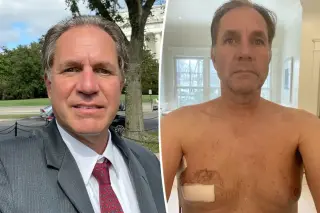
A 62-year-old man from Virginia, Robert Pfleghardt, credits a painful prank during a trip to Las Vegas five years ago with saving his life. While engaging in horseplay with friends, a friend twisted his nipple, causing persistent pain that led to a medical visit. Doctors discovered an eraser-sized lump, which a mammogram confirmed as breast cancer that had spread to lymph nodes. Pfleghardt, who initially believed men could not get the disease, underwent a lumpectomy and radiation therapy in 2022. He now warns that many men ignore chest lumps, delaying treatment for a condition that affects roughly one in 100,000 males but carries a higher mortality rate than in women due to late diagnosis.
Chance Osborne, a 24-year-old BRCA1 carrier, developed triple negative breast cancer two weeks after a clear MRI. The tumor doubled in size within two weeks of discovery. She underwent chemotherapy, surgery, and a hysterectomy, surviving five years. She now advocates for genetic testing and regular circulating tumor DNA monitoring.
A breast oncologist warns that skin dimpling is a critical, often overlooked sign of breast cancer that requires immediate medical evaluation. While the World Health Organization reports that 2.4 million women are diagnosed globally each year, many cases lack specific risk factors beyond age and sex. Early detection through monitoring subtle changes like skin texture is vital, as untreated cancer can metastasize. Recent cases, such as actor Amanda Peet’s, highlight that skin changes can precede lumps, underscoring the need for vigilant self-examination and professional screening.
Actor Amanda Peet revealed that her first sign of breast cancer was a change in skin texture, not a lump. She was diagnosed with Stage 1 lobular breast cancer in late 2025 after a six-month delay following an initial MRI. Peet underwent a lumpectomy and radiation, highlighting the importance of monitoring skin changes and dense breast tissue.
Research presented at an international cancer conference indicates that disrupted sleep patterns may contribute to the development and progression of breast cancer. The study suggests that inconsistent rest triggers biological changes, including altered immune and inflammatory responses, which could elevate disease risk. While the findings highlight a potential link between sleep quality and cancer outcomes, they do not establish definitive causation. These results add to a growing body of evidence connecting lifestyle factors, such as sleep consistency, to broader health risks, including various chronic diseases and cancer types.
A new peer-reviewed study in Environmental Health Perspectives identifies 485 chemicals in US pesticide products linked to breast cancer. The research, led by the Silent Spring Institute, highlights that many of these substances are classified as 'inert' ingredients, which bypass rigorous safety reviews. While the EPA evaluates pesticides individually, the study argues that cumulative exposure to multiple chemicals, including those in consumer goods and drinking water, creates significant health risks. Breast cancer incidence is rising, particularly among women under 50, and the authors suggest that current regulatory frameworks fail to account for the combined effects of these widespread exposures.
Researchers in Egypt followed 184 breast cancer patients undergoing mastectomy and found those with vitamin D deficiency (<30 nmol/L) reported more moderate-to-severe pain in the first 24 hours and used more opioids—about 112 mg more tramadol postoperatively and 8 μg more fentanyl intraoperatively—than those with sufficient vitamin D; the study cannot prove cause-and-effect and did not measure inflammatory markers, but suggests preoperative vitamin D supplementation may help reduce postoperative pain, pending further research.