
FDA recalls Texas-made pre-workout powder for containing banned stimulant DMAA
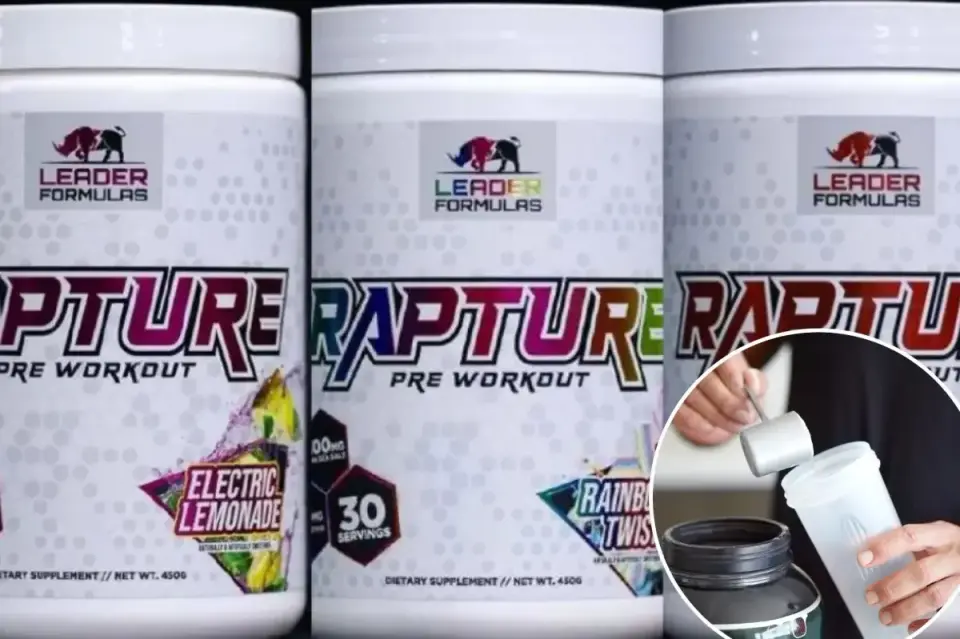
Leader Formulas is voluntarily recalling its RAPTURE pre-workout powder after the FDA detected the banned stimulant DMAA, which poses risks of heart attacks and seizures. The affected lot was sold nationwide between January 2025 and May 2026. Consumers are advised to stop using the product and seek a refund, as no adverse events have been reported yet.
Key points
- The FDA identified 1,3-dimethylamylamine (DMAA) in RAPTURE pre-workout powder manufactured by Leader Formulas, LLC, a Texas-based company.
- The recall covers lot number 260327-4, which was distributed nationwide from January 29, 2025, to May 25, 2026.
- Three specific flavors are affected: Rainbow Twist, Electric Lemonade, and Berry Mojito, each with distinct UPC codes.
- DMAA is a synthetic amphetamine derivative previously used as a nasal decongestant but banned in the US and several other countries due to cardiovascular risks.
- Consumers are instructed to return the product for a full refund, as no adverse health events have been reported to the manufacturer as of October 7, 2026.
Background
This recall follows a broader trend of FDA scrutiny regarding unapproved stimulants in dietary supplements. While previous archive entries highlighted cardiovascular risks associated with common sweeteners like xylitol and undiagnosed peripheral artery disease, this incident involves a direct, illegal additive. DMAA was withdrawn from the pharmaceutical market in the 1980s and subsequently banned in the US, Canada, and the EU by 2013 due to its potential to cause heart attacks, arrhythmias, and neurological issues. The FDA does not pre-approve supplements, relying instead on post-market testing to identify unsafe additives like DMAA, which is often marketed falsely as a 'natural' plant-derived stimulant.
How outlets are covering it
Both the New York Post and USA Today report the core facts of the recall, including the specific lot number, distribution dates, and the presence of DMAA. The New York Post emphasizes the physiological mechanism of DMAA, noting it narrows blood vessels and can lead to seizures, while also highlighting the FDA's rejection of claims that the substance is a natural plant derivative. USA Today provides a broader international context, listing the UK, Australia, and the EU as countries that have also banned DMAA. Both outlets agree that no adverse events have been reported, though they differ slightly in their framing of the substance's history; the New York Post notes its return to the market in 2006, while USA Today focuses on its current status as an illegal additive in energy-boosting products.
Why it matters
This recall underscores the ongoing risks associated with unregulated dietary supplements, where banned substances like DMAA can still appear in products marketed for performance enhancement. The presence of such stimulants poses direct cardiovascular threats, including heart attacks and arrhythmias, particularly when combined with other stimulants like caffeine. Consumers are urged to verify product safety and report suspicious ingredients to the FDA, as the agency continues to monitor the market for these dangerous additives.
What to watch
Leader Formulas is notifying distributors and customers via mail and arranging for the return of all recalled products. Consumers should contact the company at the provided email or phone number for refunds. The FDA will continue to monitor the market for DMAA and other banned substances in dietary supplements, urging the public to avoid any product containing the stimulant.
- Pre-workout powder recalled over illegal drug linked to heart attacks New York Post
- Pre-workout powder recalled nationwide due to illegal ingredient: FDA FOX 8 News
- Workout drink recalled for illegal amphetamine-like substance USA Today
- Pre-workout powder recalled nationwide for illegal substance: FDA NewsNation
- FDA Announces Nationwide Recall of Supplements That May Raise Blood Pressure Health.com
Want the full story? Read the original reporting
Read on New York Post