
JAMA Study Reveals OpenEvidence's Rapid Adoption and Clinical Query Patterns
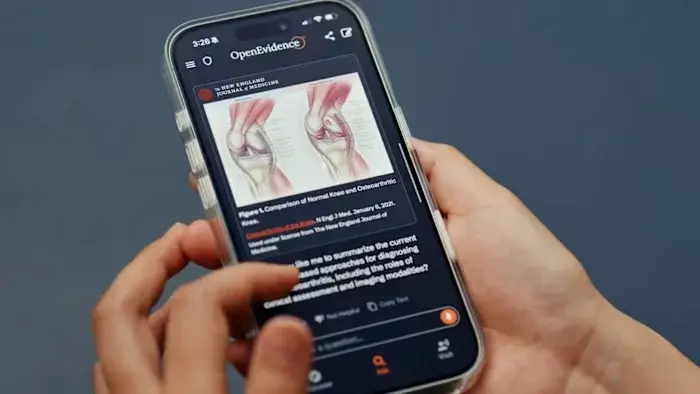
A new JAMA study shows that OpenEvidence, an AI clinical reference tool, has seen explosive growth, with monthly active users rising from 355 in January 2024 to over 703,000 by June 2026. Nurse practitioners and physician assistants are the most intensive users, averaging 44.5 queries per month compared to 37.1 for physicians. While the tool is free for clinicians, it generates revenue through targeted pharmaceutical advertising, raising questions about the intersection of clinical decision support and commercial interests.
Key points
- OpenEvidence's monthly active users grew nearly 200,000% from 355 in January 2024 to 703,265 by June 2026, with total queries reaching 271 million over the period.
- Nurse practitioners and physician assistants outquery physicians, averaging 44.5 queries per active user-month versus 37.1 for doctors, according to a JAMA study published October 15, 2026.
- Treatment and management questions account for 33.1% of physician queries, significantly outpacing diagnosis questions at 13.9%, indicating a shift toward practical clinical decision-making.
- Early-career clinicians with fewer than 10 years of experience are driving usage, averaging 43.4 queries per month compared to 29.9 for those with 20+ years of experience.
- OpenEvidence sustains its free model for clinicians by selling targeted digital ads to pharmaceutical companies, with ads appearing in only 5% of queries but offering a narrow window for engagement.
Background
OpenEvidence has been described as a 'ChatGPT for clinicians,' leveraging AI trained on peer-reviewed literature and national guidelines. Previous coverage highlighted concerns about nursing representation in AI validation processes, with only 19% of nurses reporting meaningful input into AI tool selection. The platform's growth coincides with broader trends in AI adoption within healthcare, where clinical decision support is the most commonly cited AI use case among physicians.
How outlets are covering it
Nurse.org emphasizes the disproportionate usage by nurse practitioners and physician assistants, highlighting potential gaps in nursing-specific AI governance and education. eMarketer focuses on the commercial implications, noting how query patterns enable pharmaceutical companies to deliver targeted advertising, though the brief ad window limits the scope of such campaigns. The Financial Times, while behind a paywall, likely frames the story around the $15 billion valuation of OpenEvidence and its impact on American healthcare practices. All sources agree on the rapid adoption and the dominance of treatment-related queries, but differ in emphasis: Nurse.org on workforce equity, eMarketer on marketing opportunities, and the Financial Times on market valuation.
Why it matters
The study underscores a fundamental shift in how clinical knowledge is accessed, with AI tools becoming central to daily practice. The high usage by non-physician clinicians suggests that AI is being integrated into diverse healthcare roles, potentially improving access to evidence-based care. However, the commercial model raises concerns about potential biases in clinical decision support, as pharmaceutical advertising could influence treatment recommendations. Understanding these dynamics is crucial for healthcare policymakers, educators, and practitioners to ensure that AI tools enhance, rather than compromise, patient care.
What to watch
Expect increased scrutiny of AI clinical tools' commercial models and their impact on clinical decisions. Healthcare institutions may develop guidelines for AI usage and documentation, particularly for non-physician clinicians. Pharmaceutical companies will likely refine their advertising strategies to better align with clinicians' query patterns. Further research will be needed to assess the accuracy and safety of AI-generated answers and their correlation with patient outcomes.
- The $15bn ‘viral’ AI start-up changing how American doctors treat patients Financial Times
- OpenEvidence’s JAMA paper leaves open questions STAT
- From Content to Clinical Intelligence: Delivering Trusted Evidence Where Care Happens Wolters Kluwer
- Nurse Practitioners and PAs Outquery Doctors on OpenEvidence, JAMA Finds Nurse.org
- Physicians’ AI search patterns give pharma new ways to deliver more relevant advertising eMarketer
Want the full story? Read the original reporting
Read on Financial Times