
Nvidia Unveils DSX POD: Containerized Vera Rubin AI Factories Cut Deployment to 14 Days
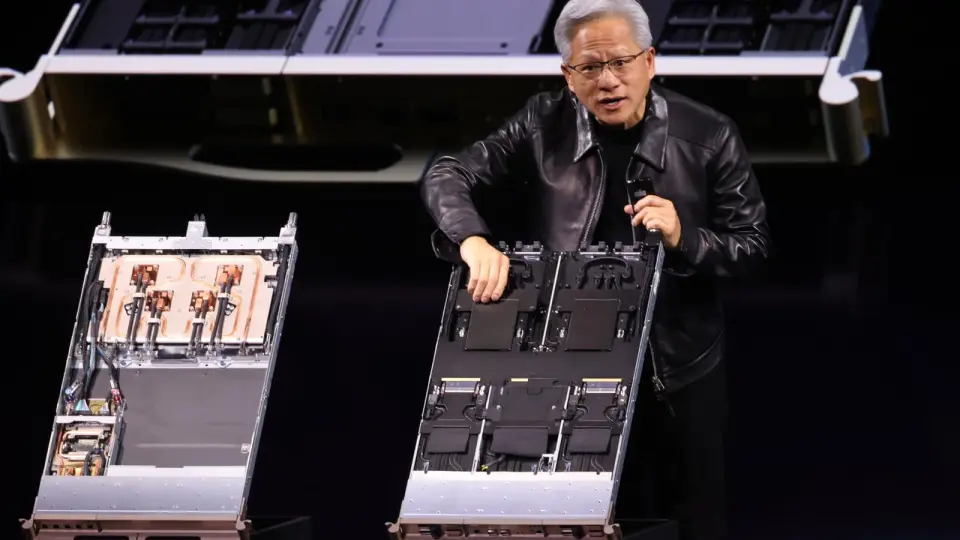
Nvidia announced the DSX POD, a containerized AI factory containing seven Vera Rubin racks, designed to cut data center deployment times from six months to 14 days. The system, weighing 28,000 kg, is fully assembled with liquid cooling and cabling at the factory before truck delivery. While Nvidia did not disclose pricing, analysts estimate a single rack costs over $7 million. The move aims to accelerate revenue generation for customers by reducing onsite construction and integration efforts, with global deliveries expected in early 2027.
Key points
- The DSX POD packages seven Vera Rubin AI racks into a standard shipping container weighing approximately 28,000 kilograms.
- All cabling, liquid cooling, and networking are pre-assembled and validated at the manufacturing facility, requiring only site connection and final testing upon arrival.
- Nvidia claims this approach reduces the time to first production tokens from six months to as little as 14 days.
- The platform is designed to be more energy and water-efficient, potentially saving 54 million liters of water daily at a 2GW scale compared to traditional cooling towers.
- Nvidia is collaborating with partners including Foxconn, Dell, HPE, and Schneider Electric to manufacture and deliver the units globally starting in early 2027.
Background
This announcement follows recent industry shifts toward open standards for AI data centers, as seen at the 2026 OCP Summit where Nvidia, Meta, and Google collaborated on Vera Rubin platform specifications. It also coincides with competitive pressure from AMD’s new EPYC Venice processors, which target Nvidia’s Vera CPU performance. The DSX POD represents Nvidia’s continued strategy to move up the value chain from selling individual chips to providing complete, integrated infrastructure solutions.
How outlets are covering it
CNBC emphasized the logistical and economic aspects, highlighting the truck-shippable nature of the container and the estimated $7 million cost per rack, noting that Nvidia has not officially priced the system. Yahoo Finance focused on the speed of deployment, framing the product as a solution to build data centers in weeks rather than months. Data Center Dynamics highlighted the environmental benefits, specifically the potential for 100% reduction in water consumption through dry-cooler technology and 30% less power usage via dynamic allocation. Nvidia’s official newsroom stressed the global partner ecosystem and the reduction in onsite labor and construction complexity, positioning the product as a key enabler for European infrastructure expansion.
Why it matters
The DSX POD addresses critical bottlenecks in AI infrastructure deployment, such as long construction timelines, specialized labor shortages, and high energy costs. By standardizing and pre-assembling complex systems, Nvidia aims to accelerate the time-to-revenue for AI operators. The environmental efficiency claims also respond to growing regulatory and public scrutiny regarding the water and power consumption of large-scale AI data centers.
What to watch
Nvidia expects to begin delivering DSX POD units in early 2027. The company will likely expand its partner network to handle manufacturing and logistics for these large-scale containers. Future updates may include specific pricing structures and detailed performance benchmarks for the integrated cooling and power management systems.
- Nvidia announces plug and play Vera Rubin racks that can be shipped on a truck CNBC
- Nvidia reveals plans for 'an AI factory in a shipping container' to build factories in weeks, not months Yahoo Finance
- NVIDIA Introduces DSX POD AI Factories to Accelerate Europe’s Infrastructure Deployment NVIDIA Newsroom
- Nvidia’s Jensen Huang Reveals AI Data Center Quick-Fix. These Stocks Are Winners. Barron's
- Nvidia launches DSX POD, claims the Vera-Rubin reference architecture will make AI data centers more water and energy efficient Data Center Dynamics
Want the full story? Read the original reporting
Read on CNBC