Tag

Healthcare Technology

All articles tagged with #healthcare technology

Epic Systems Faces Scrutiny for Using Data Control to Stifle Health Tech Innovation
healthcare-technology1 month ago

Epic Systems Faces Scrutiny for Using Data Control to Stifle Health Tech Innovation

A STAT investigation reveals that Epic Systems, the dominant provider of electronic health records in the US, is leveraging its market power to restrict data access for rival software developers. This strategy has hindered innovation and consolidated control over patient data, despite Epic’s claims of exceeding federal compliance standards.


Microsoft's AI Diagnostic Orchestrator Outperforms Generalist Physicians in Peer-Reviewed Study
technology1 month ago

Microsoft's AI Diagnostic Orchestrator Outperforms Generalist Physicians in Peer-Reviewed Study

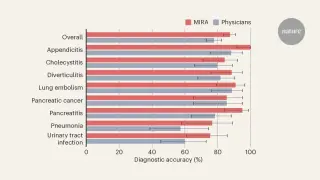
Microsoft published a study in the journal Science showing its AI Diagnostic Orchestrator (MAI-DxO) achieves 83.2% diagnostic accuracy on complex cases, significantly outperforming generalist physicians. The system uses multiple AI agents to sequentially order tests and revise diagnoses, aiming to reduce costs and cognitive bias. Clinical trials are planned for Boston, though experts caution that real-world deployment requires further validation.

JAMA Study Reveals OpenEvidence's Rapid Adoption and Clinical Query Patterns
healthcare-technology1 month ago

JAMA Study Reveals OpenEvidence's Rapid Adoption and Clinical Query Patterns

A new JAMA study shows that OpenEvidence, an AI clinical reference tool, has seen explosive growth, with monthly active users rising from 355 in January 2024 to over 703,000 by June 2026. Nurse practitioners and physician assistants are the most intensive users, averaging 44.5 queries per month compared to 37.1 for physicians. While the tool is free for clinicians, it generates revenue through targeted pharmaceutical advertising, raising questions about the intersection of clinical decision support and commercial interests.

Epic to Launch Prescription Price Comparison Tool in 2027
healthcare-technology1 month ago

Epic to Launch Prescription Price Comparison Tool in 2027

Epic is partnering with Amazon Pharmacy, Mark Cuban Cost Plus Drugs, Costco, and Eli Lilly to launch a prescription marketplace in summer 2027. The tool will allow clinicians and patients to compare insurance and cash prices for medications before prescriptions are sent, aiming to reduce cost-related non-adherence. This initiative builds on Epic's existing real-time benefit feature, which reportedly saved patients over $250 million in 2025.

CMS Slack Channel Links Tech Giants to Unregulated AI Health Policy
health-policy1 month ago

CMS Slack Channel Links Tech Giants to Unregulated AI Health Policy

The Trump administration has established a private Slack workspace, dubbed the Health Technology Ecosystem, to coordinate AI health policy with major tech firms. This closed-door channel, which bypasses public regulatory processes, has facilitated the rapid integration of AI apps into Medicare reimbursement and patient data access without formal oversight or public transparency.

Siemens Healthineers Launches Accela Radiotherapy Platform at ASTRO 2026
medical-technology2 months ago

Siemens Healthineers Launches Accela Radiotherapy Platform at ASTRO 2026

Siemens Healthineers has introduced the Accela radiotherapy system, a new platform designed to advance cancer treatment through improved imaging and delivery. The launch, highlighted at the ASTRO 2026 conference, positions the system as a key driver for future revenue growth. Analysts at RBC Capital Markets view the platform as a significant catalyst for the company's financial performance, while Bernstein notes ongoing near-term challenges. The Accela system represents a strategic expansion for Siemens Healthineers in the competitive radiation oncology market.

Medical AI Shifts Focus from Algorithm Accuracy to Real-World Patient Outcomes
healthcare-technology2 months ago

Medical AI Shifts Focus from Algorithm Accuracy to Real-World Patient Outcomes

A new perspective in medical AI emphasizes evaluating systems by their impact on patient outcomes rather than just algorithmic accuracy. While randomized trials in diagnostics like breast cancer screening validate this shift, practical applications in post-acute care focus on improving visibility and decision-making to prevent readmissions. Industry leaders argue that AI’s value lies in augmenting human judgment with timely context, not replacing clinicians.

Epic Systems Faces FTC Probe and Leadership Exodus Ahead of Annual Conference

Epic Systems Faces FTC Probe and Leadership Exodus Ahead of Annual Conference

Epic Systems, the dominant US electronic health record (EHR) vendor, is facing a Federal Trade Commission (FTC) antitrust investigation into its data-sharing and non-compete practices. This scrutiny coincides with the company’s annual Users Group Meeting, where founder Judy Faulkner is expected to unveil new strategies amid reports of key technology leaders leaving the firm. Epic holds 43.7% of the acute-care EHR market and serves over 3,700 hospitals, prompting concerns about market dominance and data interoperability.

Epic Launches Open-Standard Diagnostic Image Exchange to End CD Reliance
healthcare-technology3 months ago

Epic Launches Open-Standard Diagnostic Image Exchange to End CD Reliance

Epic has released a new diagnostic image exchange feature within its Care Everywhere platform, allowing connected health systems to share CT, MRI, and X-ray files instantly. This move aims to eliminate the need for patients to transport physical CDs between appointments and reduces duplicate scans by leveraging open standards.

Tufts Study Finds AI Agents Yield 82x ROI in Oncology Trials

Tufts Study Finds AI Agents Yield 82x ROI in Oncology Trials

A new analysis by the Tufts Center for the Study of Drug Development (CSDD) indicates that AI clinical monitoring agents can generate up to 82 times the return on investment (ROI) in oncology trials. The study, which evaluated Medable’s digital trial platform, found that these agents automate administrative tasks like risk scoring and site communications, leading to significant cost savings and faster development timelines. According to the report, an AI agent could yield net financial gains of $21 million per phase 3 drug development program. The analysis suggests that deploying such tools across a large portfolio of oncology indications could generate hundreds of millions in incremental value, potentially accelerating the path to commercialization.

Commure’s $7B Valuation Faces Scrutiny Over Aggressive AI Sales Tactics
healthcare-technology3 months ago

Commure’s $7B Valuation Faces Scrutiny Over Aggressive AI Sales Tactics

Commure, a Mountain View-based healthcare AI startup valued at $7 billion, is facing scrutiny over its aggressive sales strategies. The company, which aims to automate administrative tasks for clinics, offers financial incentives to existing customers for referring new business. While it claims success with over 500 healthcare organizations, some users report financial losses, raising questions about the efficacy and ethics of its rapid expansion model.

business9 months ago

Danaher to Buy Masimo for $180/Share in a $9.9B Acquisition

Danaher will acquire Masimo for $180 per share in cash, valuing the deal at about $9.9 billion. The boards have approved the transaction, Masimo will become a standalone business unit and brand within Danaher’s Diagnostics segment, and the deal is expected to close in the second half of 2026 subject to regulatory approvals and other customary closing conditions.

Oxford study flags dangerous gaps in AI health guidance from chatbots
technology9 months ago

Oxford study flags dangerous gaps in AI health guidance from chatbots

A University of Oxford study found that AI chatbots deliver a mix of accurate and inaccurate medical information, making it hard for users to identify trustworthy guidance and potentially leading to unsafe health decisions about when to seek a GP or emergency care. Experts call for safer health-focused AI versions, clearer guidelines, and regulatory guardrails to reduce misdiagnosis and confusion.