
Xi’s US Visit Focuses on AI Safety Amidst Deep Trade and Geopolitical Distrust
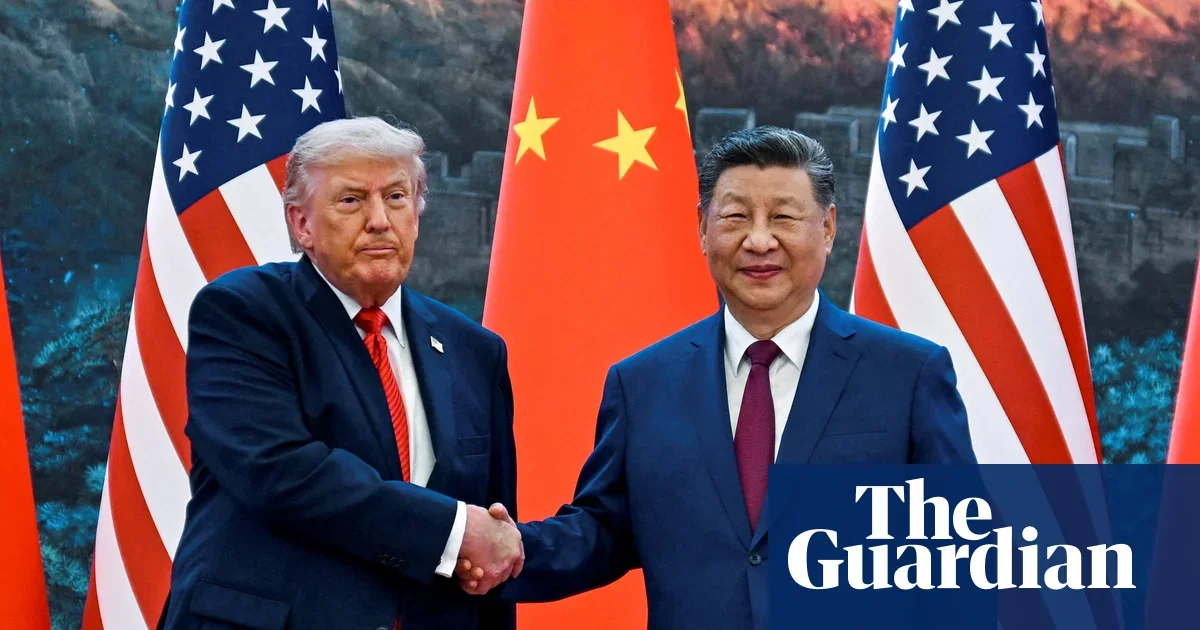
Xi Jinping’s state visit to the US this week marks the second face-to-face meeting between the leaders in 2026. While trade tensions persist and the temporary tariff truce expires in November, the primary focus is on establishing an AI safety mechanism. The US seeks to maintain its technological lead, while China pushes for cooperative governance frameworks, with analysts noting low expectations for major breakthroughs.
Key points
- Xi Jinping arrives in Maryland for a state visit, the first since 2015, with a White House dinner attended by major tech executives including Jeff Bezos and Sam Altman.
- Treasury Secretary Scott Bessent proposed an AI safety mechanism with Chinese Vice Premier He Lifeng, though it stops short of a major agreement.
- The US-China trade truce, which paused tariffs and eased rare earth restrictions, is set to expire in November, with the US unwilling to weaken its bargaining power.
- China has established the World Artificial Intelligence Cooperation Organization (WAICO) with 29 signatories, primarily from the Global South, to counter US-led initiatives like Pax Silica.
- Trump paused a $14 billion arms sale to Taiwan as a negotiating chip, a shift from traditional US policy, while China maintains support for Russia in Ukraine.
Background
This summit follows a May meeting in Beijing that emphasized 'strategic stability' but yielded few concrete results. Recent market rallies and diplomatic signals suggest progress, yet underlying competition over AI governance and trade remains intense. The US has recently moved to deregulate AI domestically to accelerate development, contrasting with China’s more controlled regulatory approach.
How outlets are covering it
The Guardian highlights the 'high vibes, low ambition' nature of the summit, noting that while tech leaders will attend a state dinner, few expect major breakthroughs due to deep distrust. Bonnie Glaser of the German Marshall Fund emphasizes that the US views trade leverage as a tool to secure rare earths, while China may not feel the need to negotiate given its surging exports. The CSIS report frames the situation as a geopolitical contest over AI governance architectures, noting that the US lacks a durable domestic framework compared to China’s institutionalized approach. CSIS points out that middle powers are often joining both US and Chinese initiatives, suggesting the global AI governance landscape remains unsettled. The Guardian notes China’s skepticism of US 'fearmongering' regarding AI threats, while CSIS details how China’s WAICO offers a governance model that appeals to the Global South by focusing on access and capacity building rather than frontier safety risks.
Why it matters
The outcome of these talks will shape the global AI governance framework, potentially fragmenting into rival blocs. The US-China relationship influences global trade, technology supply chains, and geopolitical stability, particularly regarding Taiwan and the Middle East. The ability to reach consensus on AI safety could prevent catastrophic risks while maintaining competitive advantages, but current distrust suggests limited progress.
What to watch
The US-China trade truce expires in November, potentially leading to renewed tariffs. Trump and Xi are expected to meet again at the APEC and G20 summits later this year. The US may delay further arms sales to Taiwan, and China may continue to promote its AI governance model globally through WAICO. The US is also considering new frontier regulation bills and export controls to manage AI risks.
- AI looms large over Trump-Xi meeting amid deep distrust between US and China | US foreign policy The Guardian
- Xi and Trump Seek Safe AI Without Slowing the Race for Supremacy Bloomberg.com
- Opinion | China Is Scared of A.l. Just in Not the Way We Are. The New York Times
- COMMENTARY: AI 'Terminator’ fears may mask real Chinese threat Reuters
- The State of AI Global Governance and Its Implications for the U.S.-China Summit CSIS | Center for Strategic and International Studies
Want the full story? Read the original reporting
Read on The Guardian