
Supreme Court poised to settle federal vs. state jurisdiction over prediction markets
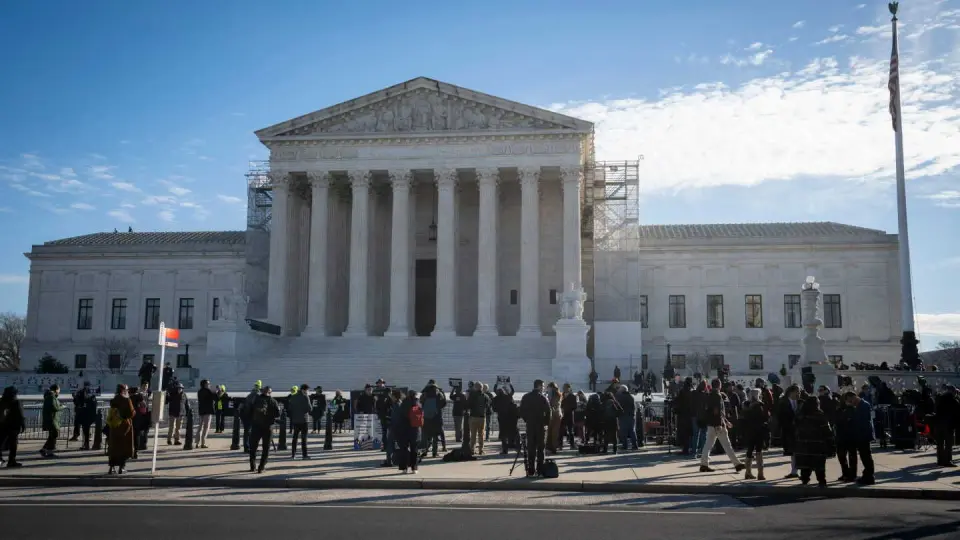
New Jersey has petitioned the U.S. Supreme Court to resolve a jurisdictional conflict over prediction markets. The core dispute centers on whether platforms like Kalshi are federally regulated financial derivatives or state-regulated gambling operations. A split between the Third and Ninth Circuit courts has prompted the high court to potentially intervene, with implications for billions in state tax revenue and tribal sovereignty.
Key points
- New Jersey Attorney General Jennifer Davenport filed a petition asking the Supreme Court to overturn a Third Circuit ruling that grants the CFTC exclusive jurisdiction over sports-related event contracts.
- The Ninth Circuit recently ruled in favor of Nevada, determining that Kalshi’s sports bets are gambling rather than financial swaps, creating a circuit split that makes Supreme Court review likely.
- The CFTC, led by Michael Selig, has aggressively defended prediction markets as federally regulated derivatives, even invoking emergency powers to block state enforcement actions in Michigan and New York.
- Critics, including 44 state attorneys general and tribal leaders, argue that prediction markets are effectively sportsbooks that evade state gambling laws and taxes, which generated approximately $18 billion in 2025.
- Kalshi argues its platform matches traders rather than acting as a bookmaker, and that sports wagers constitute a small minority of its overall activity, though they represent about 70% of its current volume.
Background
This dispute follows a series of legal battles since 2024, where prediction markets expanded into sports betting. Earlier coverage noted that the Third Circuit blocked New Jersey’s attempt to regulate Kalshi, while the Ninth Circuit allowed Nevada to enforce its gambling laws against the same platform. The conflict has escalated as the CFTC has filed lawsuits against states attempting to clamp down on these platforms, framing the issue as a matter of federal preemption under the Dodd-Frank Act.
How outlets are covering it
NBC Sports frames the issue as an inevitable legal necessity to resolve the definition of gambling versus financial products. Politico emphasizes the political dimension, noting that the prediction markets have strong support from the Trump administration and Silicon Valley investors, while states and tribes view the platforms as a threat to sovereignty and revenue. Ars Technica focuses on the technical legal argument, highlighting the debate over whether sports outcomes qualify as 'events' with financial consequences under the Dodd-Frank Act. The Independent notes the irony of Kalshi refusing to allow bets on the Supreme Court case itself, while also highlighting the broader implications for the $18 billion state gaming tax industry.
Why it matters
The Supreme Court’s decision will determine whether prediction markets operate under a unified federal framework or remain subject to a patchwork of state and tribal regulations. This outcome could reshape the entire sports betting industry, potentially rendering traditional sportsbooks illegal if federal preemption is upheld, or preserving state control over gambling and associated tax revenues. It also raises significant questions about the scope of federal regulatory power over emerging financial instruments.
What to watch
The Supreme Court must decide whether to grant certiorari and hear the case. If accepted, a ruling could come by next summer, potentially establishing a precedent that either cements federal jurisdiction over prediction markets or reaffirms state authority to regulate gambling. The CFTC has indicated it will continue to defend its exclusive jurisdiction, while states may face further legal challenges if they attempt to enforce their laws against prediction markets.
- Battle over prediction markets heads to U.S. Supreme Court NBC Sports
- How a coming Supreme Court clash over prediction markets could reshape American betting Politico
- Kalshi won’t allow betting on Supreme Court case deciding its future The Independent
- Supreme Court urged to let states regulate sports bets on prediction markets Ars Technica
- Prediction Markets Should Be Regulated as Gambling, Appeals Court Says The New York Times
Want the full story? Read the original reporting
Read on NBC Sports