
Judge lets McRib fraud suit proceed, citing consumer surveys
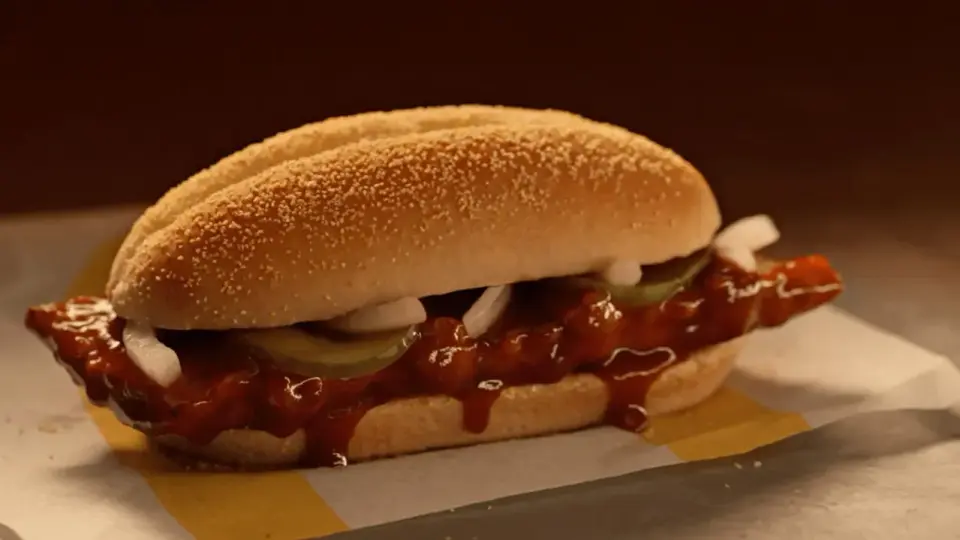
A federal judge in Chicago has allowed a class-action lawsuit against McDonald's to proceed, rejecting the company's motion to dismiss claims that the McRib sandwich misleads customers about its meat content. While the ruling does not establish fraud, it permits allegations that the product's name and rib-like shape falsely imply it contains expensive rib meat, when plaintiffs claim it uses cheaper cuts like shoulder or tripe. McDonald's maintains its ingredients are transparent and the lawsuit is meritless.
Key points
- U.S. District Judge April Perry in Chicago rejected McDonald's request to dismiss the entire lawsuit on Oct. 30, 2026.
- The ruling allows claims of consumer deception, fraud, and unjust enrichment to proceed, while dismissing five other claims without prejudice.
- Plaintiffs allege the McRib uses lower-grade pork products, including shoulder, heart, tripe, and stomach, rather than rib meat.
- McDonald's denies using heart, tripe, or stomach, stating the sandwich contains 100% pork and that its ingredient list is transparent.
- The McRib, first sold in 1981, returned to select U.S. markets on Oct. 27, 2026, in cities including Los Angeles, Chicago, and Miami.
Background
The McRib is a limited-time menu item that has been reintroduced annually since 2020 after being discontinued as a permanent item in 2012. Previous coverage noted that the sandwich features a boneless pork patty shaped to resemble ribs, served with barbecue sauce, pickles, and onions. This latest legal development follows the product's early return to select markets in late October 2026, which was earlier than the typical late-November window.
How outlets are covering it
USA Today and NBC News emphasize Judge Perry's opinion that it is 'premature' to dismiss the case, noting that the judge found the plaintiffs' understanding of the name 'McRib' is not 'unreasonable or fanciful.' Fox Business highlights specific consumer surveys submitted by plaintiffs, noting that 72% of respondents expected the sandwich to contain rib meat, while 67% considered rib meat important to their purchasing decision. UPI focuses on the procedural aspect, confirming that the lawsuit filed in December 2025 can now move forward. McDonald's, via statements to Reuters and Fox Business, consistently argues that the lawsuit 'distorts the facts' and that its marketing is truthful, despite the product's distinctive name and shape.
Why it matters
The ruling sets a precedent for how distinctive product names and visual cues in the fast-food industry are interpreted under consumer protection laws. If the fraud claims succeed, it could force major chains to be more explicit about ingredient cuts in their marketing. The case also highlights the tension between creative branding and consumer transparency, potentially affecting how other limited-time offers are marketed and labeled in the future.
What to watch
The case will now proceed to discovery, where plaintiffs must provide further proof of intent to defraud, as noted by Judge Perry. McDonald's will likely continue to defend its ingredient transparency while the plaintiffs seek accountability for deceptive marketing. The outcome of this litigation could influence future marketing strategies for limited-time menu items across the fast-food industry.
- Judge won't dismiss McRib class-action lawsuit against McDonald's USA Today
- McDonald's dealt legal setback as judge allows McRib meat lawsuit to proceed Fox Business
- McDonald’s must face lawsuit over McRib, judge rules NBC News
- McDonald’s McRib lawsuit moves forward over claims sandwich contains no rib meat: reports KTLA
- McDonald's must face lawsuit alleging McRib contains no rib meat upi
Want the full story? Read the original reporting
Read on USA Today