
Halloween Candy Prices Jump 71% Since 2021, Driving Record $13.5B Spending
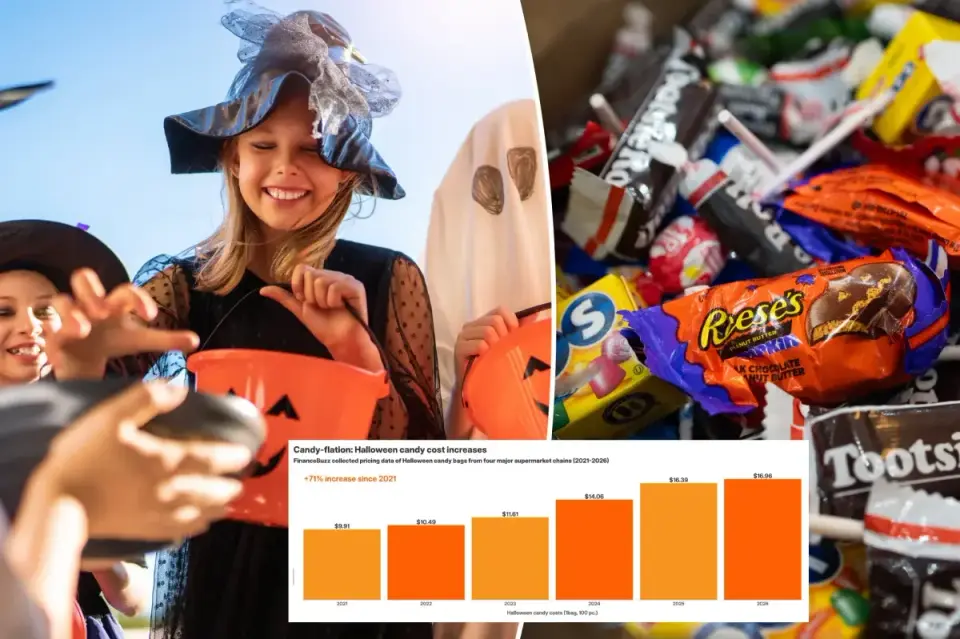
Halloween candy costs have surged 71% since 2021, outpacing national inflation. A 100-piece bag now averages $16.96, with New York City prices reaching up to $30 for 150 pieces. Rising cocoa, oil, and packaging costs are driving the spike, prompting consumers to seek budget-friendly alternatives.
Key points
- Bulk Halloween candy prices have increased by 71% since 2021, more than triple the national inflation rate of 22%.
- The average cost for a 100-piece candy bag is $16.96, up 3.5% from last year and $7.05 over the past five years.
- New York City prices are significantly higher, with a 75-piece bag at Target in Times Square costing $20.68 and a 150-piece assortment at Walgreens reaching $30.
- Cocoa prices hit a record $12,000 per ton in 2024 due to supply issues in Ghana and Ivory Coast, though they have since stabilized.
- National Halloween spending is projected to reach a record $13.5 billion, with consumers planning to spend an average of $115.14 per person.
- Consumers are adopting cost-saving strategies, such as buying value packs, using coupons, and substituting candy with glow sticks or pretzels.
Background
Recent coverage has highlighted regional preferences for specific candies, such as Reese's dominance in the Midwest, and packaging changes following legal disputes. These trends underscore the evolving consumer behavior in the Halloween market, where cost and convenience are increasingly prioritized.
How outlets are covering it
The New York Post emphasizes the sharp 71% price increase and the impact of cocoa and oil costs, while USA Today notes that cocoa prices have begun to stabilize but remain high due to weather risks. WLWT and Spectrum News focus on the record $13.5 billion spending forecast and consumer strategies to manage costs, such as buying early and reusing decorations. USA Today also highlights health-conscious choices, with 34% of consumers limiting candy intake, whereas the New York Post suggests creative alternatives like mandarin oranges and glow sticks.
Why it matters
The rising cost of Halloween candy reflects broader inflationary pressures and supply chain disruptions, particularly in cocoa and petrochemicals. As consumers face higher prices, they are shifting toward budget-friendly alternatives and value-driven shopping strategies, which could influence retail trends and product offerings in the coming years.
What to watch
Consumers are expected to continue seeking cost-effective options, such as value packs and non-candy treats, while retailers may adjust their offerings to meet demand for affordable and health-conscious products. The stabilization of cocoa prices could lead to moderate price adjustments in the future, but current supply chain issues may keep costs elevated.
- The cost of Halloween candy spiked 71% in 5 years — consider a few boo-dget swaps New York Post
- We Want to Know: How Have Your Halloween Candy Habits Changed? The New York Times
- Why you might find less chocolate in your Halloween bag USA Today
- Halloween spending to reach record $13.5 billion nationwide WLWT
- Cost of creepy: Inside a family's budget for spooking the neighborhood Spectrum News
Want the full story? Read the original reporting
Read on New York Post