
Sunnyvale Launches 'Beam' Public Ride-Share with $3.50 Fares
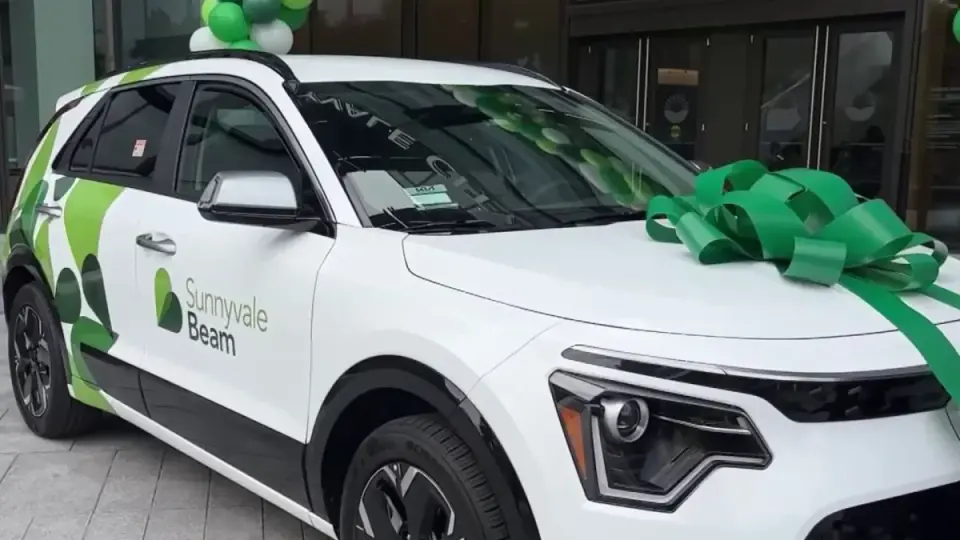
Sunnyvale has introduced a government-operated on-demand ride-share service named Sunnyvale Beam, offering trips within the city for $3.50. Operated by Via Transportation and partially funded by a state grant, the service functions similarly to Uber or Lyft but is managed by local authorities. Residents can request rides via the Beam app, with the first three trips free to encourage adoption. The service also extends to Homestead High School and Kaiser Medical Center in Santa Clara.
Key points
- Sunnyvale launched a city-run ride-share service called Sunnyvale Beam on September 1, 2026.
- Standard fares are set at $3.50 per trip, with the first three rides free for new users.
- The service is operated by Via Transportation and partially funded by a state grant.
- Rides are available throughout Sunnyvale and extend to Homestead High School and Kaiser Medical Center in Santa Clara.
- Users must download the Beam app to request a ride.
Background
This development follows recent trends in the South Bay region regarding mobility and corporate expansion. In July 2026, Tesla expanded its ride-hailing operations to San Francisco International Airport, utilizing Model Y vehicles with supervised Full Self-Driving capabilities. Additionally, Apple and Amazon have recently secured significant office leases in Sunnyvale, indicating renewed economic activity in the area. The introduction of a public ride-share service may complement these private sector mobility efforts by providing a subsidized, government-backed alternative for residents.
Why it matters
The launch of Sunnyvale Beam represents a shift toward municipal control of transportation services, offering a potentially more affordable and accessible alternative to private ride-share platforms. By subsidizing fares and offering free introductory rides, the city aims to reduce reliance on personal vehicles and improve mobility for residents who may not have access to private cars. This initiative also highlights the role of state grants in supporting local infrastructure projects.
What to watch
The city is encouraging residents to try the service, emphasizing the risk-free nature of the first three free rides. Future developments may include expansion of service areas, adjustments to pricing based on demand, or integration with other public transit options. The success of the program will likely depend on user adoption and the efficiency of the Via Transportation partnership.
Want the full story? Read the original reporting
Read on NBC Bay Area